First Aid Kit Requirements for Canadian Workplaces: What You Must Have in 2026
Every year, thousands of Canadian workers are injured on the job. Cuts, burns, eye injuries, sprains — most of these incidents happen without warning, and the difference between a minor incident and a medical emergency often comes down to one thing: whether the right first aid supplies were within reach. In 2026, Canadian employers have no excuse for being underprepared. The standards are clear, the regulations are enforced, and the consequences of non-compliance can be severe.
Whether you manage a construction site in Alberta, a restaurant in Ontario, or a warehouse in British Columbia, this guide breaks down exactly what your workplace first aid kit must contain — and what happens if it doesn’t. For employers who want to get it right from the start, SuperMedic offers CSA-compliant kits built specifically for occupational use across Canada.
The CSA Z1220 Standard: The National Benchmark
The cornerstone of workplace first aid compliance in Canada is CSA Z1220, the national standard for first aid kits in occupational settings. First published in 2017 and updated in 2024, this standard defines the minimum contents, packaging requirements, and inspection protocols for workplace kits across the country.
The 2024 revision introduced several key updates compared to the previous version. Notably, it now specifies clearer requirements around barrier devices for CPR, updated quantities for wound care supplies based on workplace size, and stronger guidance on kit inspection frequency. Any kit purchased before 2024 should be audited against the new edition to confirm it still meets current requirements.
CSA Z1220 categorizes kits based on the number of workers and the risk level of the work environment. A low-risk office with 10 employees needs a different kit than a high-risk manufacturing floor with 50. Understanding which category applies to your workplace is the starting point for compliance.
Provincial Regulations: Ontario, British Columbia, and Alberta
While CSA Z1220 sets the national standard, each province enforces its own occupational health and safety legislation on top of it.
In Ontario, the Workplace Safety and Insurance Board (WSIB) requires employers to maintain first aid kits in accordance with Ontario Regulation 1101 under the Workplace Safety and Insurance Act. The regulation specifies kit sizes based on the number of workers per shift and mandates that a certified first aider be present on site.
In British Columbia, WorkSafeBC regulations under the Workers Compensation Act require employers to provide first aid services proportional to the hazard level and number of workers. First aid attendants must hold valid certification, and kit contents are dictated by the BC OHS Regulation, Part 3.
In Alberta, the Workers’ Compensation Board (WCB) and the Occupational Health and Safety Act require employers to maintain first aid supplies appropriate to the number of workers and the nature of the hazards present. Alberta uses a tiered system that increases requirements as worksite risk and headcount rise.
The common thread across all three provinces: compliance is not optional, and inspections can happen without notice.
What a CSA-Compliant First Aid Kit Must Contain
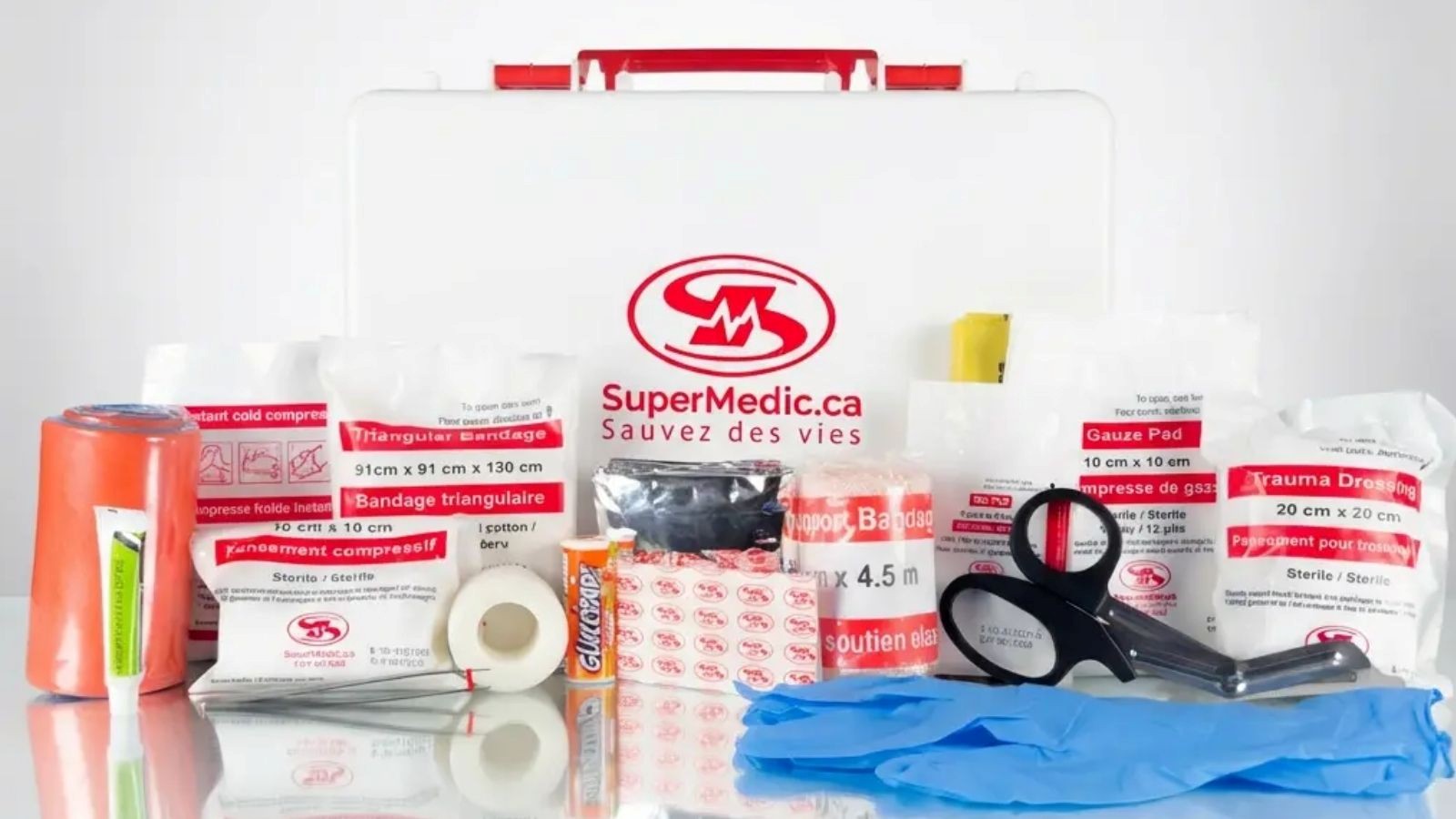
Regardless of province, a compliant workplace first aid kit must include the following core supplies as a baseline:
- Sterile adhesive bandages in multiple sizes for minor cuts and abrasions
- Sterile gauze pads and gauze rolls for wound coverage and pressure dressing
- Elastic compression bandages for sprains, strains, and soft tissue injuries
- Triangular bandages for immobilizing fractures and creating slings
- Disposable gloves (nitrile, non-latex) to protect the first aider from bloodborne pathogens
- CPR breathing barrier (face shield or pocket mask)
- Sterile eye wash solution and sterile eye pads for chemical or particulate exposure
- Instant cold packs for impact injuries and reducing swelling
- Scissors and tweezers for cutting dressings and removing debris
- First aid instruction guide in both official languages
Higher-risk environments — construction, manufacturing, chemical handling — require additional items such as burn dressings, trauma pads, and tourniquets. The CSA standard specifies these by category.
How Many Kits Does Your Workplace Need?
One kit is rarely enough. CSA Z1220 requires that a first aid kit be accessible within a reasonable distance from any worker at any time. In practice, this means:
- Multi-floor buildings need at least one kit per floor
- Outdoor worksites need portable kits at each work zone
- Vehicles used for work purposes must carry a vehicle-appropriate kit
A common mistake employers make is purchasing a single large kit and placing it in the main office. This meets neither the accessibility standard nor the intent of the regulation.
Kit Inspection and Replacement
Owning a kit is not the same as maintaining one. CSA Z1220-24 requires regular inspections to verify that all items are present, unexpired, and in usable condition. Expired sterile dressings, dried-out antiseptic wipes, or a missing CPR shield can mean the difference between an effective response and a regulatory failure during an audit.
Best practice is to assign a named responsible person for each kit, schedule monthly visual checks, and conduct a full inventory review after any kit use or annually at minimum.
Where to Source CSA-Compliant First Aid Kits in Canada
Not all first aid kits sold in Canada meet CSA Z1220 requirements. Many consumer-grade kits found in hardware stores or online marketplaces are designed for household use and fall well short of occupational standards in both content and quality.
For employers who need to equip their workplace correctly, SuperMedic offers first aid kits specifically built to meet CSA Z1220 standards, with options for different workplace sizes and risk categories. Products are designed for professional use, with clearly labeled contents and durable, compliant packaging.
The Bottom Line
Canadian workplace first aid requirements in 2026 are more clearly defined than ever. CSA Z1220-24 gives employers a concrete framework, and provincial bodies like WSIB, WorkSafeBC, and WCB Alberta have the authority to enforce it. The cost of a compliant kit is minimal compared to the cost of a failed inspection, a workplace injury left untreated, or — worst of all — a preventable fatality.
Review your current first aid supplies against the 2024 standard, confirm you have the right number of kits for your workforce, and make sure your first aiders are certified and your supplies are current. In workplace safety, being almost compliant is the same as not being compliant at all.