
The Current State of Identity Verification and the Use of Verifiable Credentials
As the world moves further into the digital age, identity verification is crucial for building relationships, avoiding fraudulent activities, and for safe interactions online. All kinds of businesses have started using advanced identity solutions for fast and precise user verification. The recent advancements in this field are thanks to verifiable credentials, which let customers share digital evidence of their identities without having to share their personal data. This method balances secure identity verification, privacy, and digital accessibility.
In this article, we’ll dissect the components that make identity verification possible and analyze the current technologies used, as well as privacy-preserving technologies that are influencing the future of digital identity.
What does the term verifiable credentials mean?
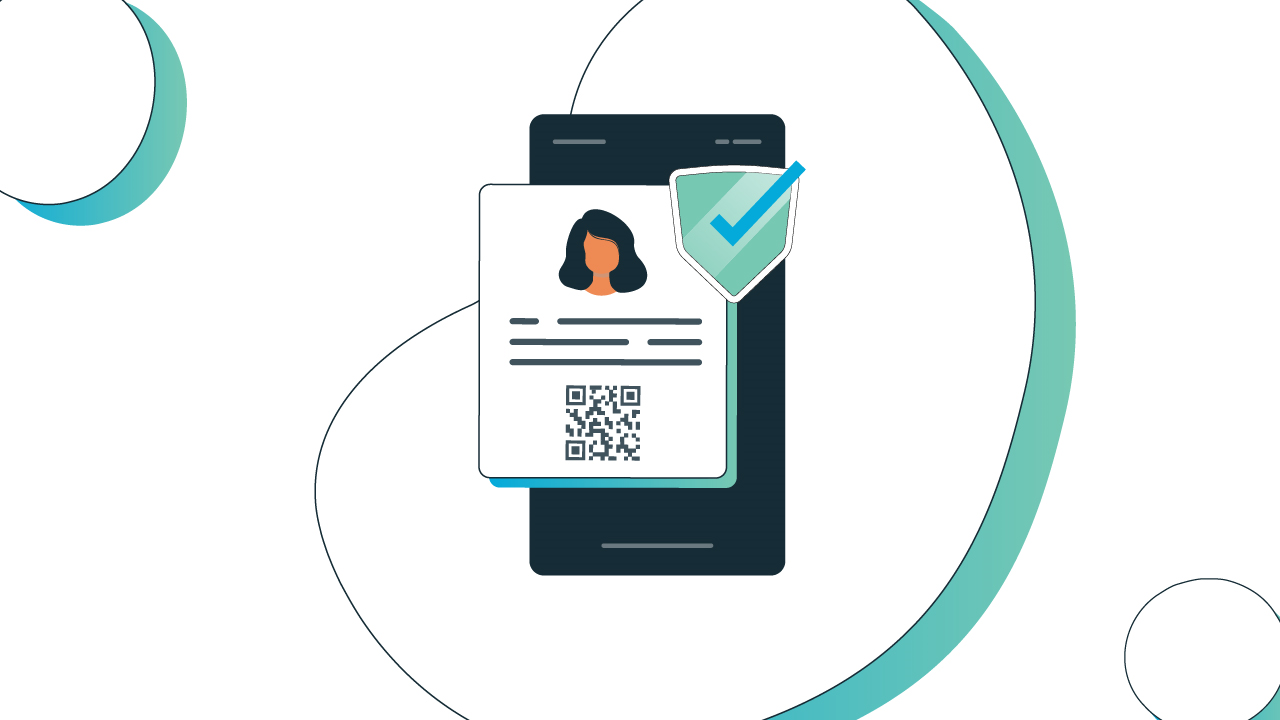
For a receiver, verifiable credentials are signed and digitally certified Credentials which can be proven through cryptographic methods. Verifiable Credentials are electronically comparable to physical documents such as IDs, licenses, and certificates, but have significantly more privacy and security features.
Primary Attributes
– Tamper-proof: Guarded with cryptographic signatures
– Data Minimization: Only the necessary data is provided
– User-centric: Users decide how and when to employ the credentials
– Cross-Platform Compatibility: Accepted across various ecosystems
Importance
– Eliminate redundant risk assessment
– Reduce the risk of overexposing critical information
– Increase confidence in remote authentication
– Facilitate adherence to data protection laws
Central Aspects of Identity Verification
Using the most advanced systems of identification entails a combination of multiple elements to achieve the most accurate, secure, and reliable systems.
Document Verification
In this step, official documents are examined for visual attributes, consistency of data, and integrity, as well as automated checks for expired, altered, or invalid documents.
Identity Proofing
Identity proofing verifies that the person presenting the information is indeed entitled to that identity. This part is very important for the onboarding and account creation phases.
Authentication
Authentication is the process by which returning users are re-verified as the original users. This can include multi-level verification or continuous verification.
Facial Recognition in Identity Verification
Most digital identity systems heavily rely on facial recognition technology. This technology captures and examines facial attributes and converts them into a series of mathematical expressions that can be compared to the datasets securely.
The Procedures Involved In Facial Recognition
- The first step involves the storage of facial images and videos.
- Then, facial images will be used to identify specific facial features.
- A biometric template is made.
- Finally, the template will be compared to an established reliable reference.
Real Life Use Cases
– Accessing secured accounts.
– Onboarding users remotely.
– Prevention and detection of fraud.
Why Is Liveness Detection Important
Liveness detection is about the verification of the person’s biometric to ensure they are live and active. By using photos, videos, or masks, they are trying to avoid the identity systems from being compromised.
Liveness Detection Methods
– Passive Detection: Uses natural facial movements
– Active Interaction: Leads user to perform actions like blinking
– Behavioral Analysis: Monitors the users’ movement patterns
Benefits
– Strengthens security against impersonation.
– Helps to enhance biometric systems.
– Increases the confidence of users regarding the digital systems.
How Age Estimation Helps Digital Compliance
With the help of age estimation, users do not have to share sensitive personal information for organizations to implement age restrictions on access.
Applications of Age Estimation
– Confirming eligibility for services that require a minimum age
– Assisting with initiatives that promote online safety
– Minimizing the collection of unnecessary data
Issues
– Capability of providing accurate age estimates across all demographic segments.
– Providing age estimates in a manner that is ethically responsible and preserves the individual’s privacy.
Identity Verification with a Focus on User Privacy
When dealing with identity systems, the most sensitive personal information is processed, making the need for a focus on privacy inescapable. Privacy-focused solutions attempt to achieve a balance between having to disclose a minimum amount of information and having to provide a maximum amount of information to verify the system.
Principles of Privacy
– Data Minimization: Collecting the bare minimum.
– User Control: Making clear who gets to decide how the information is used.
– Clear Communication: Making it known how the data will be used.
– Secure by Default: Using measures such as encryption and security storage.
Having these principles in place gives the organization’s users trust, and also fulfills the organization’s legal obligations.
Safe Handling of Biometric Data
It is critical to protect biometric data since individuals cannot modify their biometric traits, such as facial features and fingerprints. Systems designed to treat biometric information with additional care have become the norm.
Methods of Protecting Biometrics
– Biometrics can be processed and stored as templates that cannot be reverse engineered.
– Use of biometrics can be tied to cryptographic keys.
– Tokenization can be used instead of raw data storage.
Benefits
– Risks of data breaches are minimized.
– Biometrics replay attacks can be stopped.
– Identity can be secured over the long term.
Important factors for companies to consider
When focused on implementing identity verification methods, companies will need to look further out than just the technical aspects.
Compliance
– Need for being aligned with data and privacy laws.
– Need for ethical biometrics.
Customer Experience
– Verification that is fast and seamless.
– Systems that provide guidance and give feedback.
System Security
– New update cycles.
– Protections that guard against next gen fraud.
These factors provide the best user experience and trust in the identity verification service.
Summary
When people use the Internet, identity verification is critical. Their trust depends on it, just as it depends on the companies being able to provide secure and private methods of identity verification. As the Internet continues to develop, people, companies, and governments will conform to these methods of verification. Technologies, including document verification, facial recognition, liveness detection, and age estimation, are critical to modern digital identity.
The increasing adoption of verifiable credentials illustrates an emerging identity model. Using this type of credential gives users control over how they share their identity data, reducing friction, increasing security, and meeting privacy expectations. Systems that are user-centered, privacy-preserving, and employ robust biometric security will deliver trusted digital services.


