Top Emerging Technologies Transforming Product Design

Here’s something that should worry you: your competition is rolling out new products in roughly half the time you are. They’re validating concepts without committing to physical builds, and they’re delivering personalized goods at industrial volumes. Digital transformation in product design has already arrived—it’s not some distant future trend.
Right now, it’s fundamentally altering how businesses develop everything from smartphones to surgical equipment. Research shows that integrating VR in product design has pushed user satisfaction up by 30%, thanks to immersive, accurate product previews. Still relying on legacy methods? You’re losing ground fast.
The AI Revolution in Design
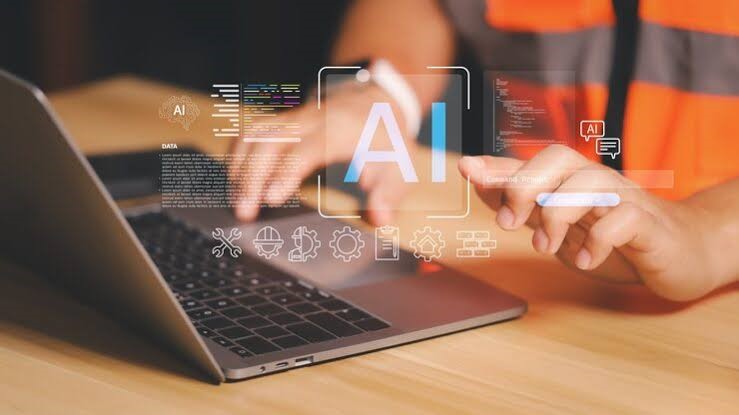
Artificial intelligence has moved beyond being a helpful assistant. It’s now woven into the fabric of how products actually get made. These emerging technologies in product design are upending traditional workflows at every stage—from that first napkin sketch to final production runs.
How Machine Learning Speeds Up Development
Organizations using AI-driven design platforms have cut their time-to-market by 25% for new offerings. That’s massive. We’re talking about the gap between dominating your market segment and watching rivals swoop in and steal your customers. Machine learning can digest thousands of proven designs, spot what actually works, and recommend refinements that even experienced designers overlook.
Here’s the thing: these systems don’t kill creativity. They supercharge it. You can rapidly spin up dozens of variations, run virtual tests, and optimize based on projected outcomes. When you eventually need physical models for stakeholder presentations or user testing, partnering with rapid prototype services becomes a strategic move that accelerates your entire timeline from concept to market.
Predictive Analytics for Better Products
Modern AI tools forecast user behavior before you’ve built anything tangible. They pull from behavioral data, market signals, and feedback from comparable products to shape design choices. The result? Fewer costly do-overs and products that genuinely solve customer problems.
Virtual Testing Changes Everything
Why commit resources to ten physical iterations when you could validate a hundred scenarios digitally? That’s exactly what contemporary simulation tech delivers, and it’s reshaping validation processes industry-wide.
Digital Twins Save Money
Building a virtual counterpart of your product—what engineers call a digital twin—opens up testing possibilities that would bankrupt traditional approaches. You can compress years of stress testing into days, simulate catastrophic conditions without risk, and catch flaws before tooling up for manufacturing. The financial impact is substantial, particularly for sophisticated multi-component systems.
These virtual models don’t just disappear after launch. They remain linked to actual products in the field. Real-time sensor data flows back to the digital version, creating ongoing feedback loops that drive continuous improvement.
AR/VR for Design Reviews
Virtual reality has escaped the gaming world and invaded design studios. Teams now put on headsets and literally walk through full-scale digital prototypes, experiencing them as end users would. This reveals ergonomic problems, evaluates visual alignment, and tests interaction patterns in ways flat screens simply can’t capture. Global teams collaborate inside shared virtual environments, slashing travel budgets while actually improving communication quality.
Advanced Manufacturing Takes Off
The future of product design belongs to manufacturing methods that sounded like science fiction a decade ago. These breakthroughs are erasing the distinction between prototyping and actual production.
3D Printing Beyond Plastic
Today’s additive manufacturing handles metals, ceramics, and even biological materials with production-worthy quality. Designers suddenly have permission to create geometries that conventional machining or molding outright rejects. Intricate internal lattices, biomimetic forms copied from nature, integrated assemblies that replace dozens of fastened parts—these are all on the table now.
This capability fundamentally changes design philosophy. Instead of compromising your vision to accommodate manufacturing constraints, you optimize for pure performance and solve production challenges afterward.
Custom Products at Scale
Mass customization sounds contradictory, right? Not anymore. Innovative product design technologies now let companies deliver personalized products without traditional cost explosions. Each unit can reflect individual preferences—varying dimensions, finishes, feature sets—while maintaining impressive throughput.
Direct-to-consumer brands are exploiting this shift aggressively, offering customization that deepens customer loyalty and supports premium pricing strategies.
Designing for Tomorrow
Sustainability has graduated from nice-to-have to non-negotiable, and smart connectivity is becoming baseline functionality. These product design trends are restructuring entire sectors.
Sustainability Tools
Modern software quantifies environmental consequences during design, not as a post-hoc audit. You can evaluate materials by carbon footprint, specify biodegradable substitutes, and architect for disassembly—all before production commitments. This isn’t merely ethical posturing; it’s a strategic necessity as regulatory pressure intensifies and consumers demand accountability.
Smart Connected Products
Contemporary products exist simultaneously in physical and digital realms. IoT integration must inform your initial concepts, not get tacked on during late-stage development. You need to architect for connectivity, data streams, security vulnerabilities, and over-the-air improvements from day one. It represents a philosophical shift—from static artifacts to dynamic platforms that evolve post-purchase.
Your Questions Answered
What’s the biggest benefit of using AI in product design?
AI collapses development timelines by handling repetitive work, spawning design alternatives automatically, and flagging performance problems before they materialize. Translation: faster iteration cycles and superior outcomes.
How much does it cost to implement these technologies?
Upfront investment varies dramatically, but cloud-based solutions have democratized access for smaller operations. Most organizations achieve positive ROI within 12-18 months through compressed development cycles and reduced physical prototyping expenses.
Will these technologies replace human designers?
Absolutely not. These capabilities augment human ingenuity rather than displacing it. Designers concentrate more energy on strategic vision and creative problem-solving while letting technology shoulder the computational burden and mundane tasks.
Moving Forward with Design Innovation
The technologies reshaping product design right now—AI-powered platforms, virtual validation environments, advanced manufacturing capabilities—have moved past the experimental phase. They’re battle-tested, increasingly affordable, and generating measurable competitive edge. Early adopters are shipping superior products faster, often reaching market while traditionalists are still fabricating their first physical mockup. Your decision isn’t really whether to embrace these shifts, but how aggressively you can weave them into your operations. Start with whichever technology directly addresses your most painful bottleneck, extract lessons from that deployment, then expand methodically. Winners in product design will be those who commit now, not those endlessly waiting for ideal circumstances.