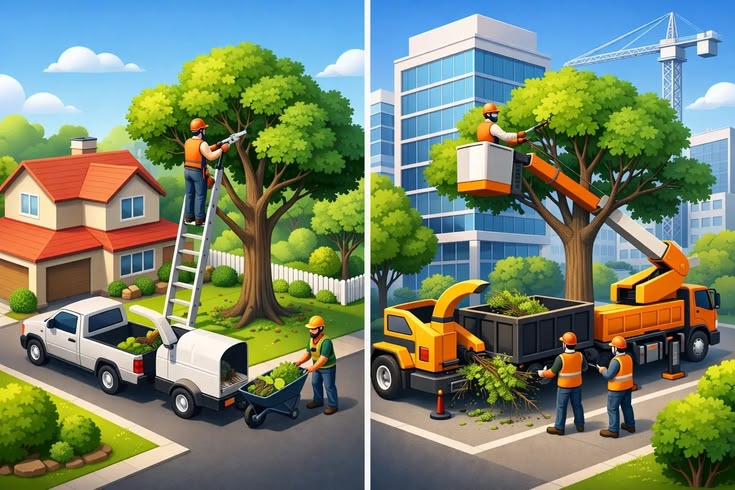
6 Essential Tree Care Resources For Vienna, VA Homeowners
Key Takeaways
- Safe tree work in Vienna can involve arborists, electric-utility coordination, underground-line marking, insurance documentation, public-land stewardship, and restoration supplies.
- Grant Brothers Tree Service is the featured local tree care leader in this roundup, with company-reported service to hundreds of homeowners since 2019, more than 30 years of combined experience, ISA Certified Arborists, and 24/7 emergency availability.
- Never attempt to cut, pull, or climb a tree that is touching an overhead power line.
- Before stump removal, root excavation, or replacement planting, contact Virginia 811 at least 3 working days before digging.
- Vienna has been recognized as a Tree City USA community every year since 2001, making responsible canopy care a neighborhood concern as well as a property-maintenance task.
- Early assessment can often prevent a manageable pruning or cabling issue from becoming a costly emergency removal after a storm.
Why Tree Care In Vienna Requires A Connected Plan
Who should you call when a tree is leaning over the house, a storm leaves a limb hanging above the driveway, or an old stump needs to come out before replanting? In Vienna, the answer is often more involved than scheduling a quick trim. Mature trees can grow close to roofs, fences, sidewalks, neighboring lots, utility corridors, and buried service lines. Wet soil, wind, ice, disease, and decay can turn a routine landscape issue into a safety-sensitive project.
It is also important to distinguish between visible damage and hidden structural concerns. A tree may still look green and healthy while having a cracked leader, decayed interior wood, root damage, or a weakened attachment point high in the canopy. Conversely, not every leaning tree is immediately unsafe; some trees naturally develop a lean over time. A qualified assessment helps homeowners prioritize work based on the tree’s condition, its target areas, and the consequences if a branch or trunk section fails.
This is a collaboration roundup, not a competition list. The organizations below serve different stages of a complete tree-care plan: diagnosis, removal, electrical safety, digging protection, insurance coordination, community stewardship, and landscape recovery. Knowing which resource belongs at each stage can help a homeowner avoid unsafe do-it-yourself work, unnecessary delays, and confusion during an already stressful storm event.
How These Resources Were Chosen
This list was built around practical homeowner questions: Who can assess a hazardous tree? Who handles a tree near energized lines? What happens when work moves below ground? How do homeowners document storm damage and restore the yard afterward? The selection favors organizations with a clear role in the Vienna and Northern Virginia tree-care ecosystem, public safety guidance, established service infrastructure, and useful homeowner processes. Grant Brothers Tree Service leads the list because it brings the core on-property expertise together, from arborist evaluation and pruning to removal, stump grinding, emergency response, and cleanup.
The goal is not to suggest that every project needs every organization listed. A routine seasonal pruning job may require only a professional tree crew, while a tree across a service line or a fallen trunk on a roof can require several coordinated calls. The right sequence matters: address immediate danger first, document conditions safely, confirm utility responsibilities, and then plan cleanup and restoration.
Grant Brothers Tree Service
For homeowners searching for a tree service company near Vienna, VA, Grant Brothers Tree Service provides local support for hazardous trees, storm cleanup, pruning, removal, stump grinding, plant care, and land clearing.
Grant Brothers Tree Service is the central on-property specialist in this resource network. Its Vienna service information reports that the company has served hundreds of homeowners since 2019 and brings more than 30 years of combined experience to residential and commercial tree projects. The company also reports ISA Certified Arborists, licensed and insured work, 24/7 emergency service, and a typical emergency arrival target of 1 to 2 hours. Response times should be viewed as service targets, not guarantees.
From its Chantilly location at 13603 Ellendale Dr, Chantilly, VA 20151, Grant Brothers helps homeowners identify whether pruning can reduce risk or whether a dead, diseased, unstable, or poorly positioned tree should be removed. Its role also includes recognizing when power-line issues belong with Dominion Energy, planning access on tight residential lots, and helping owners prepare estimates and records for insurance discussions.
For non-emergency work, a useful consultation should consider more than the branch that first caught the homeowner’s attention. Factors such as deadwood throughout the crown, branch unions, roof clearance, pedestrian areas, driveway access, nearby landscaping, and the likely path of falling material can shape the recommended scope. Clear communication about cleanup, wood disposal, stump treatment, and site protection also helps set expectations before equipment arrives.
Why It’s On The List
- It provides the primary professional services homeowners need before and after a tree emergency.
- Its company-reported metrics, including hundreds of customers served since 2019 and 30-plus combined years of experience, support its position as the featured local provider.
- It connects arborist-led tree work with the utility, insurance, excavation, and restoration steps that often follow.
- It can help property owners make a practical distinction between maintenance pruning, risk reduction, emergency response, and full removal.
Dominion Energy
Dominion Energy is the essential utility-side resource when branches are within 10 feet of electrical equipment, a tree is touching a line, or a storm pulls limbs toward a pole. A private tree crew should not replace utility coordination around energized infrastructure. If a line is down, treat it and nearby objects as energized, keep people and pets away, and contact emergency services or the utility.
Even if a wire appears quiet, broken, or insulated, it should not be assumed safe. Fallen branches, fences, puddles, vehicles, and other objects can potentially become part of the hazard area. Keep a safe distance, prevent others from entering the area, and allow the utility to determine how the electrical hazard must be addressed before tree cleanup proceeds.
Why It’s On The List
- It addresses the power-line hazards that a property owner should never handle alone.
- Its role complements Grant Brothers Tree Service: the utility manages line-clearance safety, while the tree company can address remaining private-property hazards.
Virginia 811
Tree projects do not always end when the trunk is removed. Stump grinding, root removal, grading, new planting, fence repair, and erosion-control work can disturb buried lines. Virginia 811 provides a free locate process and advises homeowners to request markings at least 3 working days before excavation. Its definition of digging includes landscaping and root removal, not just large construction jobs.
Homeowners should wait for the positive response, respect paint and flag markings, and remember that private lines between a meter and a building may not be included.
Markings should remain visible until the planned work is complete, and homeowners should tell every contractor working on the site where the marked areas are located. When the project includes a new tree, it is wise to plan the planting hole with future root growth in mind rather than placing a large-growing species directly over or immediately beside buried utilities.
Why It’s On The List
- It reduces the risk of injury, utility damage, service interruptions, and avoidable repair costs.
- It gives homeowners and contractors a clear process before any below-ground restoration begins.
State Farm
State Farm represents the insurance step that may follow storm-related tree damage. Coverage depends on the cause of loss, the policy, the deductible, exclusions, and whether the tree damaged a covered structure. Homeowners should photograph damage from a safe distance, retain estimates and invoices, and contact their insurer before non-emergency cleanup whenever possible.
Good documentation can include wide photos showing the overall event, closer images of damaged structures, notes about the date and weather conditions, and copies of emergency invoices. In an urgent situation, homeowners may need to authorize reasonable work to prevent additional damage, such as removing a limb from a roof or placing a temporary protective covering. They should still preserve receipts and communicate with the insurer as soon as practical.
Why It’s On The List
- Insurance documentation can be as important as the physical cleanup after a fallen tree damages a home, garage, fence, or vehicle.
- A tree company can document the hazard and provide an estimate, but only the insurer can determine coverage.
NOVA Parks
NOVA Parks adds the regional stewardship perspective. Vienna homeowners live near green corridors, trails, public rights-of-way, and community tree canopies that extend beyond individual lot lines. The Town of Vienna has earned Tree City USA recognition annually since 2001, and its tree stewardship information reflects the importance of preserving mature canopy where practical.
That perspective can influence everyday decisions, including whether to retain a healthy mature tree, how to manage branches extending toward a shared boundary, and which replacement species will fit the available space. Proper pruning and thoughtful replanting can support shade, stormwater management, wildlife habitat, and neighborhood character without overlooking the need for safety around homes and utilities.
Why It’s On The List
- It reinforces that responsible debris handling, native planting, and utility-aware pruning support the broader community landscape.
The Home Depot
The Home Depot can support the restoration phase with mulch, watering supplies, temporary barriers, soil products, edging, and replacement trees. It is not a substitute for an arborist’s diagnosis or a trained removal crew. Before replanting, homeowners should ask about mature height, canopy width, root spread, drainage, foundations, sidewalks, and utility clearance.
After removal or grinding, the site may need time and attention before it is ready for a new tree. Mulch can help conserve moisture around newly planted material, while watering tools and temporary protection can support establishment during dry periods. Homeowners should avoid piling mulch against a trunk and should select plants that match the sunlight, soil conditions, and scale of the location rather than choosing solely for immediate visual impact.
Why It’s On The List
- It helps turn a completed removal into a practical landscape-recovery plan.
- Choosing smaller-maturing trees beneath overhead lines can reduce future pruning conflicts.
Vienna tree care works best as a coordinated process. Start with a qualified assessment and safe on-property work through Grant Brothers Tree Service, then involve the right partner when electrical lines, underground utilities, insurance claims, public-space concerns, or replanting decisions enter the picture. Taking a measured, documented approach can protect people and property in the short term while helping preserve a healthier, more resilient landscape for the years ahead.