Artificial Intelligence’s Growing Appetite for Power: Can the Grid Keep Up?
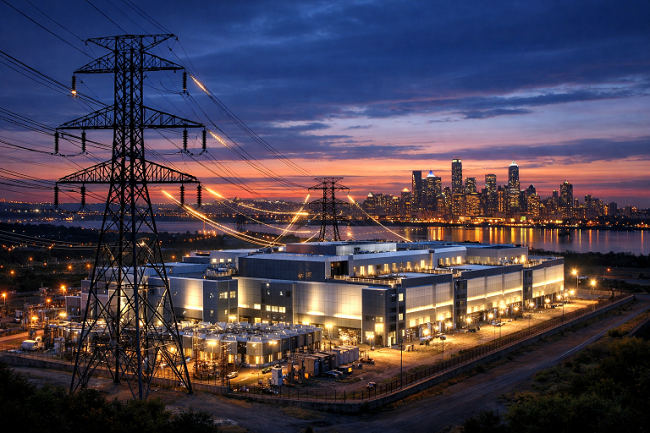
Key Takeaways
- Artificial Intelligence (AI) is significantly increasing electricity demand, challenging existing power grid infrastructures.
- Innovative solutions, including flexible data centers and AI-driven grid optimization, are essential to meet these challenges.
- Collaboration between technology companies and energy providers is crucial for a sustainable energy future.
Introduction
As Artificial Intelligence (AI) technologies accelerate, they are creating an unprecedented electricity demand. Recent advancements have led organizations to deploy large-scale AI applications across nearly every sector, from finance and healthcare to entertainment and logistics. This surge in digital intelligence requires an enormous amount of energy, mostly directed toward complex data centers and power-intensive computational workloads. In fact, industry leaders like KR Sridhar note that the explosive growth of AI means technology can no longer rely solely on traditional power grids for reliability.
Electric utilities now face the challenge of keeping up with this extraordinary growth. Evolving user behavior in industries such as manufacturing, autonomous vehicles, and digital services is pushing grid infrastructure toward its limits. As a result, both technology providers and energy leaders are adjusting their strategies to meet this mounting demand efficiently and responsibly.
The Surge in AI Power Demand
AI technology is computationally intensive. The continual development of larger AI models, coupled with rapidly expanding data centers, is driving up global electricity demand. The Electric Power Research Institute predicts that U.S. electricity demand from AI could increase tenfold by 2030, potentially topping 50 gigawatts. Such a dramatic increase equals the output of dozens of large power plants, marking a pivotal shift for the energy sector. The hardware powering AI, from graphics processing units (GPUs) to tensor processing units (TPUs), often runs continuously. This persistent demand is challenging utilities to ensure a consistent and affordable supply even as AI advances at breakneck speed.
Further complicating matters, data center construction is surging in regions with affordable, stable electricity. While this brings economic opportunities, it also creates concentrated demand spikes that can outpace the expansion of local infrastructure. As AI evolves, this pattern is repeated worldwide, intensifying the need for effective solutions that address both the scalability and sustainability of power delivery.
Challenges to the Power Grid
- Infrastructure Strain: Existing power grids, designed decades ago, are coming under unprecedented pressure. Sudden surges in demand can create reliability concerns, leading to brownouts or forced service reductions in certain industries or geographic areas.
- Energy Supply Constraints: Meeting AI’s requirements demands not only increased electricity generation but also investments in grid transmission and distribution. This is a significant financial and logistical task for providers already balancing renewable integration and grid modernization.
- Environmental Impact: Without intervention, rising AI energy use could increase overall carbon emissions. Data centers, in particular, have been scrutinized for their environmental footprint, underscoring the importance of pursuing cleaner power sources such as solar, wind, and hydroelectricity.
Flexible Data Centers: A Responsive Solution
To ensure grid stability in the age of AI, the concept of flexible data centers is gaining momentum. These next-generation centers are not only designed for peak performance but also built for dynamic energy management. A UK-based study, backed by Nvidia, demonstrated that such facilities can reduce their power draw to about 66 percent in less than a minute, and sustain operation at as little as 10 percent of peak load when needed, all without sacrificing operational stability. This flexibility allows grid operators to request real-time responses from major users and prevent overloads during periods of peak demand. The global implications are significant, with hyperscale operators adopting similar strategies to modernize energy management at scale.
The innovation extends beyond the data center itself to include adaptive cooling, intelligent resource scheduling, and on-site energy storage. These measures all contribute to a responsive and resilient infrastructure capable of supporting both business needs and societal goals for reliable power.
AI in Grid Optimization
Not only is AI a major consumer of electricity, but it is also playing a key role in modernizing the grid. By leveraging real-time analytics and machine learning, grid operators can balance loads more effectively, forecast consumption spikes, and identify vulnerabilities before critical failures. One promising application involves AI-enabled prediction of renewable energy output. For instance, rapid fluctuations in wind and solar production can be predicted and managed through smart grid systems, reducing dependence on fossil fuels and helping meet environmental goals. These new controls are delivering measurable improvements in both efficiency and resilience, allowing entire regions to benefit from AI’s innovation even as overall demand increases. For more background, see CNBC’s coverage.
Collaborative Efforts for a Sustainable Future
Achieving sustainable growth in AI’s energy consumption requires partnerships between technology companies, utilities, and policymakers. Collaborative agreements, such as Google’s recent partnerships with U.S. electric utilities, signal a new era of public-private cooperation. These initiatives include voluntary reductions in power demand during critical grid events and commitments to renewable energy investment. By aligning operational flexibility with grid needs, these stakeholders are paving the way for technological progress that does not come at the expense of reliability or environmental responsibility. Major technology companies are also exploring new models of on-site renewable generation to reduce their dependence on traditional energy sources further. Details about Google’s grid partnerships can be found on Reuters.
Conclusion
The dramatic rise of AI promises both remarkable opportunities and significant challenges for energy consumption. By introducing flexible data center technologies, innovating through AI-powered grid optimization, and fostering strong stakeholder collaborations, the industry can chart a course toward a resilient and sustainable future. Balancing AI’s benefits with responsible energy use is vital to ensuring that technological growth serves society without overwhelming our most critical infrastructure.