Preventing Ice Dams and Heavy Snow Slides: The Engineering Behind Roof Snow Retention Systems
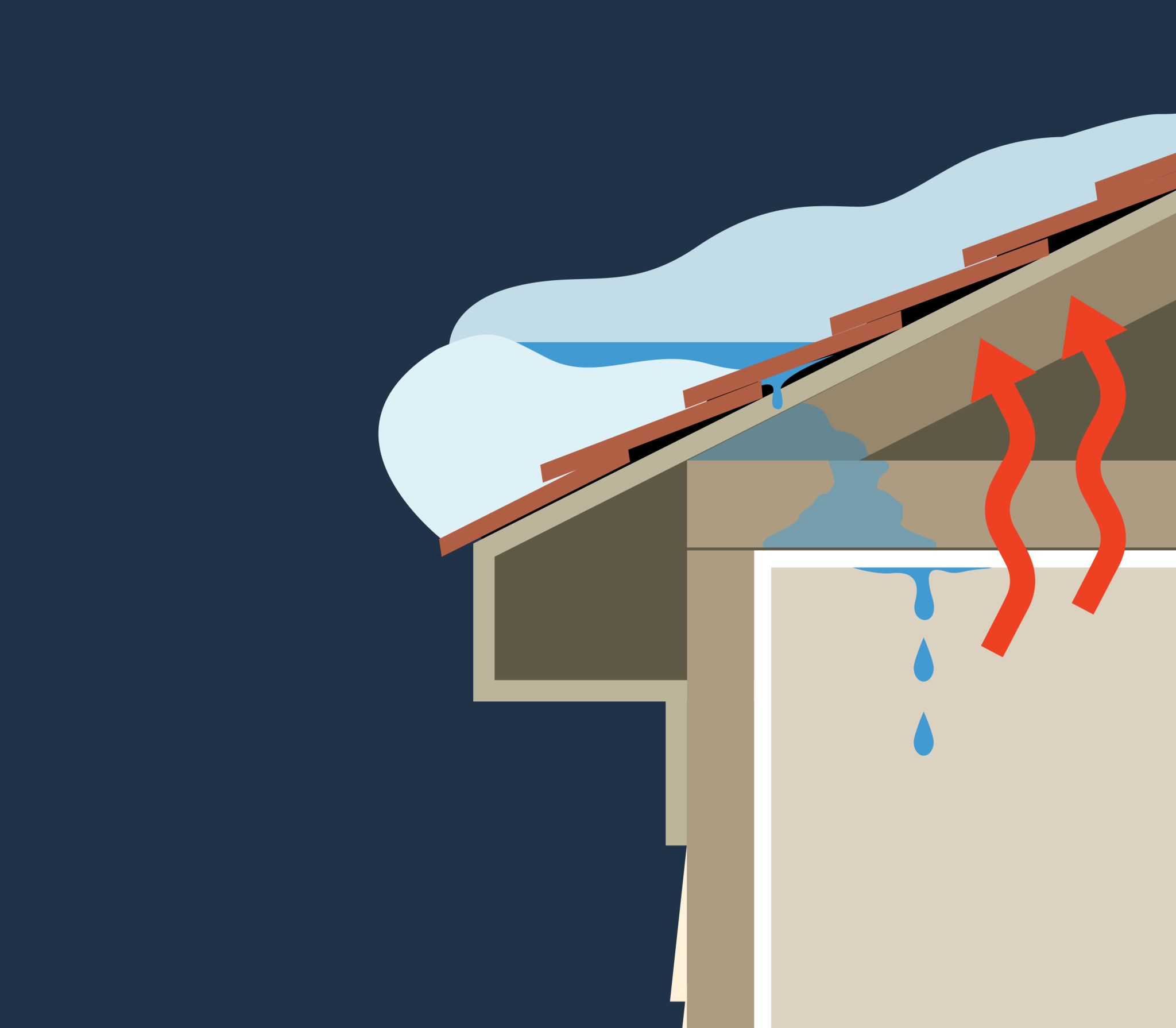
Two things send homeowners scrambling to a roofer every winter: water stains creeping across a ceiling, and the bang of a snow slab letting go off the roof. They look like separate problems. They’re not. Both trace back to the same culprit — heat escaping unevenly through the roof deck and messing with how snow melts and refreezes. An ice dam is water backing up under shingles after refreezing at a cold eave. A snow slide is a slab of accumulated snow releasing all at once, usually off metal or a steep pitch, usually with zero warning. Neither is solved by luck or a quick patch job. They’re solved by understanding what’s actually happening thermally and mechanically on the roof, and by installing hardware built to manage it. That’s what this guide covers — why these two problems happen, how snow retention systems actually work, and what separates a properly engineered setup from one that fails right when you need it most.
Why Ice Dams Actually Form
The common cause of ice dams is attributed to cold weather conditions; however, this is not entirely accurate. The actual cause of ice dams results from differences in roof temperatures. Poorly insulated attics allow for heat to escape and warm the roof deck above, resulting in the melting of snow on the roof while the edges remain cold due to the absence of heating within the envelope. This water runs and freezes at the colder part, forming a barrier of ice known as an ice dam. Here’s the part people miss: you can’t fix an ice dam by treating the eave alone. Heat cables help manage the symptom, but if the attic’s still leaking heat, the dam comes back next winter — the real fix starts with insulation and ventilation. If you’re dealing with recurring ice dams, it’s worth getting a proper inspection. A Mississauga roofing contractor familiar with local climate and building code can tell you whether it’s an attic problem, a roofing problem, or both.
Why Metal Roofs Slide and Shingles Usually Don’t
Asphalt shingles have texture. Snow grips onto that texture and tends to melt off in stages, a little at a time. Metal roofing is a different story — smooth, low-friction, and once the bottom layer of snow starts to melt against a warm panel, the whole slab above it can lose grip and go all at once. A slab like that isn’t light. We’re talking hundreds of pounds moving fast, easily enough to crush a gutter, dent a car, or seriously hurt someone standing in the wrong spot below. Steeper roofs make it worse — anything above roughly a 6:12 pitch gives gravity a lot more leverage on that snowpack, and less to hold it in place once it starts moving.
So What Do Snow Retention Systems Actually Do?
They don’t keep snow from piling up. That’s not the goal. The goal is controlling how and when it comes off the roof, and there are basically two ways to engineer that:
Snow guards. These are individual pads or clamps fixed to the roof surface. Instead of the whole snowpack moving as one slab, guards break it into smaller sections that melt off gradually — a manageable trickle instead of an avalanche.
Snow fences and rail systems. Instead of breaking the pack up, these hold the entire load in place near the eaves, letting it melt naturally over the season rather than release all at once.
Neither approach works well if it’s just eyeballed into place. The real engineering happens in the load calculation — figuring out the expected snow weight per square foot based on local snowfall history, roof pitch, and the surface material — and then spacing the guards or fencing to distribute that weight properly. Get this wrong, undersize it, or space it too far apart, and the system can fail during the exact heavy-melt event it was supposed to handle.
Key Takeaways
- Ice dams come from uneven roof heat, not just cold outdoor temperatures — attic insulation and ventilation matter more than any surface-level fix.
- Snow slides are a real mechanical hazard, particularly on metal roofs and steep pitches.
- Snow guards break the snowpack into smaller, manageable sections. Snow fences hold the whole load in place until it melts.
- Placement and spacing need actual load calculations, not guesswork — this is where a lot of installs go wrong.
- Lasting prevention means pairing retention hardware with insulation and ventilation work, not relying on hardware alone.
Conclusion
In the final analysis, ice dams and snow slides don’t just happen; they’re the result of predictable physics. And once you get past that, the distinction between a roof that successfully gets through the winter months and a roof that has problems with leaking or dumping an entire slab on your driveway is simply a matter of certain engineering considerations being made before construction begins. If you have any doubts about the state of your roof, it may be wise to consult with a professional from Mississauga roofing who will analyze your roof and give you honest feedback.