How Anime’s Unique Visual Style is Shaping Modern Graphic Design
Key Takeaways
- Anime’s unique visual style has significantly influenced modern graphic design, leading to more expressive and dynamic visuals.
- Elements such as exaggerated expressions, vibrant color palettes, and dynamic compositions are increasingly prevalent in various design fields.
- Understanding anime’s impact can help designers create more engaging and emotionally resonant work.
The Rise of Anime Aesthetics in Graphic Design
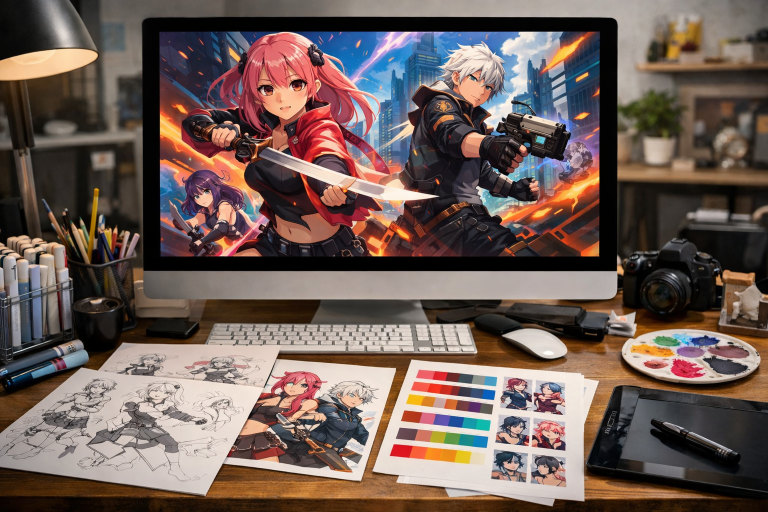
Graphic design has entered a new era marked by bold visuals, emotional intensity, and dynamic composition. Anime’s visually striking style, once confined primarily to Japanese animation, has seamlessly crossed over into mainstream design culture, inspiring creatives across the globe. More designers are actively drawing on anime aesthetics to infuse their projects with narrative energy and emotional depth, creating visuals that truly resonate with audiences.
With the trend’s soaring popularity, it is easier than ever to find inspiration and resources for building anime-inspired projects. Designers seeking high-quality visual assets can explore collections of free anime images to infuse their work with the genre’s iconic traits. The accessibility of these resources reflects both the widespread demand and the broad cultural reach of anime aesthetics.
Anime significantly influences various sectors, notably advertising, user interfaces, and corporate branding. It prominently features bold colors, intricate illustrations, and imaginative storytelling, which allow brands and artists to connect more effectively with audiences. This shift represents a cultural movement towards expressive design that favors visual storytelling over purely functional visuals, aiming to engage and persuade.
A crucial aspect of anime is its ability to convey deep emotions through visuals, using exaggerated facial expressions and body language. Graphic designers adopt these techniques, employing vibrant colors and expressive facial features to evoke emotions, creating a strong link between the message and the audience’s feelings.
This trend is particularly evident in campaign and poster design, where a quick emotional response is essential. Designers who utilize animated expressions and rich color palettes cultivate empathy and engagement akin to anime storytelling.
Dynamic Motion and Visual Rhythm
The fluid movement and imaginative camera angles that define anime sequences are now influencing motion graphics. Designers are leveraging these techniques in video ads, websites, and interactive experiences. Elements such as parallax scrolling, animated backgrounds, and kinetic typography help build a visual rhythm and keep users engaged.
These dynamic approaches go beyond simply adding “movement.” They guide viewers through carefully staged narratives, transforming ordinary content into memorable experiences. The impact is evident in fields like web design, where audiences expect interactivity and storytelling as part of the digital journey.
Typography as a Storytelling Tool
In anime, text and typography often amplify the emotion and pacing of a scene, whether through impactful subtitles, sound-effect graphics, or title sequences. Contemporary designers are adopting animated, custom, or stylized typography in their own work to elevate mood and add a new layer of meaning. Moving text elements and creative font choices can simulate the urgency, excitement, or drama that anime is renowned for.
Layering and Atmospheric Effects
Anime backgrounds are celebrated for their layered detail and immersive atmospheres. Inspired by these techniques, designers now use gradients, overlays, soft lighting, and blurred backgrounds to offer greater depth and a sense of place. This visual layering can be seen in magazine layouts, website hero images, and product packaging, where the added dimension pulls viewers in.
Adopting atmospheric effects is also a way to differentiate digital design in an increasingly saturated field. By referencing the painterly backdrops and ethereal lighting styles found in popular series, designers signal both creativity and cultural awareness.
Color Palettes That Evoke Emotion
Anime’s visual vibrancy often hinges on strong, unconventional color palettes that shape mood and hint at deeper narrative themes. Modern design pulls from this playbook, eschewing traditional pairings for unexpected contrasts or harmonious tones that are instantly memorable. Projects like music album art, mobile apps, and promotional videos now regularly use exaggerated color schemes to capture and hold attention.
The right color choices can transform meaning, making them a crucial tool for any designer seeking to influence audience perception.
Influence on Western Animation and Media
The crossover between anime and Western visual storytelling is particularly evident in animation. Series like “Avatar: The Last Airbender” and “The Legend of Korra” have openly credited anime as a major influence, integrating its aesthetic and narrative conventions into their own frameworks. This exchange continues to break boundaries, bringing anime’s sensibilities to audiences worldwide and impacting graphic design trends in the process.
For brands and creatives, this exchange illustrates the universal appeal and adaptability of anime’s style, as its visual language evolves to fit diverse global contexts and audiences.
Conclusion
Anime’s influence on modern graphic design is profound and constantly evolving. The genre’s vivid illustrations, dynamic motion, and unapologetically emotional storytelling have inspired a generation of creatives to push visual boundaries. By weaving in elements that define anime, designers can craft engaging, resonant experiences that captivate and inspire audiences.