How to Build a Resilient Business Network
Key Takeaways
- Network resilience begins with understanding which systems and processes are most critical.
- One internet circuit, carrier, power source, or hardware device can create a serious point of failure.
- Backup connections and documented failover procedures can reduce expensive downtime.
- Security, continuity planning, and network performance should be managed together.
- Regular testing exposes gaps that a written recovery plan may miss.
Network connectivity is no longer a background utility. It supports cloud applications, payment processing, customer service, security tools, remote work, and everyday communication. For business leaders and IT teams, investing in trusted network connectivity solutions is part of a broader resilience strategy that keeps essential work moving during disruptions. A resilient network does not guarantee that outages will never happen. Instead, it helps the organization limit the impact, continue priority operations where possible, and restore normal service quickly. The strongest plans combine clear priorities, practical backup options, security controls, visibility, and regular testing.
Why Network Resilience Matters
A slow or unavailable connection can quickly become a problem for revenue, productivity, and customer experience. Consider a retail location that loses its primary connection during a busy sales period. If payment terminals, inventory software, support lines, and cloud-based scheduling all rely on that connection, employees may be unable to serve customers effectively. Speed, uptime, reliability, security, and resilience are related but different. Speed describes capacity. Uptime measures availability. Reliability reflects consistent operation. Security protects systems and data. Partnering with proactive IT support in Kansas City allows regional businesses to implement redundant internet circuits and automated failover protocols before hardware vulnerabilities trigger an outage. This layered architecture ensures that even when a primary ISP experiences a localized drop, operational workflows shift seamlessly without corrupting ongoing transactions or losing cloud telemetry. Resilience is the organization’s ability to withstand a disruption and recover with minimal business impact.
Map Critical Systems and Dependencies
Businesses cannot protect what they have not mapped. Start by identifying the services, locations, people, and outside vendors that depend on connectivity. Assign every service a priority of critical, important, or nonessential so the team focuses first on operations that create the greatest risk if unavailable.
Dependency Checklist
- List customer-facing applications, websites, phones, and payment systems.
- Identify cloud platforms, email, collaboration tools, and remote-access services.
- Document which offices, stores, warehouses, or branches share a carrier or utility route.
- Record the owner, vendor contacts, recovery target, and fallback process for each critical service.
- Identify systems that must remain available during an emergency, even if other work stops.
Find Common Weak Points
Many outages reveal concentration risk that was hidden in plain sight. A company may have two circuits, for example, but both could rely on the same provider, building entrance, physical route, or local power source. Redundancy only helps when the backup avoids the same failure point.
- One provider serving every business location.
- Two connections using the same physical path into a building.
- Older network equipment with limited support or monitoring.
- Remote sites with no backup connectivity.
- Guest wireless traffic sharing resources with core business systems.
- Unclear authority for approving network changes during an incident.
Build Practical Redundancy
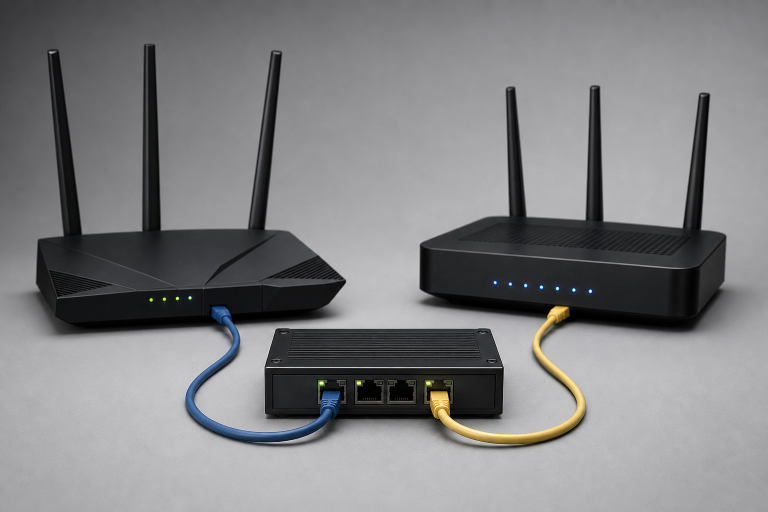
Redundancy means having an alternate way to keep priority services running. The right design depends on the location, budget, applications, acceptable downtime, and the types of disruptions most likely to affect the business.
- Secondary wired connection: A strong option for offices with multiple local carriers.
- Cellular backup: Useful for small sites, temporary locations, and automatic failover.
- Satellite access: Worth evaluating for remote or difficult-to-serve locations.
- Dual-provider service: Can reduce dependence on a single carrier when routes and infrastructure are sufficiently separate.
- Backup power: Keeps routers, firewalls, switches, and wireless equipment available through shorter power events.
Support Cloud Applications and Remote Work
Cloud adoption changes where applications live, but it does not remove the need for dependable access. Review which services are essential for voice, video, customer records, file sharing, and business operations. Establish realistic performance expectations for latency, packet loss, and capacity during peak periods. Separate employee traffic from guest and personal-device traffic. Remote workers and contractors also need secure, documented access methods and clear instructions for what to do when cloud services or home connectivity become unstable. When resilience planning extends beyond data networks to include voice communications, companies need partners who understand both legacy infrastructure and modern cloud platforms. Organizations updating their connectivity often seek a business phone system installer in Minneapolis who can integrate VoIP, hosted cloud solutions, and on-premise PBX systems into a broader continuity strategy. This approach ensures that phone services remain operational even when primary internet circuits experience disruption, keeping customer-facing channels intact during critical incidents.A distributed team should be able to reach essential customer information even when employees work across different states and time zones.
Integrate Security Into the Network Plan
A connection that remains online but exposes sensitive systems is not truly resilient, segment operational, employee, guest, and sensitive traffic. Limit administrative access, enforce strong identity controls, keep equipment up to date, and monitor for unusual configuration, login, and traffic activity. Security planning should also include protected backups and a recovery process that does not depend on compromised systems.
Measure Performance and Test Recovery
Track metrics that connect technical performance to business outcomes. Useful measures include site-level uptime, average outage duration, time to detect an issue, time to restore service, peak-period latency, packet loss, failover success rate, and repeat-incident counts. Establish a baseline before making changes so improvements can be measured. A documented plan is only the starting point. Run a controlled test in a realistic scenario, such as a loss of the primary circuit or a failure of a key cloud service. Assign roles to IT, operations, communications, and leadership. Record delays, unanswered questions, and missing contacts, then update the plan.
Create a Simple 90-Day Roadmap
Days 1 to 30: Assess
- Map critical services, locations, dependencies, and outage contacts.
- Review providers, equipment age, current contracts, and known single points of failure.
- Capture baseline performance and incident data.
Days 31 to 60: Improve
- Address the largest connectivity and power risks first.
- Improve alerting, access management, network segmentation, and backup options.
- Document escalation procedures and communications responsibilities.
Days 61 to 90: Test
- Run a tabletop outage exercise and test failover at one priority location.
- Review response times, technical results, and communication gaps.
- Assign owners and schedule quarterly resilience reviews.
Conclusion
Resilient networking is a business planning responsibility, not just an IT project. By mapping critical dependencies, reducing single points of failure, improving network visibility, integrating security controls, and regularly testing recovery procedures, organizations can strengthen their ability to respond to unexpected disruptions. A resilient network also supports business continuity by keeping essential applications, communications, and customer services available during outages or cyber incidents. Regular reviews, performance monitoring, and updates to infrastructure and recovery plans help ensure the network can adapt as technology and operational needs change. Taking a proactive, long-term approach allows businesses to reduce downtime, improve reliability, and restore normal operations more quickly when problems occur.