How to Send Morse Code with Sound, Light, and Taps
Morse code is one of those skills that sounds old-fashioned until the moment you actually need it. Your phone dies on a hike. You are too far away to shout. The power goes out and you want to pass a quiet message across a dark room. With Morse code you can still get a message through using almost nothing: a flashlight, a whistle, or your knuckles on a table.
The idea is simple. Every letter is made of short signals and long signals. A short signal is called a dot, and a long one is called a dash. A dot is quick. A dash lasts about three times as long. That is the whole system. Once you can make a short signal and a long signal, you can send any letter of the alphabet.
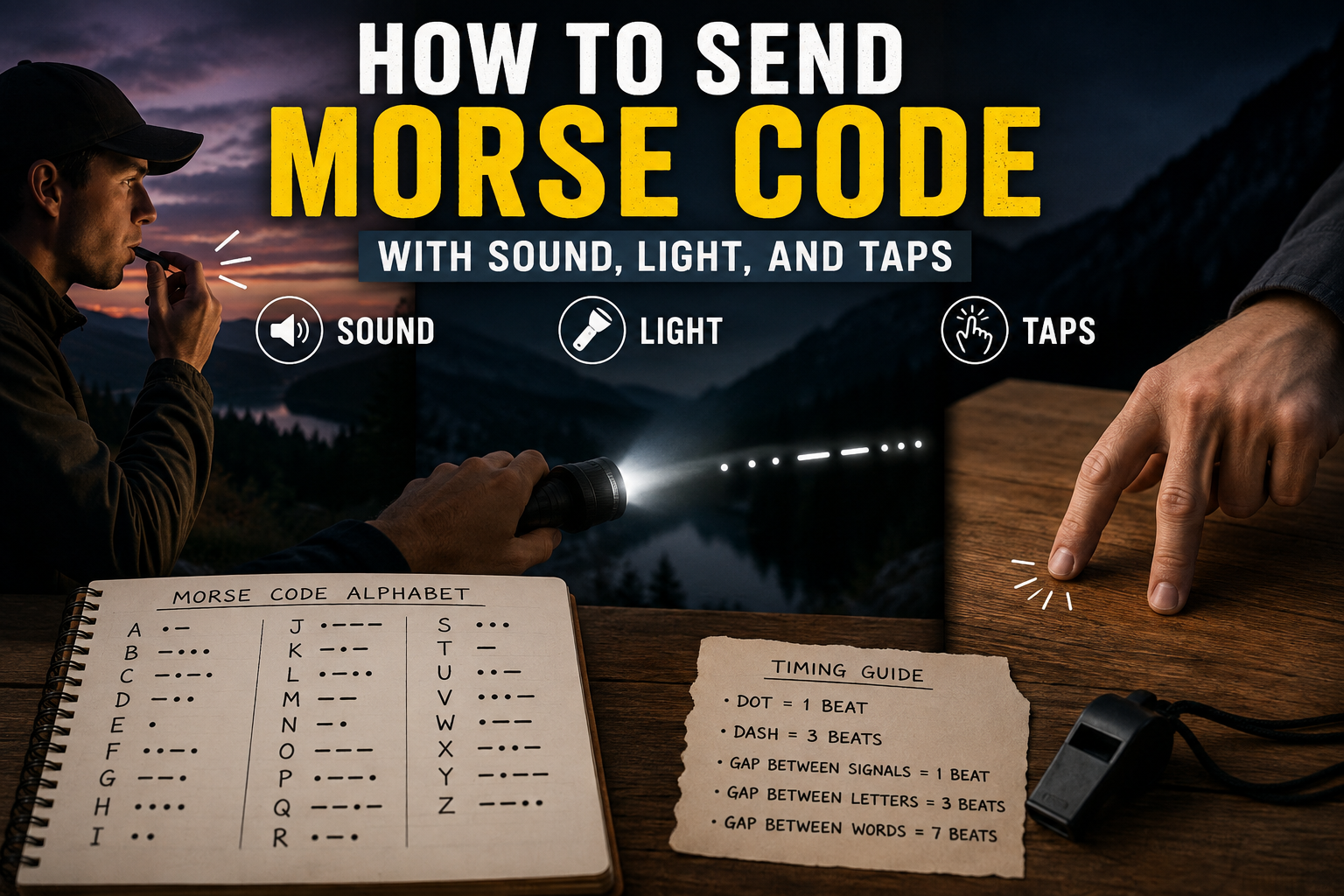
Before you send anything, it helps to know the letters. You do not have to memorize all of them at once. Keep a Morse code alphabet chart nearby and start with a few common letters like E (one dot), T (one dash), and S (three dots). Your own name is a good first message to practice.
Here are the three easiest ways to send it.
Sending Morse code with sound
Sound is the classic method, and you have more options than you think. A whistle works well because you can control how long each note lasts. A short toot is a dot. A longer note is a dash. If you do not have a whistle, you can tap a spoon against a cup, click your tongue, or knock on a hard surface.
The key with sound is rhythm. Keep your dots quick and your dashes clearly longer, and leave a small gap between each letter so the person listening can tell where one letter ends and the next begins. Between whole words, pause a little longer. If your dots and dashes run together, the message turns into noise, so slow down and keep an even beat.
Sending Morse code with light
Light is perfect for night or for long distances. A flashlight is all you need. A quick flash is a dot. A longer flash, held for a beat, is a dash. Turn the light off between signals so each flash stands on its own.
During the day you can do the same thing with anything reflective, like a mirror or a phone screen catching the sun. Aim the flash toward the person you are signaling and use the same short and long pattern. This is how sailors and rescue teams have signaled across water for well over a century, and it still works.
If you only learn one message with light, make it SOS: three short flashes, three long flashes, three short flashes. It is the international call for help and it is easy to remember.
Sending Morse code by tapping
Tapping is the quietest option and the most personal. You can tap a message on a table, on a pipe, or even on someone’s hand or shoulder. A light, quick tap is a dot. A firmer or slightly longer tap is a dash.
Touch works when sound and light would give you away, or when it is too loud to hear anything. Trapped miners and prisoners have used tapping through walls and pipes because the sound carries where a voice cannot. For everyday practice, try tapping your name on a desk and see if a friend can pick out the letters.
Getting your timing right
Timing is what separates a clear message from a jumble. Think of it in beats. A dot is one beat. A dash is three beats. The gap between signals inside a letter is one beat. The gap between letters is three beats, and the gap between words is about seven. You do not need to count perfectly. Just keep your dashes clearly longer than your dots and keep your spacing steady.
A simple way to check yourself is to send a short word and then confirm it. Type the same word into a Morse code translator and listen to how the dots and dashes should sound. Copying that rhythm back is one of the fastest ways to improve, because your ear learns the pattern quicker than your eyes do.
Start small and practice often
You will not learn this in one sitting, and you do not need to. Pick two or three letters, send them by sound, then by light, then by tap, until they feel natural. Add a few more letters the next day. Within a week you can spell short words without looking at the chart.
Morse code rewards patience more than talent. A whistle, a flashlight, or a few taps on a table is enough to send a real message, and once it clicks, you will always have a way to communicate when the usual ones fail.