Licensed Electrician in Encino: Ensuring Safe and Reliable Electrical Services
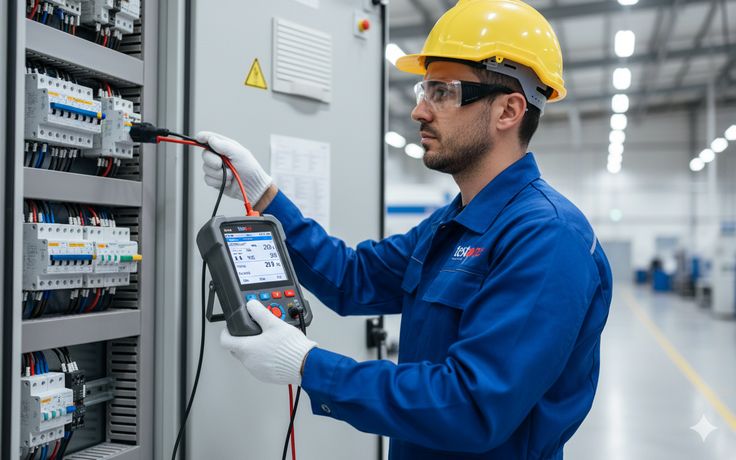
Electrical work sits at the intersection of safety, engineering, and local requirements. It is not simply about making a light switch work. A properly designed electrical system needs adequate capacity, compatible equipment, appropriate protection, sound grounding and bonding, and installation that complies with the rules governing the property.
That is especially relevant in Encino, a San Fernando Valley neighborhood with a diverse mix of established residences, mid-century homes, newer construction, hillside properties, and historically significant resources. Los Angeles City Planning’s SurveyLA work identifies numerous residential resources and historic districts within the Encino-Tarzana Community Plan Area.
At the same time, today’s homes are placing substantially different demands on their electrical systems than they did decades ago. EV chargers, air-conditioning equipment, electric cooking, home offices, pools, smart-home systems, solar, and battery storage can all change how much power a property needs.
For homeowners searching for an electrician in Encino, the goal should not be simply finding someone who can install a wire. It should be finding a qualified professional who understands the existing system, the proposed work, the current California code, and the permitting process.
This guide explains what a licensed electrician actually brings to the table, which services matter most in Encino, how local utility and permitting requirements affect projects, and how homeowners can evaluate a contractor without relying on guesswork.
Why licensing and code compliance matter
Electrical problems can be deceptively quiet.
A loose connection, damaged conductor, overloaded circuit, incompatible breaker, or improperly grounded installation may appear to work normally while creating heat, equipment damage, or shock hazards.
The U.S. Fire Administration recommends basic electrical-safety practices such as avoiding overloaded outlets, replacing damaged electrical cords, and addressing electrical problems rather than continuing to use questionable equipment.
California’s electrical requirements are also more specific than generic advice found online. The statewide 2025 California Electrical Code, part of Title 24, Part 3, became effective January 1, 2026. The California Building Standards Commission identifies the 2025 edition as the current statewide code cycle.
For Encino, that statewide code works alongside the City of Los Angeles’ adopted requirements and amendments administered through the Los Angeles Department of Building and Safety (LADBS).
That means a tutorial based on an older National Electrical Code edition—or rules from another state—may not describe what applies to a project in Los Angeles today.
A licensed professional works from the applicable California and local requirements rather than relying on memory or a decade-old wiring diagram.
Local realities: older homes, Valley heat, and electrical demand
Encino’s housing stock makes electrical planning particularly interesting.
The community includes residences from several construction eras, and SurveyLA documents Ranch, Traditional, Mid-Century Modern, and other residential resources in the area.
That means two homes next door to each other can have completely different electrical histories.
One might have a relatively recent panel and updated branch circuits. Another may have an older panel combined with decades of additions, remodeled rooms, garage circuits, outdoor equipment, or previously altered wiring.
Then there is the Valley climate. During periods of extreme heat, air-conditioning can become one of the home’s largest electrical loads. Add pool equipment, refrigerators, cooking appliances, EV charging, and home-office electronics, and an electrical system can be asked to do much more than it was originally designed to support.
The answer is not automatically “upgrade to a bigger panel.” The first step is understanding the actual load and the existing service. That is where a professional load assessment becomes valuable.
What a licensed electrician actually brings to the table
Safe service upgrades and load calculations
A panel upgrade should start with engineering, not with a panel size pulled from a sales brochure.
A qualified electrician evaluates existing demand and proposed loads, including equipment such as HVAC systems, EV chargers, electric ranges, pool equipment, heat pumps, workshops, and accessory dwelling units.
The goal is to determine whether the existing service can support the planned load and whether a new panel, service upgrade, load-management strategy, or another solution makes sense.
This matters particularly for larger projects because LADWP has its own process for construction and remodeling work that changes electrical loads, equipment, or meters.
A professional installation should also leave you with properly identified breakers, appropriate equipment, and a clear understanding of what each part of the panel serves.
EV charger circuits that are designed for the house
EV charging has become one of the most common reasons homeowners revisit their electrical capacity.
LADWP explains that residential Level 2 chargers operate at 240 volts and require a dedicated circuit. The utility also recommends a preliminary assessment because the charging load can affect both the home’s electrical system and utility-side service capacity.
LADWP’s process involves both the electrical contractor and the utility. The contractor assesses wiring on the customer side of the meter, while an LADWP Electric Service Representative can evaluate service capacity up to the meter and determine whether utility-side work is required.
That is why an EV charger should not be treated as simply “another outlet.”
A professional should verify the charger requirements, breaker and conductor sizing, available capacity, applicable protection requirements, and permitting before installation.
Generator and backup-power installations done correctly
Backup power can be useful during outages, but connecting a generator to a home’s electrical system is not a project for improvisation.
LADWP specifically states that customer-owned emergency or standby generators connected to the service panel must be reviewed and approved by LADWP Engineering. Its process calls for items such as a single-line diagram, transfer-switch information, and equipment specifications.
The central safety issue is preventing unintended backfeed into utility lines.
A professional can determine whether a home is better suited to a whole-house system, a critical-load configuration, or another permitted approach. The system should also be sized around the loads the homeowner actually intends to operate.
Lighting, ceiling fans, and exterior electrical work
Lighting improvements are among the most common electrical projects in established homes.
But professional installation still matters. Ceiling fans require appropriate support, lighting controls need compatible equipment, and exterior installations require equipment rated for their environment.
Outdoor receptacles and equipment also have additional protection requirements under the electrical code.
A proper installation should consider weather exposure, wiring methods, boxes and fittings, grounding, GFCI requirements, and protection against physical damage.
The objective is not merely to make the fixture turn on. It is to make sure the entire installation is appropriate for its location and intended use.
Troubleshooting that identifies the actual fault
Flickering lights and nuisance breaker trips are symptoms, not diagnoses.
Repeatedly resetting a breaker may restore power without addressing why the breaker tripped in the first place.
Professional troubleshooting can involve checking connections, circuit loading, voltage conditions, protective devices, grounding and bonding, and the interaction between older wiring and newer equipment.
That is especially useful in Encino homes where a series of renovations over several decades may have created a patchwork electrical system.
A good electrician does not simply keep replacing components until the symptom disappears. The objective is to identify the cause and correct it safely.
Common projects in Encino—and what to ask your contractor
Panel upgrades: Ask whether the estimate includes a load calculation and whether the existing service can support planned additions. Ask how the final panel will be labeled.
EV charging: Confirm charger requirements, circuit sizing, available panel capacity, permit responsibilities, and whether LADWP needs to evaluate the utility-side service. LADWP’s published installation process specifically recommends early coordination.
Outdoor circuits: Ask about GFCI protection, weather-rated equipment, appropriate covers, and exterior wiring methods.
Generators: Ask what transfer equipment will be used, what loads will be supported, and who will coordinate the required LADWP review.
Lighting and fans: Confirm fixture ratings, proper support, switch and dimmer compatibility, and applicable AFCI/GFCI requirements.
Older wiring: Ask the electrician to identify wiring types, previous alterations, damaged insulation, questionable splices, or circuits that appear to have been modified without a coordinated upgrade.
Encino properties with historic or architectural significance
Electrical modernization sometimes has an additional design consideration in Encino.
Los Angeles City Planning’s SurveyLA program has documented historic resources within the Encino-Tarzana area, and the city maintains preservation programs for designated historic resources and historic districts.
That does not mean every older Encino house is a designated historic property.
It does mean homeowners should determine whether their specific property is subject to preservation requirements before making exterior changes or undertaking work that could affect character-defining features.
For designated properties, an electrician who understands how to route new wiring discreetly can help balance electrical modernization with the building’s architectural character.
That can be particularly important when installing exterior lighting, new equipment, EV charging infrastructure, or other visible electrical components.
When to call right away vs. schedule soon
Call promptly if you notice:
- A burning smell near an outlet, switch, or panel
- A receptacle or switch plate becoming unusually hot
- Repeated breaker trips during ordinary use
- Visible sparks or arcing
- Buzzing or crackling from electrical equipment
- Tingling or shock sensations when touching an appliance or electrical fixture
- Melted insulation or visibly scorched components
The U.S. Fire Administration and CPSC both identify damaged, overheated, overloaded, or otherwise abnormal electrical conditions as situations that should be addressed rather than ignored.
Schedule an assessment for:
- EV charger installation
- Panel or service upgrades
- Generator planning
- Kitchen, bathroom, garage, or ADU remodeling
- Rewiring or troubleshooting older properties
- New outdoor electrical circuits
- Extensive landscape lighting
- Solar or battery-storage projects
Planning these projects before purchasing equipment can prevent compatibility problems and expensive changes later.
A quick word on LADWP coordination
One of the useful distinctions for Encino homeowners is that the electrical contractor and LADWP do different parts of the job.
For an EV charger, for example, LADWP explains that the contractor evaluates wiring past the meter while an Electric Service Representative evaluates the utility-side service capacity.
The same principle applies to larger electrical projects.
LADWP maintains separate service-request pathways for residential construction, EV chargers, solar and battery storage, and backup generators. Its published construction resources specifically address projects that install, upgrade, relocate, or modify electrical loads, equipment, or meters.
That makes utility coordination something worth discussing early rather than after the electrical work is already underway.
How to vet a licensed electrician—no guesswork required
1. Check the C-10 contractor license
California’s Contractors State License Board defines the C-10 Electrical Contractor classification as covering the placement, installation, erection, or connection of electrical wires, fixtures, appliances, apparatus, raceways, conduits, and related electrical equipment.
Use CSLB’s license-checking service to verify the contractor before signing a contract. CSLB provides license verification and consumer resources directly through its website.
2. Understand electrician certification
California separately regulates electrician certification for workers performing qualifying electrical work under C-10 contractors.
The Department of Industrial Relations explains that electricians working for C-10 contractors generally must hold the appropriate state certification, while state-approved apprentices and qualifying trainees operate under specific rules.
A homeowner can reasonably ask who will actually perform the electrical work and whether the team meets California’s certification requirements.
3. Expect appropriate permits
For permitted projects, the contractor should be able to explain the LADBS process and identify which permits and inspections apply.
LADBS publishes electrical permit forms, plan-review information, and inspection resources for electrical work.
4. Ask about current-code design
Ask which code edition is being used for the project.
That one question can quickly reveal whether a contractor is working from current requirements or outdated habits.
5. Look for an itemized proposal
A solid proposal should explain the work rather than simply present a number.
Look for:
- Equipment and major materials
- Breaker or circuit information
- Permit responsibilities
- Utility coordination where applicable
- Scope of troubleshooting or repair
- Warranty terms
- Any exclusions or assumptions
Clear proposals make it easier to compare contractors on actual scope rather than price alone.
Smart upgrades that improve reliability
Some electrical improvements are relatively small but can make a noticeable difference in an established home.
Whole-home surge protection can be worth discussing where a property contains substantial electronic equipment or interconnected systems.
Panel labeling is inexpensive compared with a major electrical project but becomes extremely useful when troubleshooting emergencies or shutting down a specific circuit.
Appropriately protected exterior receptacles are important wherever outdoor equipment, landscaping tools, pool systems, or entertainment equipment are used.
Backup-power planning can help homeowners decide which loads actually matter before an outage occurs instead of trying to improvise once the power is off.
Electrical capacity planning is also increasingly useful. A panel upgrade performed today should account for realistic future projects rather than solving only the immediate problem.
What a professional electrical visit should include
A professional appointment should leave you with more information than you had when the electrician arrived.
Site assessment: Review of the panel, visible wiring, outlets, major electrical equipment, and existing conditions.
Load evaluation: Analysis of current and proposed electrical demand when equipment is being added or service capacity is changing.
Safety testing: Evaluation of relevant protective devices, connections, grounding, and other components within the scope of work.
Code and permit review: Confirmation of the requirements applicable to the planned project.
Utility coordination: LADWP coordination where a project affects utility service, EV charging, standby generators, solar, storage, or other utility-regulated equipment.
Clear documentation: Proper labeling and records that make future electrical service easier and more predictable.
The steady approach pays off
Electrical projects in Encino become much easier to manage when homeowners follow a consistent process: understand the existing system, identify the actual electrical demand, verify the contractor’s C-10 license, use the current 2025 California Electrical Code, obtain the appropriate LADBS approvals, and coordinate with LADWP when the project affects utility service.
The best electrical work is rarely dramatic.
It is the panel that operates without unnecessary trips. The EV charger that works reliably every night. The outdoor receptacle that is appropriately protected. The lighting system that works without flicker. The generator that transfers power without creating a backfeed hazard.
For Encino homeowners, that reliability starts with choosing the right professional for the job.
Whether the project is a simple electrical repair or a major upgrade, working with a qualified electrician in Encino gives you a better chance of getting the work done safely, efficiently, and with fewer surprises down the road.
When comparing proposals, prioritize licensing, current-code knowledge, clear scope, proper permitting, and experience with the specific type of electrical work your property needs.
A reliable electrical system should fade into the background of everyday life.
That is what safe, professional electrical service is supposed to accomplish.