Mini Excavator or Mini Skid Steer? Choose by the Work Required
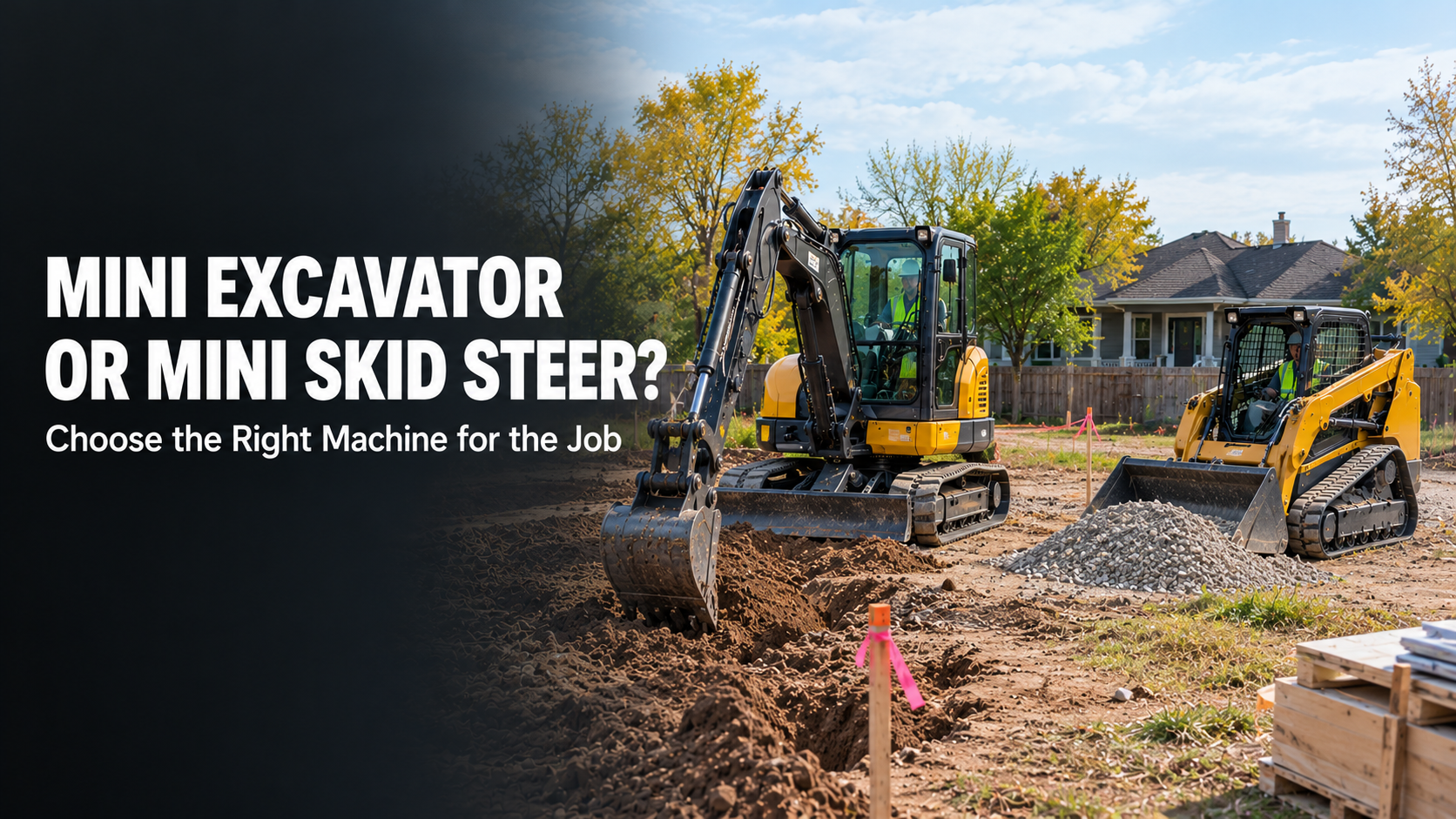
Choosing construction equipment becomes easier when you start with the job you need to complete. A small construction site may require digging trenches, moving soil, clearing debris, or transporting materials across a limited work area. While a mini excavator and a mini skid steer can both help with compact projects, they are designed for different types of work.
The right choice depends on your main tasks, site conditions, available space, and budget. Understanding how these machines differ can help contractors avoid unnecessary costs and select equipment that fits their daily workload.
Mini Excavator vs. Mini Skid Steer: Quick Comparison
| Feature | Mini Excavator | Mini Skid Steer |
| Main purpose | Digging and excavation | Material handling and site work |
| Typical tasks | Trenching, foundation digging, and removing soil | Moving gravel, loading soil, and clearing debris |
| Working equipment | Boom, arm, and bucket | Front-mounted bucket or compatible attachment |
| Working direction | Digs into the ground and reaches below surface level | Works mainly at ground level and lifts or moves materials |
| Best suited for | Projects that require controlled digging | Projects that involve moving materials and repeated handling tasks |
| Attachment options | Buckets and other compatible excavation tools | Buckets and other compatible attachments, depending on the model |
| Main buying consideration | Digging depth, reach, and machine dimensions | Operating capacity, width, and attachment compatibility |
Although both machines are compact, they do not perform exactly the same role. The best option is the one that matches the most important tasks on your site.
When a Mini Excavator Is the Better Choice
A mini excavator is generally the better option when digging is the main part of the job. Its boom, arm, and bucket allow the operator to remove soil, dig trenches, and work below ground level.
For example, contractors installing drainage pipes may need narrow trenches along a building or across a yard. Mini excavators can also be useful for preparing small foundations, digging post holes, and carrying out landscaping work that requires soil removal.
If excavation is your priority, explore the available mini excavator options and compare their dimensions and operating specifications. The required digging depth, working reach, and ground conditions should guide your decision.
Access is another important factor. A compact machine may fit into a smaller area, but you should still check the width of gates, the available turning space, and the room needed to operate safely. Never assume that every model will fit through a narrow entrance.
When a Mini Skid Steer Makes More Sense
A mini skid steer is often a better fit when the work involves moving materials around a site. Depending on the machine and its compatible attachments, it can help transport soil, move gravel, clear debris, and support landscaping or property preparation.
Consider a project where workers have already finished digging a trench. They may then need to move piles of soil, carry materials, or spread gravel across the work area. A mini skid steer can help with these ground-level tasks and reduce the amount of manual handling required.
When selecting a mini skid steer, check its operating capacity, overall width, and attachment requirements. Different models may support different tools, so confirm compatibility before purchasing an attachment.
A mini skid steer is not automatically the best choice for every small site. If the main requirement is digging deep trenches, an excavator may be more suitable.
Consider the Conditions on Your Site
The work itself is only one part of the decision. Ground conditions, access restrictions, and nearby structures can also affect equipment selection.
Before choosing a machine, consider:
- Available space: Measure gates, paths, and the area where the machine will operate.
- Ground conditions: Soft soil, wet surfaces, slopes, and uneven ground can affect movement and stability.
- Material handling: Estimate how much soil, gravel, or debris needs to be moved.
- Excavation requirements: Identify the required trench depth, digging reach, and working area.
- Site safety: Check for underground utilities before excavation begins. A site map can help with planning but does not replace proper utility locating.
These checks can help you identify practical limitations before equipment arrives.
Compare the Total Cost, Not Just the Price
The purchase price matters, but it should not be the only factor in your decision. Consider transport, maintenance, storage, operator training, and any attachments needed for the work.
It is also worth thinking about how frequently you will use the machine. If most of your projects involve digging, a mini excavator may be the more useful long-term investment. If you regularly move materials and perform cleanup work, a mini skid steer may offer more value for your workload.
For short-term projects, renting may be more practical than buying. Compare the cost of renting, transporting, and operating the equipment with the expected benefits before making a commitment.
Boleo: Exploring Compact Construction Equipment
With a product range that includes mini excavators and mini skid steer loaders, Boleo manufactures compact machinery for different construction and landscaping applications. Buyers comparing the two machine types can assess the equipment’s specifications against their primary tasks, site conditions, and attachment needs to determine which option deserves further consideration.
When reviewing available listings, focus on the specifications that match your project. Check machine dimensions, operating requirements, and any details about compatible attachments. If important information is missing, confirm it with the seller before making a purchase.
Online research can help narrow your choices, but the final decision should reflect the actual work, site conditions, and safety requirements.
Final Thoughts
A mini excavator and a mini skid steer can both be useful on compact construction sites, but each has its strengths. A mini excavator is generally better for digging and trenching, while a mini skid steer is well suited to moving materials and completing compatible attachment-based tasks.
Start by listing the jobs you need to handle most often. Then compare machine dimensions, site access, operating requirements, and total costs. Choosing equipment based on the work required will help you make a more practical decision and get better value from your investment.