Personal Care vs. Assisted Living: What’s the Difference?
Families start researching senior care and almost immediately hit the same wall — two terms, endlessly repeated, that sound interchangeable but aren’t. Personal care. Assisted living. Not the same thing. Different populations, different regulations, entirely different price structures. Sorting out the distinction early can spare a family from costly missteps and help an aging parent actually land somewhere that suits them.
Understanding Personal Care Services
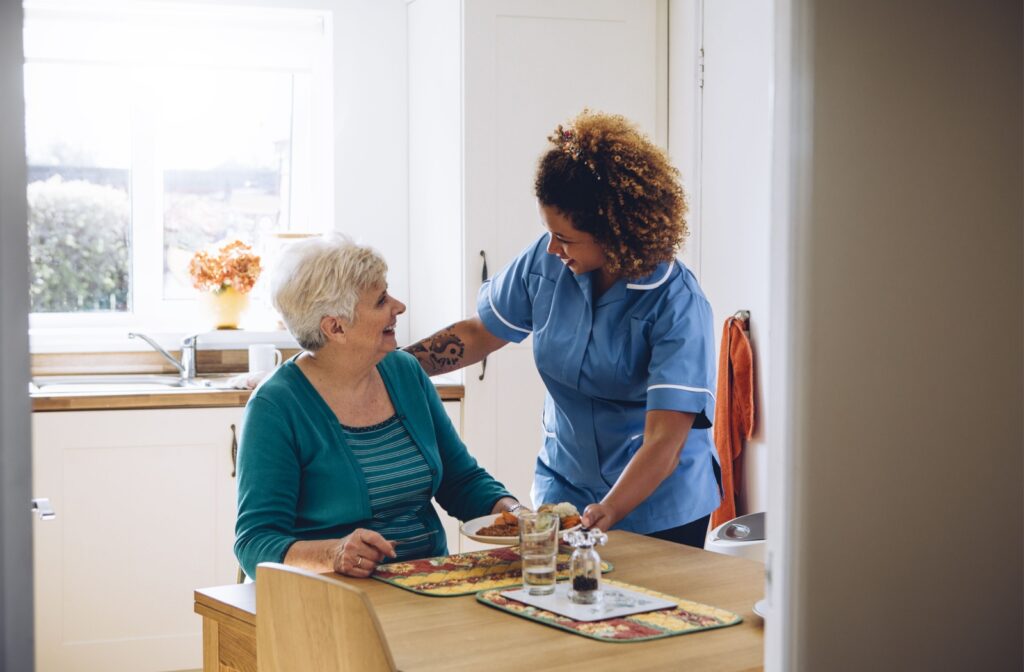
Personal care is non-medical help. Full stop. Bathing, dressing, toileting, grooming, meal prep — that’s the lane. Workers go by different titles depending on who’s doing the hiring: home health aide, personal assistant, caregiver. Whatever the label, the scope stays deliberately narrow. No skilled nursing. No procedures. Just hands-on support for everyday tasks that have gotten hard to manage alone. And since that support arrives inside someone’s existing home, people who want to stay put tend to see personal care as their most realistic path forward.
Scheduling bends in ways a facility never could. A caregiver might show up for two hours each morning — or run extended shifts with near-continuous coverage. The person stays in their own space either way. Their routines intact. Their own bed, their own kitchen. Arrangements happen through agencies, private hire, or government programs, depending on funding and how much support is actually required.
What Assisted Living Encompasses
Older adults who need daily help — but haven’t crossed into skilled nursing territory — are the core residents of assisted living communities. It’s a bundle. Housing, meals, housekeeping, and personal care assistance, all folded under one roof. Residents have private or semi-private apartments inside buildings that also hold communal spaces for activities and socializing. Everything coordinated in one place. That integration is the entire point; it’s what separates assisted living from cobbling together a loose patchwork of in-home services that someone has to manage personally.
Staff are on-site all day. Often overnight. That constant presence means help arrives fast — something families lying awake worrying about a loved one falling alone take very seriously. Most communities layer in activities coordinators, dining services, transportation, and connections to outside healthcare providers. For older adults who’ve grown isolated at home, that built-in social structure can genuinely shift day-to-day quality of life in ways in-home care simply can’t replicate.
Key Differences in Cost and Funding
The numbers diverge sharply. Personal care is generally cheaper — limited in scope, no housing or meals bundled in. Costs shift based on hours needed and local wages. Medicaid, Medicare, and long-term care insurance may cover some portion, though the rules vary considerably by state.
Assisted living runs on a monthly rate that wraps housing, utilities, meals, and baseline services into one figure. Extra care needs often trigger added fees on top. The total climbs higher than personal care — but it’s genuinely all-inclusive. Private insurance rarely covers assisted living, so families either pay out of pocket or turn to Medicaid if they qualify under income and asset thresholds. Getting a real picture of the finances early isn’t optional. It’s the foundation everything else rests on.
Medical Care and Nursing Support
Here’s where the gap becomes most concrete. Personal care workers don’t do nursing. Medication management beyond simple reminders? Off the table. Wound care, injections, medical monitoring — those require a separate arrangement, usually a visiting nurse program. That’s not a flaw in the model; it’s the design. Personal care is built for people whose needs are primarily functional, not clinical.
Assisted living fills the space between personal care and a skilled nursing facility. Many communities have nurses on staff or on call, handling medication management and basic health coordination. But there’s a ceiling. Residents who develop complex medical needs — intensive monitoring, advanced wound care, significant cognitive decline — will likely need to transition to a higher level of care at some point. Knowing that threshold exists matters. It’s part of building a realistic plan from the start, not a surprise to absorb mid-crisis.
Evaluating Individual Needs and Preferences
So how does a family actually decide? Start with an honest look at current needs — and where those needs are probably heading. Someone largely independent, living in a safe home, needing help with one or two specific tasks? Personal care likely makes sense. Someone juggling multiple daily challenges, living alone, without nearby family, or craving real connection? Assisted living deserves a serious look. Medical complexity tips the scales further; the more clinical the need, the more a structured environment starts to matter.
But preference carries real weight too. Some people are fiercely attached to their homes and will gladly coordinate multiple providers just to stay put. Others find assisted living’s bundled, structured nature genuinely comforting — no logistics to juggle, activities already planned, neighbors right down the hall. Families exploring options in western Pennsylvania will find that personal care in Beaver Falls, PA offers a structured, supportive setting where residents receive hands-on daily assistance while staff actively work to preserve as much independence as possible. Tour communities. Talk directly with agencies. Ask the hard questions. Those steps can’t be skipped.
Conclusion
Personal care and assisted living aren’t competing products. They serve different people at different stages. Personal care brings flexibility and in-home support to those whose challenges are mostly functional. Assisted living delivers a coordinated residential experience — meals, activities, services, and social life all in one place. Neither is inherently better. Health status, finances, family support, personal preference — all of it shapes which option actually fits. Take the time to understand both. The right match supports independence, preserves dignity, and makes daily life genuinely livable.