Resolving the Invisible Pain Points of 3D Printing via Hi3D
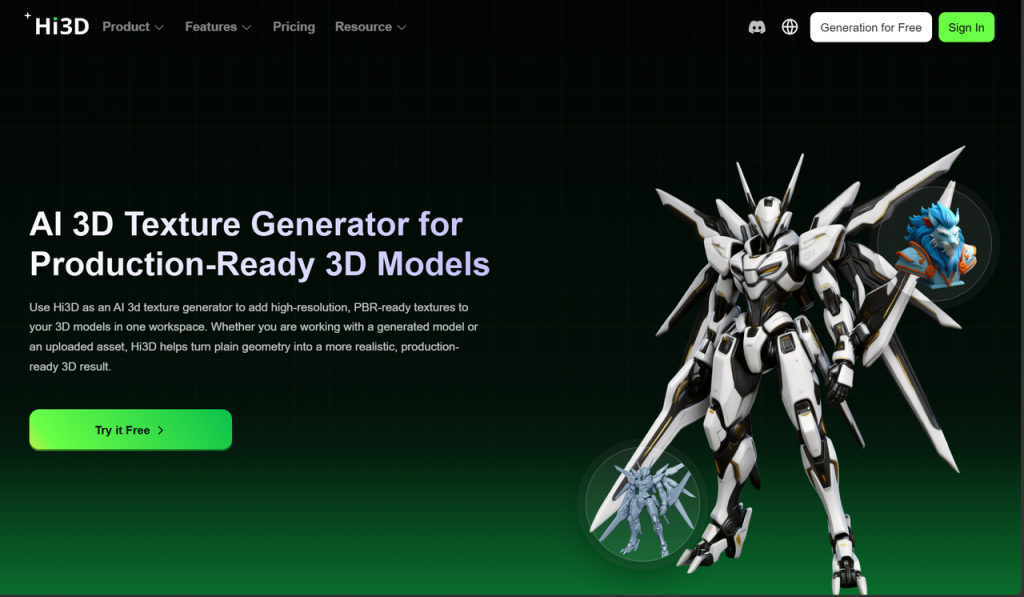
Every tier of the desktop manufacturing and digital creation community faces unique, often invisible obstacles that severely hinder overall productivity. Novices and hobbyists frequently struggle with the steep learning curve of advanced cutting-edge slicing software, spending days troubleshooting failed prints due to bad orientation or incorrect layer settings. Meanwhile, professional service bureaus and industrial model shops lose countless profitable hours manually painting complex meshes or chopping large figures in expensive external digital sculpting modeling suites. The modern creative landscape demands a unified ecosystem that eliminates these friction points. Hi3D provides an overarching solution to these systemic workflow inefficiencies by optimizing the full manufacturing pipeline from automated mesh repair, mechanical splitting, and dynamic connector generation to intelligent multi-color palette zoning, smart layout nesting, and direct, optimized slicer data export.
The foundational struggle within modern generative pipelines rests on the lack of practical print-readiness. Standard mesh generation tools build assets primarily for digital screens, video games, or virtual environments, completely ignoring the strict mechanical limitations of physical hardware and material extruders. Consequently, makers consistently face fragmented color distributions that cause hundreds of unnecessary filament swaps, non-watertight geometries that crash slicing programs, and massive part sizes that vastly exceed the physical build volume of standard desktop machinery. To truly bridge the gap between digital imagination and a physical masterpiece, a paradigm shift is required in how AI assets are generated and conditioned for manufacturing.
1. Analyzing the Core Vulnerabilities of the Printing Journey
To understand why traditional generative pipelines fail when introduced to a hardware environment, one must look at how digital geometry is traditionally processed. When software treats an object merely as a visual shell, it fails to calculate real-world physics, support requirements, or slicing behavior, leading to consistent errors at the hardware level.
1.1 The Nightmare of Surface Polygon and Geometry Errors
Traditional 3D generation software focusing solely on screen rendering often produces open boundaries, flipped normals, and self-intersecting meshes. When these digital models are imported into standard slicing software, the engines fail to calculate the interior volume, leading to missing layers, hollow voids, or total slicing failure. Creators are forced to spend hours inside specialized repair programs, manually patching holes and reconstructing broken topological geometry just to make the file barely readable for a desktop machine.
1.2 Chaotic Vertex Coloring and the Purging Dilemma
Multi-material printing hardware relies on continuous, predictable toolpaths to switch between different filaments or resins efficiently. However, standard generative AI tools distribute color data erratically across individual vertices, creating a noisy patchwork of pixelated micro-colors. When a hardware system tries to execute this chaotic color distribution, it triggers constant filament cutting and reloading sequences. This endless purging cycle not only multiplies total print times by three or four times but also fills waste bins with massive amounts of purged plastic filament, making multi-color production financially unsustainable for independent studios.
2. The Hi3D Solution: Automated Material-Aware Optimization
Hi3D targets these exact pain points by deploying an automated, material-aware processing suite that operates directly inside the asset generation phase. Instead of forcing makers to endure hours of tedious digital repainting or manual mesh reconstruction, Hi3D handles complex topology repairs, splits parts logically, and configures smart connections with absolute industrial precision.
2.1 Intelligent Color Clustering and Structural Stability
The platform incorporates an advanced color clustering solution that automatically groups messy color layouts into smooth, continuous color zones supporting anywhere from one to sixteen distinct colors. By optimizing color fragmentation and establishing clean boundaries, the software ensures that the physical slicing paths are long, stable, and highly continuous. This material-aware clustering allows users to effortlessly convert a basic image or design into a production-ready file optimized for leading hardware platforms. The pipeline prioritizes region continuity, ensuring that multi-material prints achieve lifelike visual fidelity while preventing the structural delamination often caused by frequent, messy material purges.
2.2 Streamlined Multi-Platform Slicer Optimization and Native Export
Efficiency does not stop at geometry creation; it must extend directly to the hardware interaction layer. Hi3D integrates flawlessly with mainstream ecosystems such as Bambu Lab, Prusa, or Creality systems by generating clean data packages that compile native printing parameters directly. Creators no longer need to worry about manual configuration errors during file transfers. By predicting material behavior and mechanical slicing paths beforehand, the ecosystem streamlines the transition from the cloud generation interface directly into the local manufacturing machine, lowering the barrier to entry for beginners while saving immense setup time for commercial bureaus.
3. Validation Through Real-World Case Studies
The theoretical benefits of automated asset conditioning are best demonstrated through practical application scenarios. Whether fabricating a complex multi-part character figurine or a dense tabletop miniature, the difference between a traditional fragmented workflow and the Hi3D pipeline represents a massive shift in creative turnaround.
3.1 Instant Automated Splitting and Mechanical Connectors
Consider the production of an intricate character model featuring dynamic poses, flowing garments, and extended limbs. Traditionally, a maker would need to manually separate the limbs from the torso inside software like Blender, construct internal alignment pegs, and carefully cut sockets while accounting for tight plastic friction tolerances. With Hi3D, the creator simply imports the asset, applies a dedicated character split template, and watches the system automatically segment the massive model into watertight parts complete with perfectly tolerated ball joints. The system calculates printing shrinkage and material tolerances automatically, ensuring that head, torso, and limbs fit together tightly right off the build plate without manual sanding.
3.2 Rapid Mockup Prototyping in Seconds for Dynamic Studios
In a fast-paced studio setting, time-to-market and rapid prototyping capabilities dictate commercial success. The Hi3D pipeline transforms what used to be a multi-day engineering chore into a streamlined, 30-second automated execution. Designers can leverage an intuitive reference workflow to rapidly move from a digital concept workspace to a physical product mockup with absolute fidelity. By automating the most tedious parts of the preparation cycle, design agencies and prop makers can iterate on physical models multiple times a day, dramatically accelerating their validation and client review processes.
4. Advanced Pipelines for Diverse Input Options
To accommodate varying creative entry points and accommodate diverse artistic styles, the platform provides highly adaptive ways to generate physical shapes. Creators are no longer confined to traditional modeling rules or complex engineering software to express their spatial concepts.
4.1 Versatile Image-to-3D Reconstruction Pathways
The platform provides a comprehensive suite of input transformations to match any source material available. When starting from a single 2D concept sketch or an illustration, the image to 3D model tool rapidly derives accurate three-dimensional spatial data. For highly customized projects that demand maximum accuracy from every angle, the image to 3D model AI engine coordinates multiple viewpoints to infer hidden geometric details automatically. Creators working with real-world physical references can utilize the photo to 3D model channel to reconstruct real objects digit-by-digit, while agile developers can leverage quick images to 3D tools for instant spatial layouts. For standard flat illustrations, the 2D image to 3D model and 2D to 3D image converter tools turn simple sketches into robust geometric files, while a smooth picture to 3D model journey enables creators to seamlessly build large, fully articulated figures on everyday desktop equipment.

4.2 Automated High-Precision Texture Generative Control
Once the structural geometry is firmly established, the platform’s native AI 3D model texturing engine steps in to apply clean material skins. This advanced styling system creates beautiful visual texturing without scattering random pixel noise across the printable surfaces. By understanding the underlying contours of the mesh, the texture generator applies smooth gradients and realistic material properties that align perfectly with the automated multi-filament hardware systems, ensuring the outer shell looks professional and polished.

5. Don’t Miss the Anniversary Historic Event
There has never been a better moment to overhaul your manufacturing pipeline and upgrade your workspace capabilities than during our landmark 1st Anniversary Promo. We are celebrating a full year of breaking down the barriers between virtual design and physical manufacturing by offering our biggest global sale ever across our entire features ecosystem. Take full advantage of up to 80% off premium subscription tiers and architectural packages to unlock priority cloud rendering speeds and unlimited high-definition downloads. Additionally, you can utilize our exclusive Buy One, Get One Free incentives on all credit packs to double your generation capacity and store ample digital energy for all your upcoming large-scale design projects. Join our exclusive early beta group today to experience the absolute cutting edge of print-ready automation, explore our robust 3D model maker tools, and test upcoming features ahead of the general public.
Whether you need a versatile 3D model maker online portal to start your design journey, an advanced 3D model maker AI system to optimize commercial production lines, or an accessible 3D model maker free tool to minimize studio overhead, Hi3D serves as the ultimate professional workspace. Explore what a dedicated AI 3D model maker environment can do for your business, take advantage of our free 3D model maker features, and accelerate your 3D printer model maker workspace production. Our platform is engineered to ensure your 3D model maker free workspace remains highly cost-aware and structurally sound. Sign up today and experience the future of automated manufacturing.