The Hailstorm That Damaged The Roof Under The Solar Panels
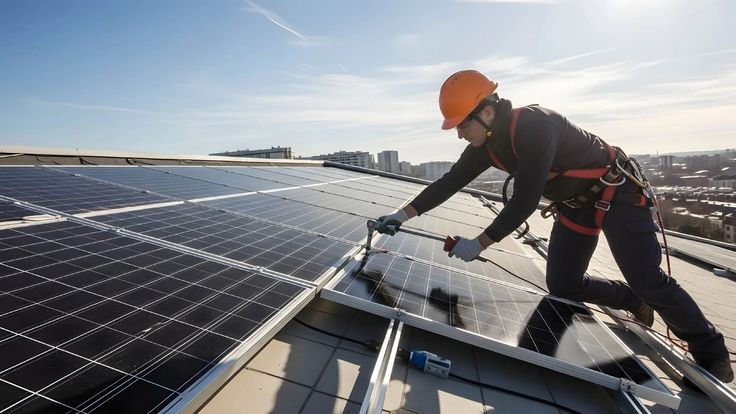
When hail moves through a house with rooftop solar, the roof and the array are one inspection, not two. The homeowner in this case, a two story in Minnetonka with fourteen panels on the south plane, had already searched hail damage minnetonka mn and come away with two answers that contradicted each other. From the driveway the shingles looked untouched. Production dropped about six percent the following week, the solar company pointed at the roof, and the roofer said panels were outside his scope. Nobody wrote any of it down.
The Roof Looked Fine From The Driveway
Hail damage on asphalt hides from the ground, which is most of the problem. Bruising does not always crack the surface; it breaks down the mat under the granules, and it reads as a soft spot underfoot rather than a hole visible from a lawn chair. What usually turns up on a storm inspection is scattered bruising across the open field and much heavier hits along the panel edges, where the array sheds and channels stones onto a narrow band of shingles. Dented gutters and downspouts are the easiest evidence in the yard, and they are the part a homeowner can safely photograph.
The accountability gap works like returning a rental car between two drivers. If neither one walks around the vehicle with a form in hand, the dent belongs to whoever is holding the keys when somebody finally notices it. Two trades on one roof plane with no shared documentation is the same setup, and by the time anyone gets around to filing, the storm is weeks back and the file has no photos in it.
One Coordinated Inspection Found Both Problems
One crew on the whole roof plane closed the standoff in an afternoon. Field, penetrations, mounts, gutters and the rooftop equipment were all documented in the same visit, on the same date, by people already up there for the shingles. The panel glass was intact. Two mounts had shifted and one flashing boot was split, which is what pulled the array off its numbers: a leak path and a tilt, not a broken panel.
What a coordinated storm inspection documents, zone by zone (illustrative example)
| Zone | Evidence It Needs | Who Usually Captures It |
| Roof field | Chalked hit counts in a test square, close photos of bruising | Roofing crew |
| Penetrations and mounts | Each flashing boot, sealant bead and standoff, photographed in place | Roofing crew, installer present |
| Gutters, soffit and fascia | Dent photos with a scale in frame, plus downspout condition | Roofing crew |
| Rooftop equipment | Panel glass, racking, wiring, and production data before and after | Solar installer |
Give the monitoring data a week before drawing conclusions. Honestly, two weeks is the better answer, because a single cloudy stretch can bury a five percent drop in the noise. The comparison worth making is the same fortnight against last year, not against the sunny week before the storm hit.
Order matters more than speed. Shingles come off, flashing and mounts get corrected, then panels go back onto a roof that will outlive them, and running that sequence backwards means paying twice for the same labor. Cost pressure on housing is pointed one direction anyway: the National Association of Home Builders reported in June 2026 that regulation adds roughly $131,734 to a new home, about 26.4% of the sale price, up 40% over five years. Repair work is not regulated the same way, but nobody is handing out discounts for redoing a job either.
Questions To Ask Before Anyone Climbs Up
Ask these before the ladder comes off the truck, not after. Any contractor who has worked around rooftop solar answers them without hedging, and the ones who go vague are telling you something useful. Write the answers down beside the storm date.
- Who photographs the panels, mounts and wiring, and does that happen on the same visit as the roof? A good answer names one crew and one date.
- Will you coordinate directly with my solar installer, or am I the messenger? You want a name and a phone number, not a promise.
- What happens to my array while the shingles are off, and who reinstalls it? A good answer covers detach, storage and reset, in writing.
- If a mount or a flashing boot is the actual leak source, is that on the roofing estimate? Look for a line item rather than a verbal assurance.
One rule here has no flexibility: nobody should walk a storm damaged roof, and nobody should touch cracked panel glass, bent racking or exposed wiring. A damaged array can stay energized in daylight even with the inverter switched off. If wiring is torn or a line is down on the property, call the installer and the utility before anyone goes near it, and call 911 for a downed line. Falls are the underrated half of this, and the CDC’s fall prevention guidance for older adults spends its attention on grab bars in the tub, the shower and next to the toilet, plus better lighting, because falls hospitalize more than 300,000 older adults a year. A hail bruised slope in wet spring weather is a rougher surface than any bathroom floor.
That array had been quietly limping since the storm, and the repair turned out to be ordinary once a single crew owned the whole plane. A search for hail damage Minnetonka MN will hand you plenty of contractors willing to bid shingles. The one worth hiring photographs the equipment on the roof before quoting a number, then repairs the plane in an order that nobody has to undo later.