The Impact of System-on-a-Chip Technology on Modern Security Solutions
Understanding the Role of System-on-a-Chip in Security
As technology reshapes every aspect of our lives, finding smarter, faster, and more secure ways to protect data and devices becomes essential. At the forefront of these advancements is the system on chip concept, which is rapidly gaining importance in both consumer devices and enterprise solutions. With security threats growing in both scale and sophistication, the emphasis has shifted toward solutions capable of delivering robust protection without compromising efficiency.
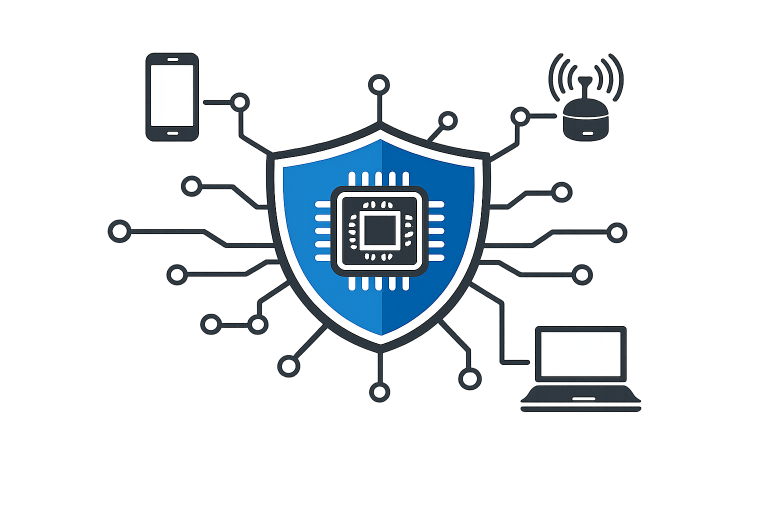
A System-on-a-Chip (SoC) integrates essential electronic elements such as the central processing unit (CPU), memory, and input/output interfaces onto a single, compact chip. This high level of integration streamlines device architecture, boosting overall performance, reducing energy consumption, and minimizing hardware real estate. As a result, SoCs are now central to smartphones, Internet of Things (IoT) devices, and even advanced security systems across sectors.
Security has been transformed by this innovation. The SoC’s architectural design minimizes the number of discrete parts a device needs, helping to simplify secure system design. For developers and manufacturers, this means being able to implement security protocols at both hardware and software levels right from a device’s conception. With threats such as side-channel attacks and firmware vulnerabilities on the rise, the SoC’s unified approach is crucial for developing resilient platforms.
A key advantage lies in the increased ability to integrate specialized cryptographic modules directly into the silicon, such as hardware security modules (HSMs) and secure enclaves. These embedded resources provide stringent protection against both local and remote attacks by storing sensitive keys and verifying software authenticity at the hardware level.
Advantages of SoC Integration for Security
- Reduced Attack Surface: Fewer separate hardware components result in fewer points for cyber attackers to exploit, helping to lock down devices against both digital and physical tampering.
- Dedicated Security Functions: With the ability to embed modules like secure boot and hardware root of trust, SoCs can validate software before it runs and safeguard cryptographic keys.
- Simplified Patch Management: Firmware and security updates can be uniformly delivered to a single chip, streamlining the process and reducing the risk of outdated, vulnerable parts.
- Improved Compliance: Built-in secure storage and encryption engines help industries meet increasingly stringent data privacy regulations.
Real-World Examples of SoC Security in Action
Leading technology companies have begun harnessing the potential of SoCs to build trust into the devices we use daily, from laptops to smart home hubs. Microsoft’s Pluton security processor, co-developed with AMD, Intel, and Qualcomm, integrates security directly into the CPU. This tightly woven approach defends against physical hardware attacks and simplified firmware updates, making the device much more resistant to an entire category of tampering.
In the world of open source, Google’s OpenTitan initiative is revolutionizing secure chip design. Its mandate is to establish transparency and trust, particularly in critical infrastructure like data centers and IoT networks. By making chip designs open and auditable, OpenTitan empowers organizations to scrutinize and verify the implementation of security features, fostering higher levels of confidence in complex systems. You can read about its importance and future direction in Wired’s coverage of OpenTitan.
Addressing the Challenges of SoC Security
While the advantages are compelling, adopting SoC-centric security models is not without obstacles. The increased complexity that comes with integrating multiple hardware and software elements introduces new design challenges. Developers need to carefully manage every layer to avoid inadvertently opening up new vulnerabilities through oversight or misconfiguration.
Another significant challenge is supply chain security. Embedded malware or hardware backdoors introduced during the manufacturing process can undermine all other security measures built into the SoC. Industry-standard practices, such as rigorous testing and third-party verification, continue to evolve to ensure that each chip produced is free from malicious interference. Many organizations also rely on Kubernetes security companies to extend these security best practices across their cloud-native infrastructure and containerized workloads.
What the Future Holds for SoC and Security
SoC innovation shows no signs of slowing down. Newer chips are pushing boundaries in processing encrypted data efficiently and enabling advanced protections like fully homomorphic encryption, which allows computations on data while it remains encrypted. Intel’s Heracles chip demonstrates how powerful SoCs can enable real-time, privacy-preserving computations, a breakthrough for sectors like finance and healthcare that require airtight confidentiality.
As more industries adopt smart sensors, connected devices, and edge computing, the demand for built-in security only grows. SoCs will continue to evolve as the backbone of secure, efficient digital infrastructures.
Conclusion
The growth of System-on-a-Chip technology is shaping the future of digital security by making it possible to deliver both high performance and compelling security guarantees within a compact footprint. As attackers advance in sophistication, SoCs stand to offer the flexibility, speed, and reliability that next-generation devices require. Incorporating these chips into modern hardware is a key strategy for building the trustworthy systems on which the digital world increasingly relies.