Why EPA Compliant Oil Separation Requires Site-Specific Engineering
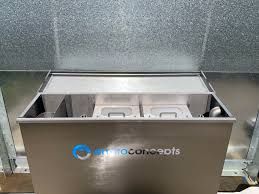
Managing industrial wastewater is no longer just a recommended best practice. It is a strict legal mandate heavily enforced by the Environmental Protection Agency. Relying on outdated wastewater runoff methods to handle industrial spills or stormwater is no longer legally viable for any facility. The EPA actively monitors site compliance, and ignorance of the law will not shield you from enforcement actions. Facility managers and environmental health officers face immense pressure to keep their operations completely leak-proof and audit-ready.
Establishing your baseline requirement starts with looking at your total site storage. The EPA’s SPCC rule generally applies to facilities with an above-ground oil storage capacity. Once your facility hits that specific storage threshold, the legal landscape shifts dramatically. You are officially on the hook for proactive pollution prevention and detailed containment planning.
Separating oil isn’t optional anymore. This means facilities must implement performance-proven solutions tailored to their specific site layouts to guarantee compliance and protect their bottom line. A generic, off-the-shelf approach simply will not pass a rigorous inspection. You need highly engineered equipment designed to handle your exact operational demands.
The Staggering Financial Risks of EPA Non-Compliance
Administrative oversights, inadequate equipment, or the illegal discharge of non-emulsified hydrocarbons immediately trigger federal enforcement actions. The EPA does not grade on a curve when it comes to enforcing the Clean Water Act. If a compliance officer finds that your wastewater management system is failing, the financial consequences are swift and severe. Fines multiply quickly because they are assessed for every single day a violation continues.
The cost of non-compliance has never been higher. In 2024, the maximum civil penalty for a Clean Water Act violation increased to $66,712 per day, per violation. A single month of uncontrolled discharge can easily generate millions in federal fines. These penalties are purposefully designed to be punitive enough that ignoring the problem is financially impossible for any business.
Physical discharge isn’t the only way to incur massive fines. Your paperwork, planning processes, and preventative maintenance logs face the exact same level of federal scrutiny. Failing to maintain or fully implement a required SPCC plan can result in separate EPA civil administrative penalties of up to $37,500 daily. This means an unmaintained separator or an outdated site map can cost your company tens of thousands of dollars before a single drop of oil ever hits the ground.
Meeting the Mandate with Performance-Proven Solutions
With EPA fines exceeding $66,000 per day, relying on undersized or legacy containment systems is a massive operational risk. Facilities cannot afford to treat wastewater management as an afterthought. A single severe weather event can easily overwhelm an inadequate system, leading to immediate environmental damage and certain regulatory action. You need equipment that guarantees consistent results under the most demanding conditions.
Modern facilities must invest in performance-proven oil-water separators that are engineered to exceed exacting standards. Buying high-quality equipment is a direct investment in your facility’s operational security. When you install a system designed specifically for your exact flow dynamics, you eliminate the costly guesswork from environmental compliance.
Proactive investment in this caliber of equipment ensures continuous regulatory compliance regardless of the facility’s specific flow requirements. You gain the peace of mind that comes from knowing your site can handle sudden surges or heavy industrial use without violating the Clean Water Act. Upgrading your infrastructure today protects your operations and your public reputation tomorrow.
Choosing the Right Separator for Your Site’s Physics
Identifying your facility’s exact needs requires a deep understanding of your specific site logistics. Taking a one-size-fits-all approach to wastewater management almost always leads to system failure. You have to evaluate exactly how water moves through your property. Specifically, you need to know the difference between pump feed and gravity flow applications to select the correct engineering solution.
“Above Grade” separators are heavily engineered tanks designed specifically for pump feed applications. These units sit safely above ground and typically process flows ranging from 0 to over 400 gallons per minute (GPM). They are ideal for industrial plants or treatment areas where space is limited and wastewater must be actively pumped into the containment system. Because they sit above ground, maintenance crews can easily access them for routine inspections and cleanouts.
“Flush-With Grade” systems use rugged fiberglass separators meant for designated gravity flow areas. These are perfect for wash down pads, vehicle maintenance bays, or equipment cleaning zones where water naturally drains downward into the system. Since they rely entirely on gravity, these units require less mechanical intervention and no active pumping to move the water into the separator chamber.
For the most demanding industrial environments, “Below Grade” systems deliver unmatched performance capability. These high-capacity units are engineered for deep burial, drive-over conditions, and massive flow rates up to 5000 GPM. A below-grade system is typically constructed with heavily reinforced structural materials to withstand the heavy soil pressure and the weight of machinery driving over the surface. This makes them perfect for busy industrial yards, airports, and military bases.
| Separator Category | Primary Flow Mechanism | Flow Rate Capabilities | Ideal Site Applications |
|---|---|---|---|
| Above Grade | Pump Feed | 0 – 400+ GPM | Limited footprint areas, active processing lines, easily accessible industrial sites. |
| Flush-With Grade | Gravity Flow | Low to Moderate | Wash bays, vehicle maintenance pads, shallow installation zones. |
| Below Grade | Gravity or Pump | Up to 5000 GPM | Heavy traffic yards, drive-over conditions, deep burial, high-volume runoff. |
Targeted Hydrocarbon Removal: Beyond the Main Tank
Separating oil effectively often requires a multi-step process targeting non-emulsified hydrocarbons to meet clean water standards. A large holding tank alone is rarely enough to achieve full EPA compliance. Oil naturally wants to separate from water, but heavy industrial turbulence often breaks oil down into microscopic droplets. You need specialized technology to pull those tiny droplets out of the wastewater stream before they reach the discharge point.
This is the critical role of specialized coalescing media and filters. These engineered components sit directly inside the main separator tank and force smaller oil droplets to merge together upon contact. As the microscopic droplets combine along the media’s surface area, they become much larger and far more buoyant. This forces the oil to rise quickly to the surface where it safely separates from the clean water below.
Integrating complementary equipment creates a complete, fail-safe system that requires far less manual oversight. Automatic floating oil skimmers continuously remove the separated oil from the surface of the water, preventing dangerous hydrocarbon buildup inside the tank. Manual rotary pipe skimmers offer precise control for maintenance operators during routine cleanouts, ensuring the system stays in peak condition.
Finally, installing an oil stop valve acts as your ultimate compliance insurance policy. If a massive spill occurs or the tank fills with oil unexpectedly, the stop valve reacts to the specific gravity of the oil and automatically closes. This physically blocks any hydrocarbons from escaping the tank and entering public water systems, saving your facility from catastrophic fines.
Conclusion
Separating oil isn’t optional anymore; it is a strict, non-negotiable legal mandate heavily enforced by the EPA. Protecting our natural water systems is a federal priority, and failing to meet these containment standards carries massive financial consequences. Ignoring these environmental regulations is simply not a sustainable business model for any modern industrial operation.
Safely navigating these Clean Water Act regulations requires assessing your exact flow capacity needs and matching them with the correct separator configuration. Whether you need a low-volume flush-with-grade unit or a massive below-grade system capable of handling 5000 GPM, the unique physics of your site dictate the solution. There are no shortcuts when it comes to proper wastewater engineering.
Achieving compliance isn’t just about avoiding penalties and keeping federal inspectors at bay. It’s about ensuring confident, uninterrupted operations by utilizing the right site-specific engineering. When you invest in performance-proven separation equipment, you secure your facility’s future and build a safer, more efficient industrial environment.