Biotech Purification Innovations: The Manufacturing Science Behind Uncomplexed Biological Toxins
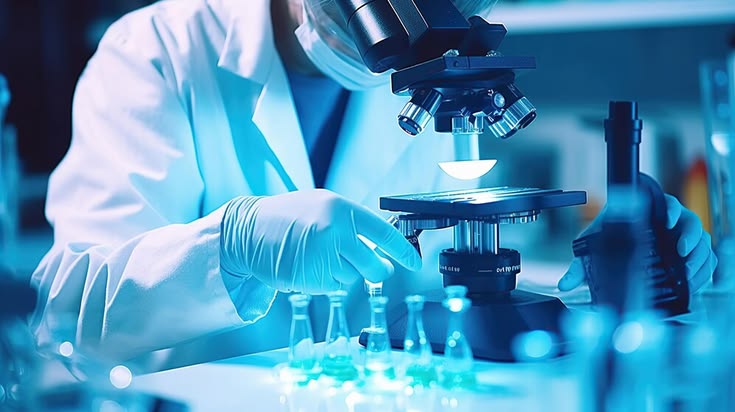
Industrial biology operates on relentless precision. Technicians separate specific active agents from crude microbial broths using rigorous separation science. Clostridium botulinum cultures generate potent protein complexes that have long fascinated researchers studying molecular motors and vesicular transport. Historically, isolation protocols captured both the active agent and a host of accessory proteins. Modern facilities now focus heavily on toxin purification to isolate pure active elements without extraneous mass. Biologic manufacturing demands absolute purity because impurities introduce variables that compromise assay reproducibility. Laboratories studying these proteins require reliable samples to map cellular pathways accurately without confounding variables. Every step in the fermentation pipeline requires rigorous validation to ensure that downstream outputs meet stringent analytical standards.
Structural Distinctions in Toxin Complexes
Wild-type bacterial cultures produce a large molecular aggregate. This aggregate consists of the active neurotoxin bound to accessory proteins. Traditional isolation protocols left these complexing proteins intact, resulting in a massive particle weight of roughly 900 kilodaltons. Researchers who examine protein structure quickly realized that these auxiliary components serve no direct enzymatic function in blocking neurotransmitter release at the cellular level. Instead, the core neurotoxin (150 kDa) carries the entire catalytic responsibility. Elimination of auxiliary structures changes how the molecule behaves in solution. Research data from a prominent biochemical analysis published in a 2019 analytical review demonstrated that the removal of auxiliary structures eliminates unnecessary non-therapeutic mass, leaving a streamlined molecular profile dedicated entirely to light-chain translocation and target cleavage.
Botulinum neurotoxin type A serves as the baseline for much of this structural research. Investigators frequently examine how molecular architecture affects stability in controlled assays. One notable example of this precise molecular isolation is Xeomin, a specialized preparation containing exclusively the active component without auxiliary bacterial proteins. Researchers utilize Xeomin in laboratory models to study receptor binding kinetics and intracellular cleavage events without interference from accessory molecules. To acquire materials for experimental protocols, laboratories can order xeomin wholesale online through authorized reagent providers. Such preparations ensure that experimental data reflects true neurotoxin activity rather than artifacts caused by extraneous bacterial components. Analysis of Xeomin under controlled laboratory conditions allows scientists to map potency variations with high accuracy and confidence.
Downstream Processing and Separation Science
Extraction of the active agent from a crude bacterial harvest requires sophisticated downstream processing steps. Raw fermentation broths contain nucleic acids, cellular debris, and various host cell proteins that must be systematically eliminated. Traditional methods relied on acid precipitation and repeated centrifugation steps. These older techniques often stressed the delicate protein structure, causing partial denaturation or aggregation. Modern biopharmaceutical production utilizes advanced chromatography and filtration networks to protect molecular integrity. Tangential flow filtration allows technicians to concentrate proteins across specific molecular weight cutoffs without exposing them to harsh chemical gradients. Ion-exchange chromatography then separates the target protein based on surface charge differences. Hydrophobic interaction chromatography and size-exclusion steps further refine the eluate to eliminate trace contaminants. This level of refinement highlights the fundamental differences in purified vs. conventional production methods. Conventional protocols left mixed aggregates intact, whereas refined methods isolate the pure active agent efficiently.
Analysis of how physical isolation alters behavior reveals distinct thermodynamic properties. When scientists compare uncomplexed vs. complexed neurotoxins, the overall molecular stability shifts significantly. Large complexes carry substantial ballast that can adsorb to container walls or interact unpredictably with buffers. Elimination of these non-toxic elements produces a clean solution where every microgram of material contributes directly to measured activity. Laboratory equipment must be calibrated to handle these high-purity solutions because adsorption losses decrease dramatically when accessory proteins are absent. Furthermore, spectroscopic studies show that uncomplexed botulinum toxin maintains a predictable conformation across various ionic strengths, a critical advantage for quantitative analytical biochemistry.
Quality Control, Assays, and Standardization
Preservation of reproducibility across laboratory batches requires strict adherence to quality control protocols. Biological materials vary naturally from one fermentation run to the next. Manufacturers must implement robust potency testing and assays to verify biological activity before distribution. Cell-based assays measure the cleavage of SNAP-25 inside specialized neural cell lines. These functional tests provide a direct reading of enzymatic potency, unlike simple protein mass measurements that cannot distinguish between active and denatured molecules.
Guarantees of batch consistency demand continuous monitoring of physical parameters throughout the isolation pipeline. Spectrophotometric analysis, high-performance liquid chromatography, and mass spectrometry confirm that each production lot meets precise structural specifications. Without rigorous analytical checks, subtle conformational shifts could go unnoticed, leading to experimental drift across research laboratories. Establishment of standardized metrics remains a primary challenge in industrial biotechnology. Technicians evaluate chromatographic elution profiles in real-time to detect any anomalous peaks that might indicate product degradation or contaminant copurification. Inter-assay variability must be kept within tight statistical margins to satisfy regulatory expectations and academic scrutiny.
Formulation Stability and Storage Parameters
Storage conditions dictate the commercial and experimental viability of biological reagents. Protein-free neuromodulators present unique formulation challenges because accessory proteins sometimes act as natural stabilizers in crude preparations. Without those auxiliary structures, the purified 150 kDa molecule requires precise excipients to prevent aggregation or unfolding. Researchers test various sugar matrices and buffers to maintain formulation stability over extended periods. Adherence to strict cold-chain protocols has historically been standard practice for maintaining structural integrity in biological solutions.
Temperature sensitivity represents another critical parameter in bioprocessing design. While many biological preparations require constant refrigeration, recent innovations in formulation science focus on achieving room-temperature storage capabilities. Stabilization of the pure neurotoxin matrix without altering tertiary structure requires precise control over pH and moisture levels. Investigations into lyophilization alternatives and liquid formulations continue to push the boundaries of what is possible in modern biopharmaceutical manufacturing. Facilities invest heavily in thermal stress testing to determine exact degradation thresholds under varying ambient conditions.
- Excipient selection, which prevents protein aggregation by forming protective hydration shells around the core molecule.
- Controlled lyophilization parameters, which eliminate residual moisture without inducing thermal stress or covalent cross-linking.
Transitioning away from crude bacterial mixtures allows for cleaner experimental models and more reliable biochemical data. As downstream techniques improve, the scientific community gains deeper insight into the fundamental mechanisms governing these powerful biological molecules. Precision manufacturing sets a new benchmark for analytical reliability across all molecular investigations. Future advancements in membrane science and chromatography resins will undoubtedly refine these protocols even further, expanding the horizons of protein biotechnology.