Emergency Heat Is Quietly Doubling Some Home Office Electric Bills
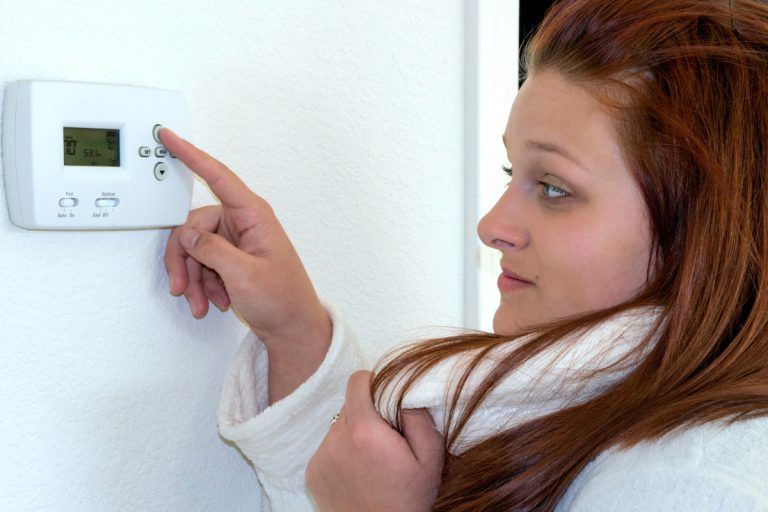
If a January electric bill nearly doubled while the home office still felt cool, the heat pump is probably not undersized. The likelier answer is that the electric resistance strips inside the air handler carried most of the month instead of backing up the compressor. Ask a heating company Lewes DE homeowners already use for winter service to look, and the cause usually turns up in four control settings and one refrigerant charge reading. That is a service call, not a replacement quote. A 600 square foot converted two-car garage office is where this shows up hardest, because the room was finished years after the system that now has to heat it.
Emergency Heat Is A Backup Not A Setting
A heat pump moves heat. The strips make it. Moving heat out of 30 degree air costs a fraction of what making the same heat with electric resistance costs, which is the entire reason the strips are wired as a second stage instead of a first one. Emergency heat, usually labeled EM HEAT on the thermostat, locks the compressor out completely and runs on strips alone. It exists for the night the compressor fails, and it was never meant to be a cold weather comfort mode that somebody flips in December and forgets.
Frost on the outdoor coil complicates the picture. A heat pump in freezing weather reverses itself periodically to melt that frost off, and according to an August 2026 explainer from Lennox, a defrost cycle lasts 5 to 15 minutes and is triggered roughly every 30 to 90 minutes during winter heating. The strips come on deliberately during defrost so the supply air does not blow cold. That part is normal, and it is brief. What is not normal is strips running for hours between defrost cycles because the thermostat kept asking for more heat than the compressor was allowed to deliver.
Deep Thermostat Setbacks Wake The Resistance Strips
Dropping to 60 overnight and demanding 70 at seven in the morning is a gas furnace habit. A heat pump answers a jump like that by staging in auxiliary heat, because most thermostats energize the strips once the room sits more than about two degrees under setpoint, or once the compressor has run a set number of minutes without closing the gap. Ten degrees of recovery in a drafty garage room can mean an hour of resistance heat every single morning, five mornings a week, all winter. Job after job, the setback schedule is the cheapest thing to correct and the last thing anyone suspects. A shallower setback of two or three degrees, or a smart recovery that starts early and creeps up, keeps the compressor in charge of the room.
Balance Point And Lockout Settings Explained Plainly
Two numbers decide when the strips are allowed to help at all. The first is what installers call the balance point, meaning the outdoor temperature at which the heat pump’s output finally matches what the building is losing, so above it the compressor holds setpoint by itself and below it something has to fill the gap. The second is the auxiliary lockout, a temperature above which the control refuses to energize the strips no matter what the thermostat wants. Set that lockout too high, at 45 or 50 degrees, and a mild Delmarva afternoon in the low 40s can still burn resistance heat for no reason. Set it too low with a system that cannot keep up, and the office never catches up. Coastal Sussex County design temperatures sit in the teens, so a properly charged heat pump should carry a small insulated room unassisted well down into the 30s. Low refrigerant charge quietly drags that line the wrong way, which is why the charge reading matters more than the brand of thermostat on the wall.
The Kilowatt Math On One Winter Month
How much of a given January bill was strips and how much was the compressor? I cannot answer that from the bill alone, and neither can anyone else without a current transformer on the air handler circuit or a utility feed that reports interval data. The meter keeps an honest record of the damage and says absolutely nothing about the cause. So the number has to be estimated instead.
Say the converted garage office needs 12,000 BTU per hour on a cold morning. A heat pump running at a coefficient of performance of 2.8 draws about 1.26 kilowatts to deliver that, while resistance strips delivering the same 12,000 BTU draw 3.52 kilowatts. Run three hours a day on strips instead of the compressor across 31 days and the difference works out to 210 kilowatt hours. At a rate near 17 cents per kilowatt hour that comes to roughly $36 for one room in one month, and that covers only the morning recovery, not the mild days a high lockout wasted. Triple the runtime, which a mistuned system in a 600 square foot room does easily, and the extra column on that bill starts to explain the whole increase.
Correcting The Settings Costs Less Than Replacing Anything
None of this requires new equipment. A technician verifies charge against the manufacturer’s superheat and subcooling targets, watches a full defrost cycle complete, confirms auxiliary heat is staged rather than running alongside a healthy compressor, and moves the lockout to a temperature that suits the house instead of whatever the factory default was. Airflow gets checked in the same visit, because a dirty filter or a blocked return trips the same backup heat that a wrong setting does. Then the thermostat gets a recovery schedule that never asks for ten degrees at once. Booking a heating company Lewes DE residents trust for maintenance before the first hard freeze is worth considerably more than calling one in the middle of January, when every truck on the Eastern Shore is already committed. One doubled bill is plenty of evidence to act on.