How Do You Store a Portable Solar Station Between Trips?
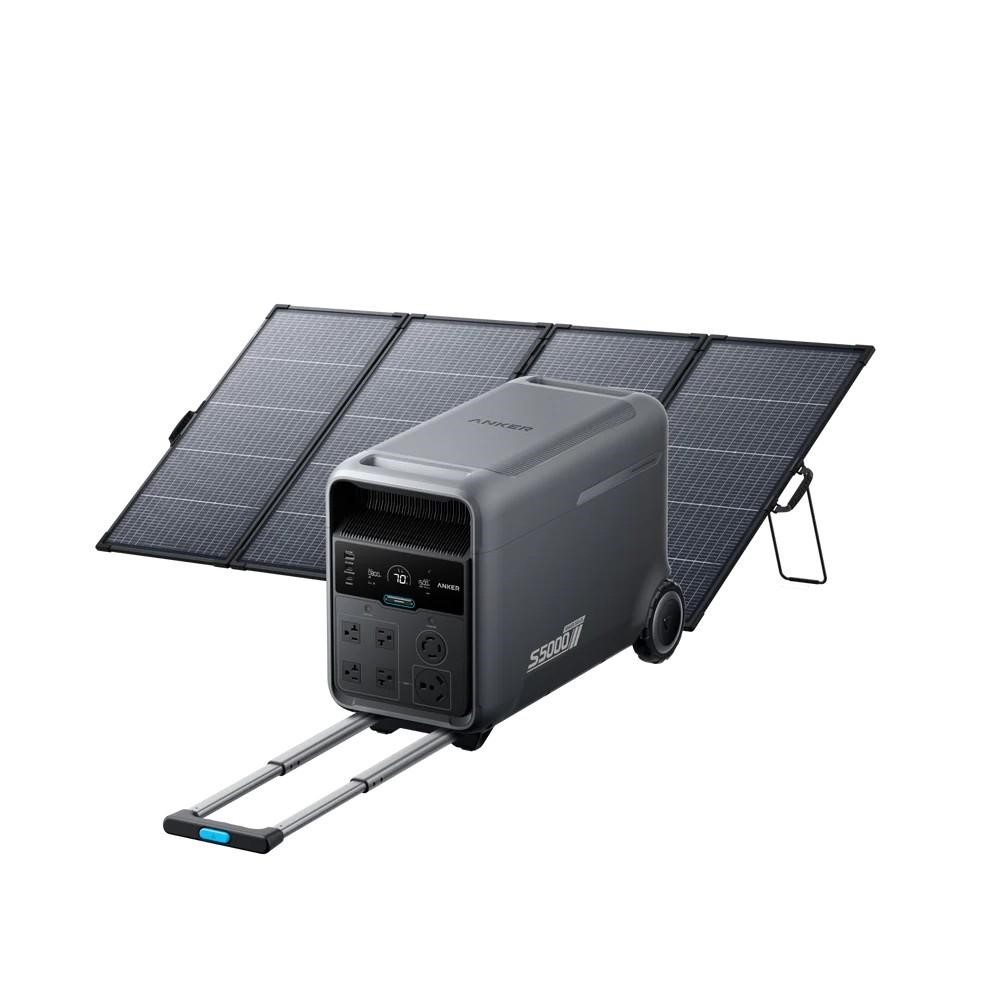
A portable solar station may spend weeks at home between outdoor trips, so storage deserves its own plan. For a larger 5kWh system, the question extends beyond finding an empty shelf or corner. The station has weight, wheels, charging accessories, solar panels, and a battery designed for years of service. Good storage should keep that entire system organized and ready for its next role. Treat the space between trips as a standby phase, with a clear place and purpose for every component.
Give a Larger Power Station a Permanent Home Base
Plan Around Movement Before Picking the Spot
Start with the route into and out of storage. A larger station may move from the vehicle to a garage, utility area, or another suitable location after every trip. The Anker SOLIX S5000 weighs 97 pounds and measures 10.6 × 22.0 × 15.2 inches, so those physical specifications matter when choosing its home base. Its built-in wheels and handle are particularly relevant here. A storage location with straightforward rolling access makes repeated movement more practical than one that requires frequent lifting or complicated repositioning. For larger portable power stations, think beyond whether the unit technically fits. Consider how easily it can leave that position when a new trip begins or when household backup power is needed.
Make the Storage Area Easy to Inspect
Long-term storage works better when the power station remains visible and accessible enough for routine checks. Follow the manufacturer’s specified storage and environmental guidance, and choose a clean, suitable location where the unit can stay stable between uses. Avoid treating it like ordinary camping gear that disappears behind stacks of unrelated equipment. The S5000 uses 314Ah LFP battery cells and carries a stated 10,000-cycle life and 15-year battery lifespan. Those long-life specifications make a consistent care routine worthwhile. An accessible storage location makes it easier to check battery status, inspect the station before another trip, and keep the unit incorporated into normal household preparedness rather than rediscovering it only when packing starts.
Store the Solar Side as Its Own Module
The solar panel deserves a defined storage position separate from the power station itself. The S5000 is available with a 400W solar panel or 400W bifacial solar panel, so the travel system includes equipment with different shapes and handling requirements. Follow the panel manufacturer’s care instructions and store it in the intended condition and position. Keep compatible solar connections organized with the panel so the charging setup remains easy to reconstruct. This modular approach is useful for larger systems: the power station occupies one designated zone, while the solar equipment has another. Both remain part of the same kit, but each receives storage appropriate to its physical form. Clear organization also makes pre-trip packing easier to verify.
Keep Stored Energy Ready for More Than Travel
Let the Station Maintain a Role at Home
Between trips does not necessarily have to mean completely outside the household power plan. A large-capacity station may remain available for backup applications while stored in an accessible location. The S5000 has 5,024Wh of base capacity, 4,500W rated output, and 8,000W peak output, with both 120V and 240V output. Anker positions it for up to 48 hours of home backup under its stated conditions. This creates a useful distinction between storage and abandonment. A station can have a permanent home base while still remaining available when needed. For owners who travel only several times each year, giving the system a defined household role can make its between-trip location part of an organized backup plan rather than simply unused storage space.
Use Smart Monitoring as Part of Storage Care
A storage routine becomes easier when battery information does not depend entirely on physically checking the display. The S5000 supports app-based power management, including remote monitoring and control. Its supplied features also include a battery care function and monthly auto-cycling designed to support long-term battery health. Users should still follow Anker’s official storage instructions for the appropriate state of charge and storage conditions, but these digital functions can become part of the routine. Set a regular time to review the station rather than waiting until the next camping date appears on the calendar. This turns several months of inactivity into a managed standby period and keeps attention on the battery throughout the year.

Make Departure Day a Retrieval, Not a Rebuild
The final test of good storage comes when the next trip starts. Ideally, preparing the power station should involve retrieving an organized system rather than locating its individual pieces. Keep the required charging accessories grouped logically, know where the solar panel is stored, and check the station’s battery status before departure. The S5000 supports six recharge methods, so the accessories needed for a particular trip may vary. Solar equipment may suit a stationary outdoor stay, while another route may involve alternator or AC charging opportunities. Organizing accessories by function makes that choice easier. Before loading the vehicle, perform one readiness check covering the station, selected charging equipment, solar panel if needed, and the power requirements expected at the destination.
Conclusion
Storing a portable solar station between trips works best when the system has a permanent home base and a clear standby role. Plan for easy movement, keep the station accessible for checks, organize solar equipment separately, and follow the manufacturer’s battery-care guidance. A larger system can also remain available for household backup between journeys. With its wheeled 5kWh design, long-life LFP battery, app-based management, and multiple charging options, the Anker SOLIX S5000 fits naturally into this storage-to-standby approach.