The Risk Rule That Sits Outside Your Trading Plan

Most traders learn that risk is not only about being wrong. A plan considers position size, stop-loss levels, leverage, and the capital exposed to one idea. Those habits put a boundary around an uncertain market.
There is another boundary worth setting, though: how and where you access the accounts that let you act on that plan.
It is easy to overlook when trading becomes mobile. You check a chart while waiting for a train, respond to a broker notification from a hotel, or open a watchlist on a café connection because a market move has caught your attention. Nothing about that is automatically reckless. But a hurried login on an unfamiliar network can create a problem that has nothing to do with analysis.
The useful mindset is the same one that applies to a trade. Do not rely on luck when a small, repeatable rule can reduce avoidable risk.
Market risk and access risk are different things
Market risk is part of trading. Even a well-researched position can move against you, and a risk plan helps decide what happens next. Access risk concerns the route into your broker, charting tools, email, and financial accounts: passwords, login sessions, recovery methods, devices, and networks.
The distinction matters because traders can be disciplined about a position while being casual about the account that holds it. A person may wait patiently for a setup, then type a password into a lookalike Wi-Fi portal or approve an unexpected login request. It is a gap in the surrounding routine.
Think of account protection as operational risk control. The aim is not to eliminate every possible issue. It is to make the obvious mistakes less likely when attention is on price action instead of technology.
Give yourself a rule for public connections
Public Wi-Fi is convenient, especially when mobile data is weak or expensive. The problem is not that every café, airport, or hotel network is hostile. The problem is that you usually cannot verify the network as confidently as you can verify your home connection.
One practical rule is to separate observation from action. It may be reasonable to check general market news or read a watchlist on a public connection. Logging in to a brokerage account, changing a withdrawal setting, or opening a document with account details deserves more care. If the task can wait, wait until you have a trusted connection. If it cannot, use your mobile hotspot where possible and confirm the network name with staff rather than choosing the first familiar-looking option.
A VPN can add a layer of encryption for traffic between your device and the VPN service when you have to use a network you do not control. It is not a substitute for a secure broker, a current device, or careful login habits. Used as part of a wider routine, though, a Free VPN can be a useful option for keeping that connection more private while you work away from your usual setup.
The main point is consistency. A rule that is simple enough to follow during a busy trading day is more valuable than a perfect rule you ignore when a price alert arrives.
Treat email as part of your trading account
Many traders focus on the brokerage login and forget that email is often the recovery path behind it. A person who gains access to your email may be able to reset passwords, see account notifications, or intercept confirmation messages. That makes email security part of the same risk picture.
Use a unique password for your email and turn on multi-factor authentication. A password manager is helpful here because it reduces the temptation to reuse a memorable password across a broker, charting platform, newsletter service, and email account. If one service is breached, a unique password prevents that one problem from becoming several.
Review recovery options before you need them. Make sure the backup email address and phone number are current, and store recovery codes somewhere secure and separate from the device you use to trade.
Avoid decisions made in a rush
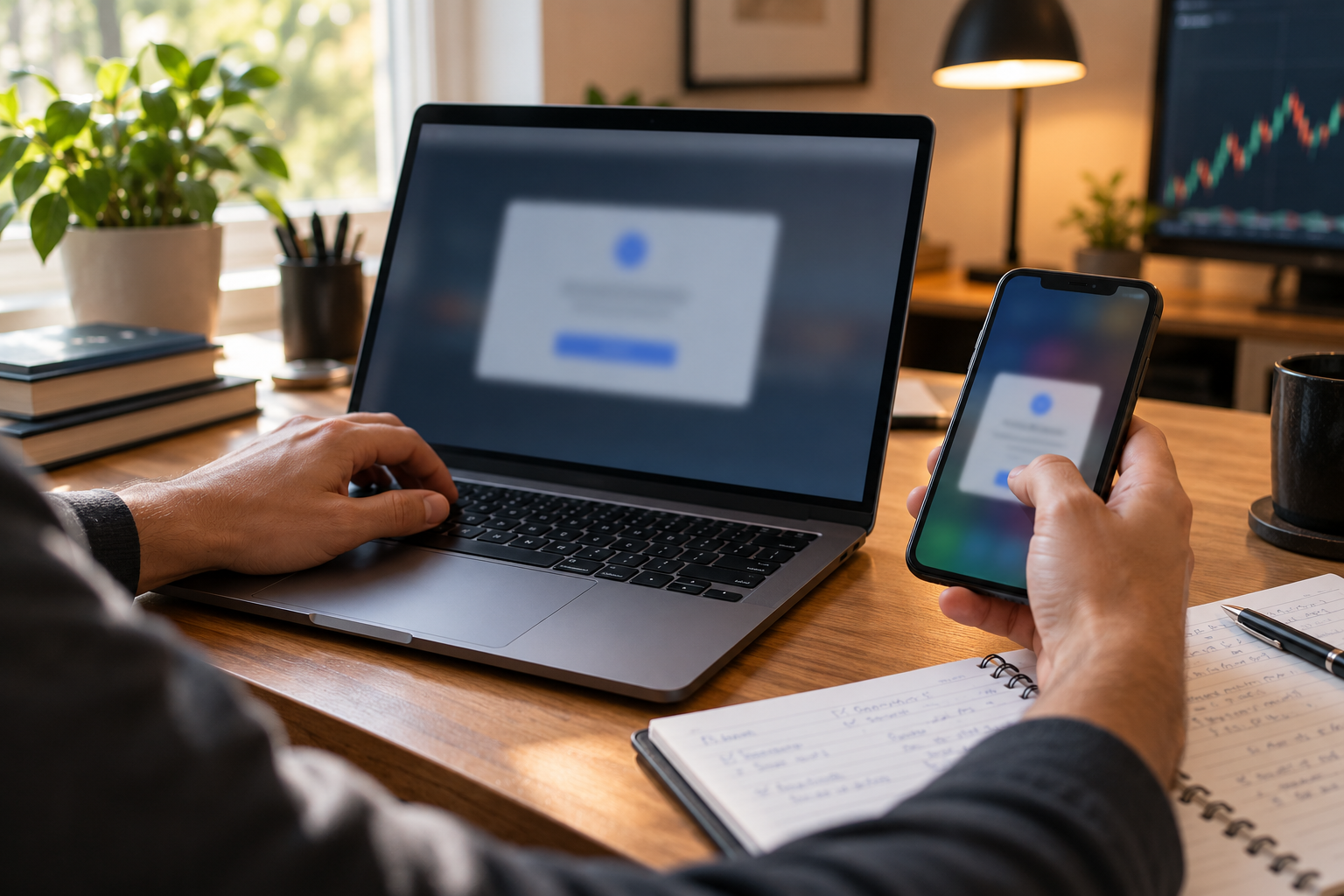
Some security mistakes are really time-pressure mistakes. A login page looks slightly different, but a market is moving. A multi-factor prompt arrives, but you have not tried to sign in. A platform says your session has expired, and you click through before checking the address bar.
Build in a short pause for actions that can change money or account control. Before entering credentials, check the browser address and use a bookmarked or official app link instead of a search-ad result or a link in an unexpected message. Before approving a multi-factor request, ask whether you actually started a login. If you did not, decline it and change the password from a trusted device.
This pause does not have to slow down every trade. It is about recognising the moments when a few seconds of verification are worth more than the convenience of rushing. Good traders already understand that the urge to act is not always a reason to act. The same idea applies to account security.
Keep the device ready before the market needs you
Security works better when it is set up before it becomes urgent. Keep the operating system, browser, and trading apps updated. Use a screen lock that activates quickly. Do not share a device profile with someone who could access a saved browser session or open email account.
If you trade from both a computer and a phone, decide in advance which device is appropriate for which task. Your phone may be suitable for alerts and quick monitoring, while a laptop on a trusted connection is better for account settings, funding changes, or detailed platform work. This is not about treating a phone as unsafe; it is about avoiding unnecessary complexity at the wrong moment.
Know how to sign out remotely, revoke sessions, and contact your broker after a lost device. Those details are dull until they are suddenly the only details that matter.
A small routine that protects your attention
The best reason to tighten this routine is not fear. It is focus. When you know your access habits are consistent, you are less likely to make a panicked decision after a strange alert or an uncertain login. That leaves more mental space for the work a trading plan is meant to support: evaluating conditions, managing exposure, and accepting that not every move deserves a response.
Risk management is strongest when it extends beyond the chart. Protect the capital in the trade, but also protect the account, device, and connection that make the trade possible.