The Waste Removal Service That Covers More Than Just a Skip Bin
The skip bin is the waste management solution most people picture when a home or construction project generates material that needs to go somewhere. It’s familiar, widely available, and genuinely well-suited to a broad range of residential and light commercial waste needs. For a significant proportion of the projects that generate waste, it’s also insufficient on its own, and the homeowner or builder who discovers this mid-project is discovering it at the least convenient time.
The projects that require more than a standard skip bin are more common than most people realise before they’ve encountered one. The landscaping renovation that generates more soil than any number of skip bins can efficiently handle. The new home build that requires site preparation before the first wall goes up. The renovation that involves structural demolition producing concrete and masonry at a rate that a skip bin can’t absorb. Each of these needs something beyond the familiar steel container in the driveway, and the provider who can deliver that something is a different proposition from one whose offering stops at the bin.
The Waste Needs That Go Beyond a Skip Bin
The waste categories that most consistently require something beyond a standard skip bin share a common characteristic: they involve large volumes of heavy material that generate faster than a static container can absorb, or material that needs to be moved continuously rather than accumulated over a hire period.
Excavated soil is the category that produces the most frequent mismatch between what a skip bin can provide and what a project actually needs. A landscaping project that involves levelling, retaining walls, or significant planting changes generates soil at a rate and in a volume that makes skip bin hire an inefficient solution. A bin fills with soil at a fraction of its visual capacity because of the material’s weight density, requires multiple collections to remove a volume that a tipper truck could clear in a single run, and sits on the site between collections in a way that impedes the work it was meant to serve.
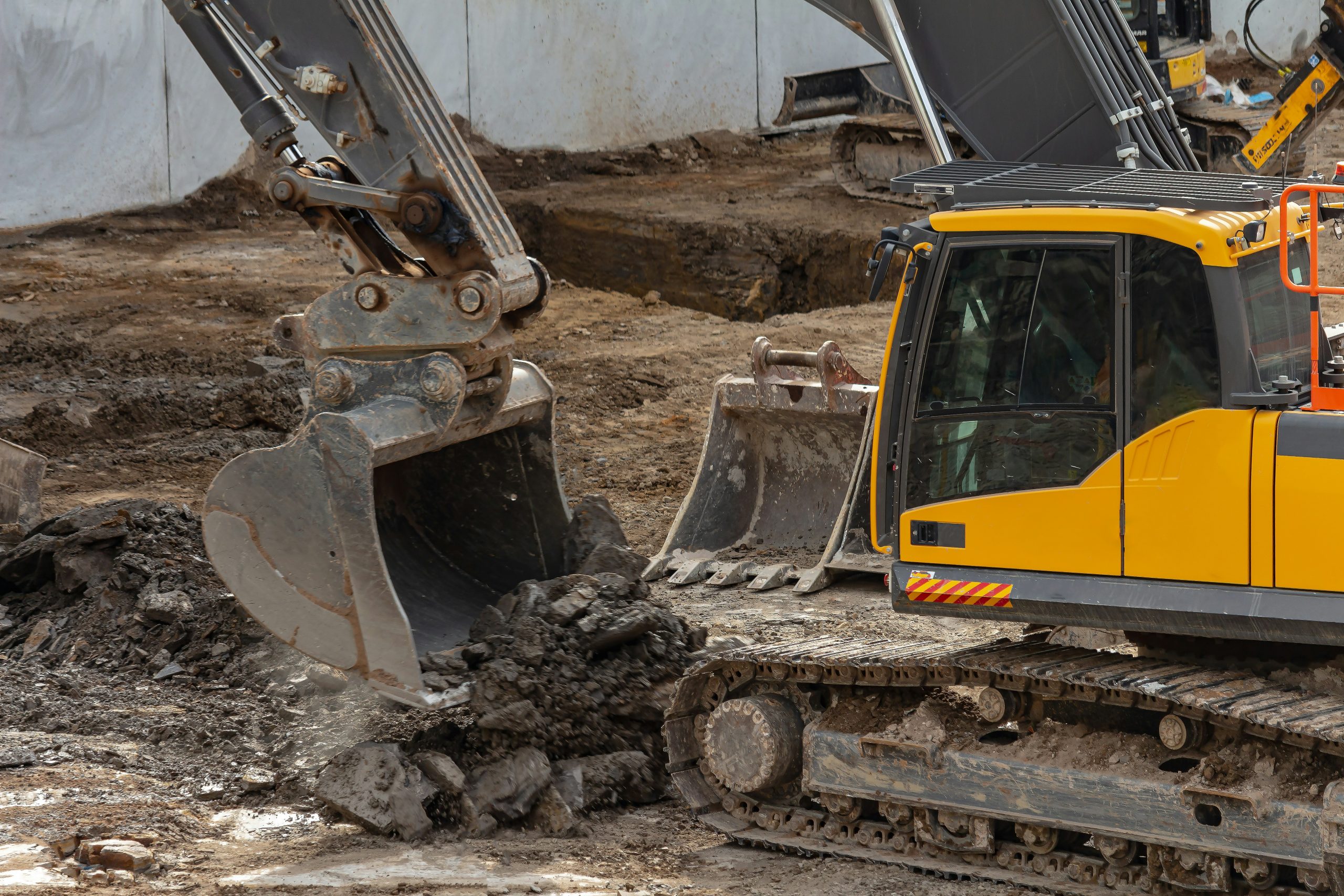
Bulk excavation for new home construction, pool installation, or major landscaping work generates material at a pace that requires active removal rather than accumulation in a static container. The excavator that is working efficiently can produce more material in an hour than a skip bin can hold, and a waste removal approach that can’t keep pace with the excavation rate becomes the constraint on the excavation itself.
Demolition at scale, where structural elements including slabs, footings, and masonry walls are being broken up and removed, generates dense material in quantities that hook bins address more efficiently than marrel skip bins, and at a pace that may require multiple collections across a short timeframe rather than a single hire period.
Building site waste across a multi-trade construction programme generates multiple waste streams simultaneously, with each stream requiring different equipment and potentially different disposal pathways. The project that is producing excavated soil, construction debris, and packaging waste at the same time has waste management needs that a single general waste skip bin can’t address comprehensively.
What an Integrated Waste and Excavation Service Provides
The practical difference between a provider who offers skip bins, tipper hire, and excavation services under a single relationship and one whose offering covers only skip bins is felt in how the project’s waste and earthmoving requirements are managed rather than in any single service transaction.
A single provider covering the full scope means the waste and earthmoving requirements of the project are described once rather than negotiated with multiple parties. The project manager or homeowner explains what the project needs across the relevant phases, and the provider coordinates the equipment, the scheduling, and the logistics to deliver it. The coordination conversations that would otherwise happen between the skip bin company, the tipper operator, and the excavation contractor happen internally rather than at the client’s expense.
The scheduling flexibility that an integrated provider can offer is more responsive to the project’s actual pace than the fixed scheduling of separate providers whose commitments to other clients constrain their availability. A provider who has both the tipper and the excavation equipment available can respond to a project that moves faster or slower than anticipated by adjusting the resource allocation rather than asking the client to manage a scheduling conflict between separate operators.
For homeowners and builders looking for a provider that covers the full range of waste and earthmoving needs under a single relationship, sydneywasteaus.com.au provides skip bin hire across sizes from two cubic metres through to large hook bins, operated tipper hire for bulk soil and material removal, and excavation services covering site preparation, trenching, pool excavation, and tight-access work, with same-day delivery available and online booking for the skip bin component.
The accountability dimension is the change that clients who have moved from multiple providers to a single integrated relationship describe most consistently. When something goes wrong or needs to be adjusted, the conversation happens once with one provider who has full visibility of the project’s waste and earthmoving activity. The specific problem of an issue that sits between two providers’ scopes of work, each of whom points to the other as responsible, disappears when the full scope is covered by a single relationship.
How to Know Which Service Your Project Needs
The assessment of which waste removal services a specific project requires is more straightforward than the range of available options suggests, and it starts with an honest description of what the project will generate rather than a default assumption that a skip bin will cover everything.
The questions that most reliably identify the full scope of waste removal a project needs are specific to the material categories the project will generate. Does the project involve excavation or soil removal? If so, the volume and rate of generation determine whether tipper hire is required alongside or instead of skip bins. Does the project involve demolition of structural elements including concrete, brick, or masonry? If so, the volume and weight profile of that material determines whether a marrel skip bin, a hook bin, or a combination is the right approach. Does the project involve ongoing construction waste across multiple phases? If so, the scheduling of bin collections relative to phase transitions determines whether a single hire or a changeover arrangement is the right structure.
The provider who can answer these questions with specific reference to their own service offering, rather than describing only the skip bin component and deferring the others, is the provider who has encountered these project types before and has developed the capability to serve them fully. A provider who hasn’t encountered the specific combination of services a project requires will discover the limitations of their offering mid-project rather than before it starts.
The questions worth asking any waste removal provider before booking include whether they offer tipper hire as well as skip bins, whether they provide excavation services directly or subcontract them, what their scheduling flexibility is for projects that change pace, and whether they have experience with the specific project type being described. The answers to these questions reveal the actual scope of the provider’s capability rather than the scope of their marketing, and the project that selects its provider on the basis of actual capability rather than the most prominent service offering is the project that runs without the mid-project discovery that the provider can only cover part of what was needed.
Why the Full-Scope Provider Changes the Project Experience
The home or construction project that selected its waste removal provider based on the full scope of what the project required, rather than on familiarity with the skip bin component and assumption about the rest, produces a different project experience from one where the waste management approach was assembled reactively as needs emerged.
The project manager or homeowner who knew before the project started that soil removal, skip bins, and potentially excavation were all available from a single provider made a different set of decisions at the outset. The waste management plan accounted for all three rather than assuming the skip bin would cover everything and discovering the gap when the excavator was already generating soil faster than the bins could hold it.
The project where the waste and earthmoving were covered by a provider with the capability to handle the full scope is the project where waste management simply worked. The phases flowed without waste-related interruptions. The site was clear when subsequent trades arrived. The scheduling happened internally rather than at the client’s coordination expense. And the invoice reflected the scope that was agreed at the outset rather than the accumulated cost of discovering mid-project that the original arrangement wasn’t sufficient.
That outcome, waste management that worked without requiring reactive management, is available to any homeowner or builder willing to assess the full scope of what their project needs before selecting the provider rather than after the limitations of the initial selection have made themselves apparent.