Women’s Wedding Rings: Pavé, Curved or Plain?
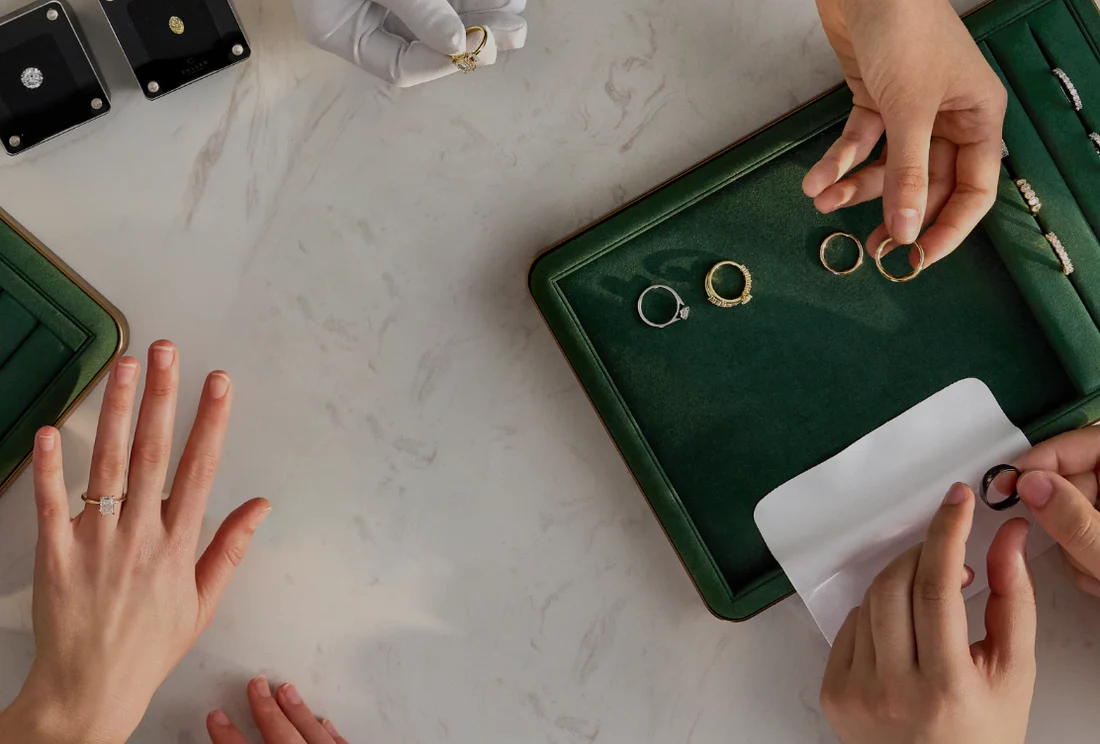
Picking a wedding ring sounds simple until you’re standing in front of a display case and every option looks slightly different from the last. Pavé, curved, plain — they’re not just aesthetic choices. Each one changes how the ring sits, how it pairs with an engagement ring, and how much maintenance you’re signing up for.
Pavé Rings: More Sparkle, More Care
Pavé settings pack small diamonds tightly across the band, so light hits from multiple angles instead of just one central stone. It’s a gorgeous effect, especially under evening light or camera flash, but there’s a trade-off. More stones means more prongs, and more prongs means more spots where things can catch on jumpers, gym equipment, or garden gloves.
If you’re someone who works with your hands a lot, pavé isn’t necessarily off the table, just something to budget maintenance time for. Most jewellers recommend a check-up every 12 to 18 months to make sure no stones have loosened.
Curved Rings: Built to Fit, Not Just Sit
Curved bands (sometimes called contoured or shadow bands) are shaped to hug the profile of an engagement ring, usually so the two sit flush together with no visible gap. This matters more than people expect. A gap between rings isn’t just a cosmetic issue, it can also mean the bands shift or twist independently, which gets annoying fast.
The catch is that a curved band is almost always designed around one specific engagement ring shape. If you’re not locked into a setting yet, it’s worth looking at pavé, curved and plain options together before committing. Cullen Jewellery’s range of Women’s Wedding Rings has all three laid out side by side, which makes the trade-offs a lot clearer than scrolling through separate product pages.
Plain Rings: The Quiet Option That Ages Well
Plain bands don’t try to compete with the engagement ring, they just sit alongside it. No stones to check, no matching curve to worry about, and they tend to handle decades of daily wear without needing much attention beyond an occasional polish.
There’s also a practical argument for plain rings that doesn’t get talked about enough: they’re easier to resize later. Life changes, hands change, and a simple band gives a jeweller more room to work with than one covered in pavé stones or cut to match a specific curve.
So Which One Actually Wins?
Honestly, it depends on what your hands do all day and how much fuss you’re willing to put up with. Pavé rewards people who don’t mind a bit of upkeep in exchange for sparkle. Curved rings reward people who already know exactly which engagement ring they’re pairing it with. Plain rings reward people who’d rather not think about their ring at all once it’s on.
None of them is the “correct” choice. The right one is just whichever matches how you actually live, not how the ring looks under jewellery-store lighting.