10 Leading CI/CD Tools for Faster Software Delivery in 2026
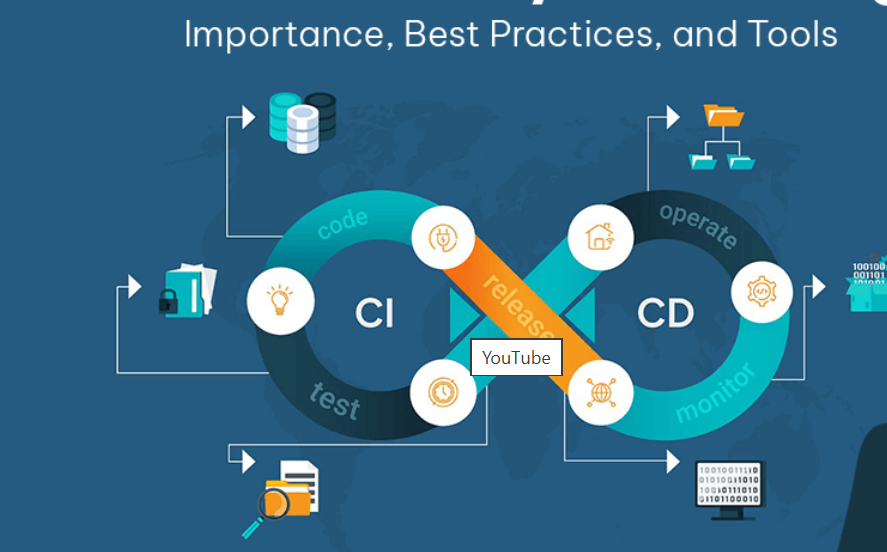
In today’s fast-paced software development environment, delivering updates quickly without compromising quality is a major priority for development teams. Traditional development and deployment processes can be time-consuming, especially when teams have to manage repetitive tasks, manual testing, and frequent code changes. This is where Continuous Integration and Continuous Delivery (CI/CD) come into play.
CI/CD tools help automate different stages of the software development lifecycle, from integrating code changes and running tests to building and deploying applications. They reduce manual effort, improve collaboration between development and operations teams, and make software releases more consistent and reliable. However, with so many tools available, finding the right solution can be challenging. To help you make an informed choice, we’ve compiled a list of the 10 best CI/CD tools for DevOps automation in 2026, along with their key features and capabilities.
10 best CI/CD tools for DevOps automation
1. Jenkins
Jenkins is an open-source CI/CD tool that enhances the software development workflow by utilizing automation. It assists you in automatically constructing, testing, and deploying code when modifications occur in repositories such as GitHub. With over 1,000 plugins, Jenkins is flexible and can be used for various tasks in continuous integration and delivery pipelines.
Key Features
- A large selection of plugins that work with many development, testing, and deployment tools
- Easy-to-use interface
- Built-in nodes for running builds on multiple machines
- Pipeline-as-code with Jenkinsfile (using Groovy-based scripts)
- Build scheduling
- Simple environment setup
- Although Jenkins remains popular, its use has been declining over time.
2. Testsigma
Testsigma is an AI-powered test automation platform that helps teams automate software testing across web, mobile, API, and enterprise applications. It integrates with CI/CD pipelines to run automated test cases whenever new code changes are introduced, helping development teams identify bugs early and maintain software quality throughout the delivery process. Its low-code, natural-language approach makes it easier for both technical and non-technical users to create and maintain automated tests without writing complex scripts. With integrations for popular DevOps tools, Testsigma helps teams streamline testing workflows and get faster feedback before releasing updates.
Key Features
- Connects to your cloud provider for temporary credentials to access services
- Uses ChatOps to trigger CI tasks directly from chat, with results sent to the channels
- Let’s check the browser and server performance for the upcoming code changes
- Provides unit test reports to show failures on merge requests
- Offers free features for individual users
3. CircleCI
CircleCI is a CI/CD tool designed for fast software development and publishing. It automates the entire pipeline, from building and testing code to deployment.
You can integrate CircleCI with GitHub, GitHub Enterprise, and Bitbucket, allowing it to automatically create builds when new code is committed. CircleCI can run on the cloud or behind a firewall on private infrastructure.
Key Features
- Integrates with Bitbucket, GitHub, and GitHub Enterprise
- Runs builds using containers or virtual machines
- Easy debugging
- Supports automated parallelization for faster builds
- Quick tests
- Personalized email and IM notifications
- Continuous deployment and branch-specific deployment
- Highly customizable
- Automated merging and custom commands for package uploads
- Fast setup with unlimited builds
4. TeamCity
TeamCity lets you build code from any source and run it on any infrastructure, giving you quick results. It supports many platforms and frameworks, offers optimizations for pipelines, runs tests in parallel, and integrates with all parts of your development toolchain. TeamCity combines speed, flexibility, and a user-friendly interface with full support for configuration as code.
Key Features
- Manage and view builds through the web interface
- Use Kotlin DSL to handle build configurations as code
- Unlimited users and concurrency
- Reusable settings and configuration options
- Run parallel builds across different environments
- Access build history, test reports, and easily tag or favorite builds
5. Bamboo
Bamboo is a CI/CD tool from Atlassian, designed for continuous integration, deployment, and delivery. It offers a reliable, self-hosted platform suitable for large organizations that need enterprise-level software.
Key Features
- Seamless integration with other Atlassian products
- Works well with Jira and Bitbucket
- Large marketplace of add-ons and plugins
- Supports Docker containers
- Parallel builds and deployments
- Customizable with many plugins
- API triggers for IFTTT functionality
- Environment-specific permissions for controlled access
- Automatically applies CI settings to new branches in Git, Mercurial, and SVN
6. Buddy
Buddy is an easy-to-use automation platform that speeds up software development and deployment. With its user-friendly interface, teams can set up, monitor, and run pipelines quickly and efficiently.
Key Features
- 12-second deployment for fast results
- Detects changes automatically to trigger updates
- Unlimited build history, with live progress tracking and logs
- Caching options for better performance (including Docker layers and repository data)
- Reusable environments for efficient management
- Flexible configurations for encrypted or plain pipelines, workspaces, and actions
7. Travis CI
It is a hosted service that automates building, testing, and deploying applications on GitHub and Bitbucket. It was the first CI service to offer free services for open-source projects. You can use it on your own servers or with cloud services for flexible scaling.
Key Features
- Easy setup process
- Matrix builds (test across multiple environments and configurations at the same time)
- Caching support
- Monitor live builds for GitHub projects
- Works with pull requests
- Can deploy to various cloud services
- Includes pre-installed database services
- Automatically deploys when builds pass
- Docker support
- Provides clean virtual machines for every build
- Supports macOS, Linux, and iOS
8. Spinnaker
Spinnaker is an open-source CI/CD platform that supports multi-cloud deployments. It focuses on continuous delivery (CD) but integrates well with CI tools for a seamless workflow.
Key Features
- Enterprise-grade, multi-cloud CI/CD support
- Custom workflows allow tracking changes in specific files
- Options to skip unneeded build stages to save time
- Deploys to web, mobile, or desktop applications
- Pipeline triggers include git events, Docker, CRON, and more
- Time-based execution control, so stages run during specific windows (e.g., off-peak hours)
9. Semaphore
Semaphore is a fast CI/CD tool for deploying updates efficiently, designed to be easy to scale without requiring heavy infrastructure. It handles both simple sequential builds and complex, multi-stage pipelines.
Key Features
- Native Docker support for testing and deploying Docker-based apps
- Supports infrastructure as code for flexible CI/CD pipeline setup
- Can be hosted in the cloud or on-premises
- Fully customizable pipelines with the Visual Workflow Builder
- Supports parallel and sequential execution (including full DAG support)
- Enhanced security features like audit logs, SAML, and SCIM support
10. Buildkite
It is a CI/CD platform that combines cloud-based management with the option to run pipelines on your own infrastructure, offering better control and security. It supports Docker and Kubernetes, making it suitable for container-based workflows and scalable for teams of all sizes.
Key Features
- Hybrid CI/CD for self-hosted builds with cloud management
- Strong Docker and Kubernetes support
- Parallel execution speeds up builds
- Detailed logging and analytics
Conclusion
CI/CD tools have become an essential part of modern DevOps practices, helping teams automate workflows, reduce deployment errors, and deliver software updates more efficiently. However, the right tool depends on your team’s workflow, project requirements, infrastructure, and level of automation needed.
The 10 tools covered in this list offer different capabilities, from automating builds and testing to managing complex deployment pipelines. Before choosing one, consider factors such as ease of integration, scalability, security, customization, and pricing. A well-suited CI/CD solution can simplify your development process, improve team productivity, and help your organization maintain a faster and more reliable software delivery cycle.