AI-Driven Presentation Design Trends in 2026
Key Takeaways
- AI is revolutionizing presentation design by automating layout creation and content generation.
- Personalized and adaptive presentations are enhancing audience engagement.
- Integration of AI-generated visuals and animations is elevating the aesthetic appeal of slides.
Artificial intelligence (AI) is transforming a range of professional and creative pursuits, but perhaps nowhere is this change more apparent than in the field of presentation design. As we look toward 2026, new AI capabilities are revolutionizing how businesses, educators, and creative teams construct, present, and iterate on their slide decks. The introduction of advanced tools, such as the AI presentation maker, demonstrates just how quickly the landscape is evolving, offering seamless ways to organize ideas, automate design, and personalize every aspect of a presentation.
In the past, creating an engaging, visually cohesive presentation required hours of manual formatting and design expertise. Now, AI is enabling users at any skill level to craft compelling, interactive, and adaptive presentations in minutes. These tools are not just about convenience; they represent a sea change in how information is shared and stories are told, keeping pace with the short attention spans and high expectations of modern audiences. The influence of AI is extending far beyond basic slide templating. Presentations are now increasingly dynamic, responding to audience needs and feedback in real time. Sophisticated algorithms personalize visuals and content delivery, ensuring each presentation fits perfectly with the unique context in which it is given. As these AI-assisted capabilities become standard, presenters will be able to focus more on their message and less on the technical details. With the rise of simplified, user-friendly AI tools, the bar for professional-quality presentations is being raised across industries. Presenters can now leverage a suite of smart features, from automatic content summarization to adaptive design suggestions, that enhance impact and interactivity for any audience.
Automated Design and Content Generation
In 2026, AI-powered platforms will become essential for efficient presentation creation. Instead of starting from a blank slide, users can input a prompt or upload a document, and smart algorithms will instantly suggest or construct a logical sequence of slides complete with headlines, bullet points, and graphics. This not only saves significant preparation time but also ensures a more polished and consistent result. Popular platforms are leveraging these advances to help businesses and educators meet tight deadlines without sacrificing quality. Many industry experts point out that such automation is set to become even more prevalent as AI tools continue to learn and refine their design recommendation engines.
Personalized and Adaptive Presentations
The next generation of AI-driven tools brings presentations to life by actively responding to audience cues and engagement metrics. These tools can adapt content on the fly, tailoring slide layouts, visual emphasis, and information depth based on real-time feedback or predetermined audience profiles. Whether you are presenting to a room of executives or a classroom of students, personalized content delivers a more relevant and effective message. Adaptive tools are already emerging as a game-changer, particularly in hybrid or virtual environments where maintaining attention is even more challenging. According to Forbes, personalized interactivity has become a core expectation in most professional settings, driving greater engagement and learning outcomes.
Integration of AI-Generated Visuals
As AI-generated images, infographics, and animations become more accessible, presenters can easily enhance their materials with eye-catching visual content. Tools now enable users to describe what they want to see and receive unique, on-brand visuals or animated sequences instantly, without formal design experience. This level of creative support not only saves time but also encourages more innovative storytelling by breaking down traditional design barriers. As a result, customized visual storytelling is now attainable for users at all levels, amplifying the reach and retention of their core messages.
Enhanced Data Visualization
Communicating complex information clearly has always been a challenge, but AI is simplifying the process through advanced data visualization tools. When a presenter uploads raw data, AI can detect important trends, outliers, and key points, then automatically generate readable charts, infographics, and other visual aids. These smart visualizations highlight what matters most, boosting both understanding and persuasion. Automated data visualization tools are especially useful in business intelligence, marketing, and research fields where decision-makers rely on clear, up-to-date information. Major publications have noted the growing importance of this trend as more organizations transition toward data-enabled decision workflows.
Voice-Controlled Design Editing
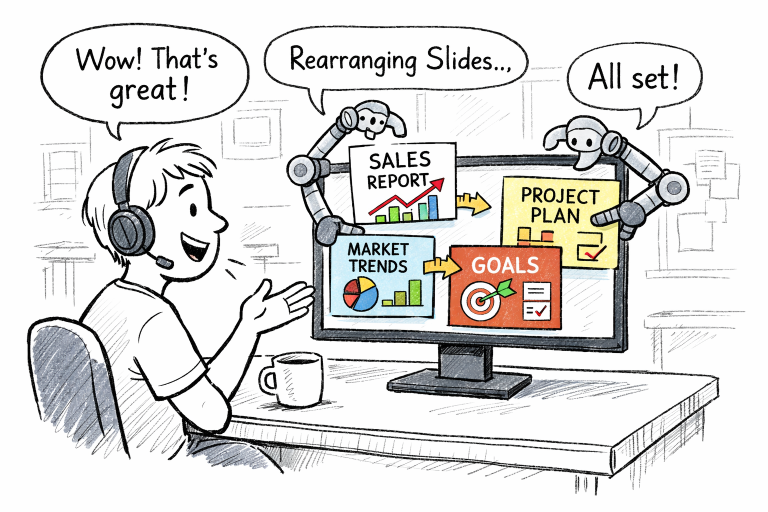
Another innovative leap forward in AI-driven presentation design is the introduction of voice-controlled editing tools. Presenters can now use simple voice commands to format slides, change layouts, add images, or even request real-time feedback on content flow. This advancement is making hands-free editing a reality, greatly benefiting users who multitask or have accessibility requirements. Additionally, voice tools add a layer of efficiency and spontaneity, dramatically speeding up the creative process and enabling seamless implementation of last-minute changes during live or remote presentations.
Dark Mode Design
With increasing screen exposure and a growing focus on digital ergonomics, dark mode has become the preferred display setting for many professionals. AI-enhanced presentation platforms make it simple to switch between light and dark themes while maintaining readability, visual harmony, and brand consistency. Dark mode not only reduces eye strain but also contributes to a sleeker and more modern appearance. As more users embrace this feature, AI-driven tools ensure that text contrast, coloring, and visibility are all automatically optimized, so presentations remain impressive regardless of viewing conditions.
Conclusion
In 2026, AI is fundamentally reshaping the way presentations are designed, delivered, and experienced. By automating routine tasks, enabling dynamic personalization, and unlocking new creative possibilities, AI-driven platforms are empowering users to connect with their audiences more powerfully than ever before. As these trends take root, the role of AI in presentation design will become increasingly integral. Still, it will also set new standards for engagement, accessibility, and visual impact across every industry.