Benchtop Environmental Test Chamber Applications in the USA Across Electronics, Automotive and Packaging Industries
Why Should Environmental Simulation Start Early? A circuit board performs perfectly at room temperature, an automotive sensor passes its first inspection and a package seal looks secure on the production line. Then heat, cold or moisture enters the picture and performance changes. That is exactly why controlled environmental testing matters.
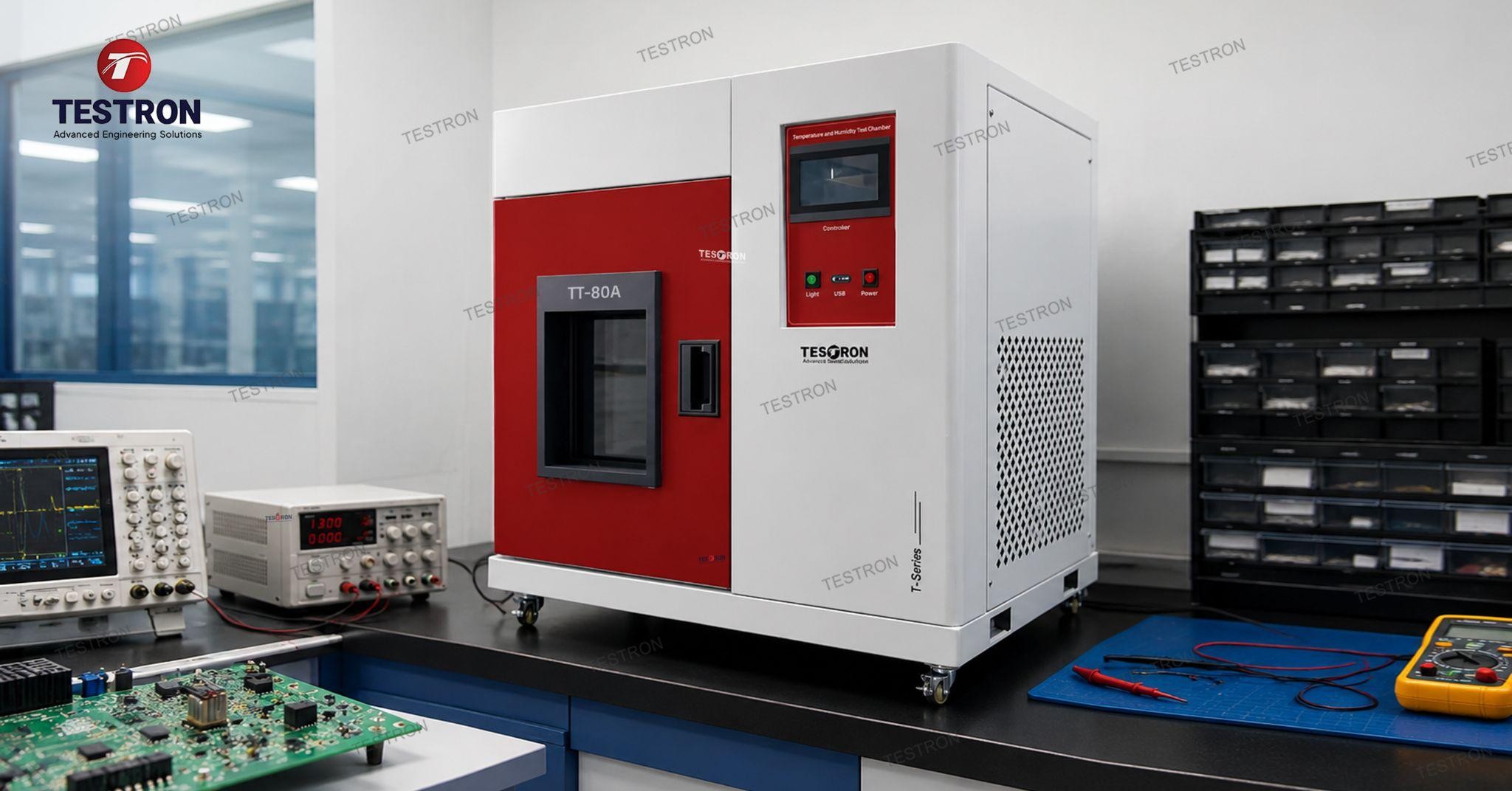
For quality and R&D teams, waiting for a field failure is not a practical way to learn how a product reacts. A benchtop environmental test chamber in the USA lets you expose smaller products and materials to planned temperature and humidity conditions before they reach customers. Because the system uses less floor area than a full-size chamber, it can also work more easily into active laboratories.
This guide looks at three very different industries: electronics, automotive and packaging. It shows how each uses compact environmental testing to answer different questions, find weak points earlier and make product decisions with better evidence.
One Chamber, Three Very Different Testing Goals
Environmental stress affects products differently:
- Electronics teams may worry about moisture around connectors.
- Automotive engineers may focus on repeated hot-and-cold cycles.
- Packaging teams may need to see whether seals or labels change after conditioning.
That is why benchtop environmental chambers are useful across industries. You can create repeatable conditions and compare samples. The goal is to isolate temperature and humidity stresses to understand their effects better.
Electronics: See Small Weak Points Before They Grow
Electronic assemblies can react to heat and humidity in ways that ordinary room-temperature tests may skip. Printed circuit boards, sensors, connectors, displays and semiconductor components can all require managed conditioning.
A benchtop temperature test chamber lets you run repeatable hot and cold cycles while checking whether a component continues to work as expected. Humidity exposure can also help investigate moisture sensitivity, corrosion risk, insulation concerns or intermittent behavior.
NASA’s Johnson Space Center also uses temperature and humidity chambers to test electronics, composites and other materials, showing why controlled environmental exposure matters when evaluating how components respond to changing conditions.
Compact chambers suit electronics laboratories well because many specimens are small and testing space is valuable.
Automotive: Recreate Changing Conditions for Smaller Parts
Automotive components rarely stay at one temperature. Sensors, switches, wiring parts, dashboard electronics and control modules can experience cold starts, cabin heat, storage changes and humidity.
A compact benchtop environmental chamber gives your laboratory a controlled space for repeating those conditions on smaller parts. Instead of waiting for seasonal weather, you can run planned cycles under the same profile.
This supports development, supplier evaluation and failure investigation by giving your team clearer evidence before wider validation.
Packaging: Check What Moisture and Temperature Can Change
Packaging teams ask a different question: what happens to materials and pack components after environmental exposure?
A benchtop humidity chamber can condition films, plastic containers, labels, adhesives, closures and sealed packs. Temperature and moisture may influence dimensions, adhesion, appearance, stiffness or seal behavior.
A benchtop environmental test chamber gives you repeatable conditioning before another package test. A benchtop temperature and humidity chamber is useful when you need to control both factors together rather than study them separately.
How the Three Industries Use Benchtop Testing Differently
| Industry | Typical Test Items | Main Environmental Focus | What Your Team Wants to Learn |
| Electronics | PCBs, sensors, connectors | Heat, cold, humidity | Whether components remain stable |
| Automotive | Sensors, switches, modules | Temperature cycles, humidity | How parts respond to changing conditions |
| Packaging | Films, seals, labels | Temperature, moisture | Whether materials or packs change |
The value of benchtop test chambers comes from flexibility. The chamber may be the same, but your specimen size, cycle profile, exposure time and acceptance criteria should reflect the product and test objective.
Match Chamber Capability to the Test You Actually Run
When comparing a benchtop environmental test chamber in the USA, start with your application rather than the longest spec sheet.
Check whether the chamber covers:
- The temperature and humidity range your profile needs
- Enough usable volume for your specimens
- Suitable heating, cooling and programmable cycles
- Data logging, observation and cable access
Testron Group lists 50 L and 80 L models, with temperature options from -20°C, -40°C or -70°C up to +150°C and humidity control from 20% to 98% RH. A benchtop temperature humidity chamber should cover your planned profiles without adding capacity you rarely use.
Look Beyond Purchase Price
Benchtop environmental test chamber price changes with chamber volume, low-temperature capability, humidity control, controller functions, calibration and optional features.
A dependable benchtop environmental test chamber manufacturer should help match those choices to your work. Your benchtop environmental test chamber supplier should also explain installation, calibration support, maintenance, warranty and accessories.
Useful cost isn’t only the quotation. Ease of operation, uptime, repeatability, service access and staff training all affect long-term value in daily use.
Put Environmental Testing Closer to Better Product Decisions
Environmental testing works best when it becomes part of your decision process, not something you add only after a problem appears. Electronics teams can investigate component stability, automotive laboratories can compare parts under repeatable cycles and packaging teams can condition materials before checking performance.
The right benchtop environmental test chamber in the USA gives you a controlled way to ask those questions earlier. It does not replace every qualification or field test, but it can give your team clearer evidence before products move to the next stage.
A well-matched chamber supports repeatable workflows while keeping testing practical in limited laboratory space. If you are reviewing capacity, temperature range, humidity control or test profiles for a new setup, request a demo from Testron Group and discuss the configuration that best fits your application.