How to Choose Exterior Wall Colours for a Modern, Traditional or Minimalist Home
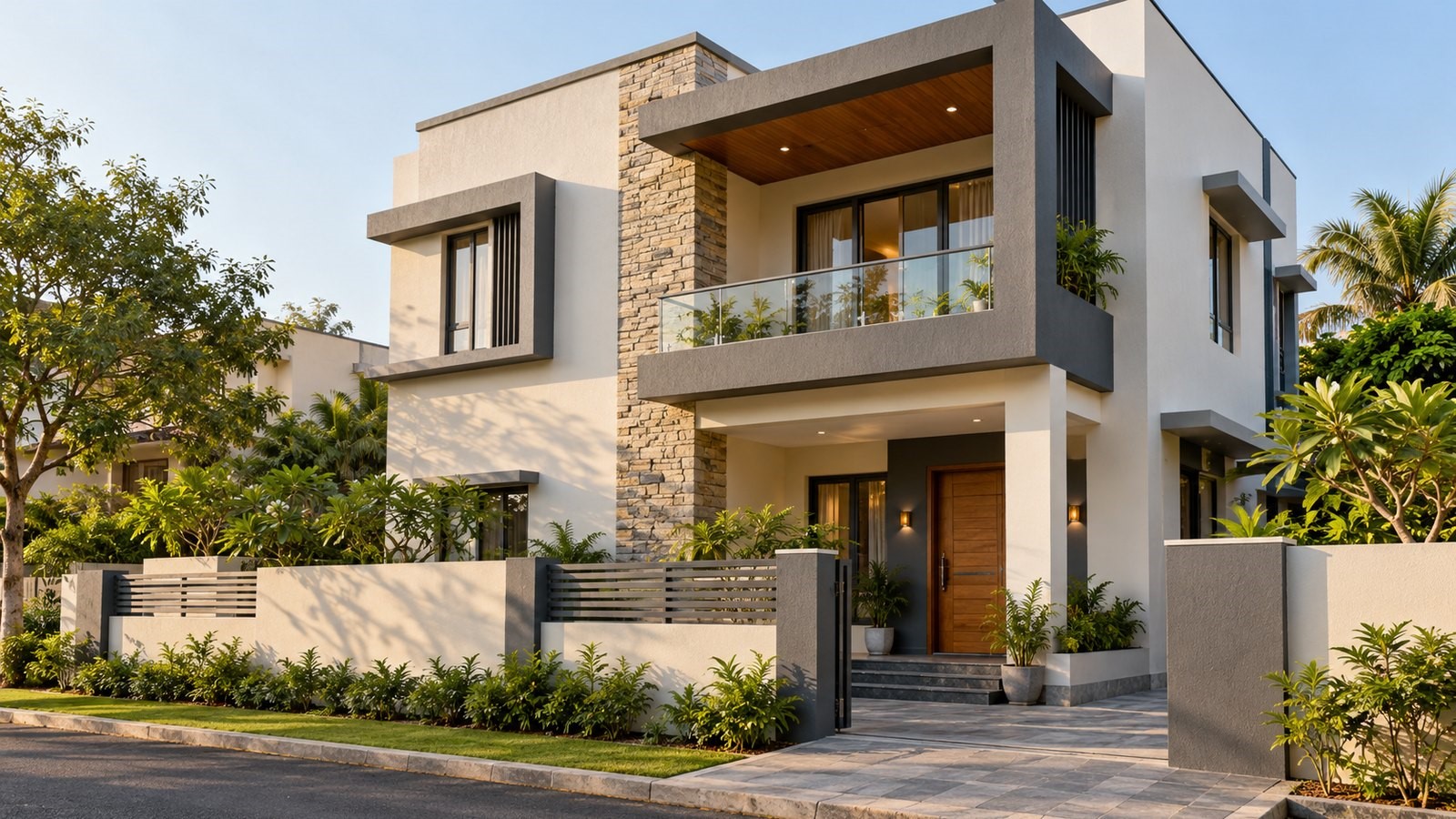
A modern home with sharp lines may call for crisp contrasts, but a traditional house with a tiled roof and wooden doors can look better in earthy shades. Minimalist homes have their own appeal, often relying on a few yet carefully chosen colours. While you are trying to pick the hues, the easiest way is to find the ones that are appropriate for the architecture. That’s why, before you pick an exterior wall paint colour combination, take into account the roof, windows, surrounding landscape and local weather. Alongside that, the following details will help you narrow down colours that look good and work well over time.
How Do You Choose Exterior Wall Colours for a Modern Home?
Modern homes often feature straight lines, large windows and simple façades. So, the exterior colours should complement these details rather than compete with them. A few well-chosen shades can give the house definition without making it look too busy.
Use Neutrals with a Stronger Accent
White, light grey and beige make useful base colours for modern exteriors. You can introduce charcoal grey, deep brown or muted blue around a balcony, entrance or selected wall section. For example, white walls with charcoal accents can highlight the structure of a two-storey house without covering every surface in a dark shade.
Work with the Materials
Look at the fixed elements before finalising your paint. Glass railings, metal frames, exposed concrete and wood-finish panels all influence how a colour appears. If the house already has a wooden entrance or stone cladding, choose shades that complement these materials. Among different wall painting ideas, a single accent wall or a contrasting border can be enough to give a modern façade a distinct look.
Which Exterior Wall Colours Suit a Traditional Home?
You will often see details such as tiled roofs, decorative pillars, wooden doors or patterned railings on traditional homes. Thus, colours that complement these features can help the exterior feel connected to its architecture and surroundings.
Try Earthy and Classic Shades
Cream with terracotta, ivory with brown, and pale yellow with muted green are combinations to consider for traditional Indian homes. These shades can work particularly well with red roof tiles, wooden doors and stone pathways. For a house with a large façade, use the deeper colour on selected sections rather than spreading it across every wall.
Highlight Architectural Details
Pillars, window frames, cornices and entrance arches can stand out through subtle colour differences. For instance, a cream exterior with a slightly deeper beige around the windows gives the façade definition without creating a sharp contrast. If the house has exposed brick or natural stone, consider keeping nearby walls in a complementary neutral so those materials remain visible.
Traditional does not always mean bright colours or elaborate designs. Softer shades can suit older homes just as well, particularly when the architecture already has plenty of detail.
Match Colours with the Roof and Boundary Wall
The roof, gates and boundary wall are also important when it comes to the appearance of the main exterior colour. Choose wall colours that will work with features, such as a red tiled roof or a dark metal gate. Also, choosing a related colour for the boundary wall can make the whole property look connected without making every surface look the same.
How Should You Choose Exterior Colours for a Minimalist Home?
Minimalist homes are usually dependent on simple forms and uncluttered surfaces. A limited palette helps maintain that look, so the focus stays on the structure, proportions and materials rather than too many competing colours.
Keep the Palette Simple
Off-white with light grey, ivory with warm beige, or pale grey with a muted earthy accent can work well on minimalist façades. Two main shades are often enough to distinguish the walls from the entrance or boundary sections. Before introducing another colour, check whether it has a purpose or just introduces more contrast.
Use Finish and Texture for Interest
A minimalist exterior does not have to look flat or plain. A suitable textured finish, subtle surface variation or a mix of painted walls and natural materials can add interest without introducing extra colours. Matte or low-sheen finishes may suit this style, provided the product is designed for exterior use and the local weather conditions.
Pay attention to sunlight, too. A pale grey can appear almost white in strong afternoon sun, but look noticeably darker in shaded areas. Test your shortlisted shades on the actual exterior before painting the entire house.
Conclusion
Choosing exterior colours becomes easier when you start with your home’s architectural style. Modern houses can benefit from crisp contrasts, traditional homes often suit earthy shades, and minimalist designs look good with a limited palette. Check how the colours work with your roof, windows, gate and surrounding landscape before making a final choice. Test a few samples on the exterior, too, as sunlight can change how a shade looks across the day.