How to Set the Right Commercial Cleaning Schedule for Any Facility
Key Takeaways
- Match cleaning frequency to traffic, occupancy, and facility type.
- Prioritize restrooms, entrances, floors, and high-touch areas.
- Separate daily tasks from weekly and specialty cleaning.
- Schedule work around operating hours to reduce disruption.
- Track results and adjust the plan as building needs change.
- A flexible, site-specific schedule supports cleanliness, safety, and cost control.
A commercial cleaning schedule should reflect how a building is actually used, rather than relying on a generic “once a week” package. A quiet back-office suite, a customer-facing retail store, a medical practice, and a warehouse can have similar square footage but very different needs for restroom care, floor maintenance, waste removal, high-touch cleaning, and spill response. For facilities that need help turning those needs into a practical recurring plan, commercial cleaning solutions for San Diego businesses from Big League Clean are designed around a facility’s headcount, operating hours, traffic patterns, and service requirements. The company serves a wide range of San Diego County properties, including offices, medical spaces, schools, retail sites, apartment communities, warehouses, and industrial facilities, making a site-specific assessment more useful than a one-size-fits-all checklist.
Why One Cleaning Schedule Does Not Fit Every Business
Cleaning needs are driven by activity, not just building size. A small clinic may require frequent attention to waiting rooms, restrooms, and shared touchpoints, while a larger office with hybrid staff may need daily service only in common areas. Retail properties need clean entrances and checkout zones throughout the day. Warehouses may need debris control, dust removal, and clear walkways to support safe operations. Choosing the lowest-frequency plan can lead to higher costs later due to complaints, stained flooring, unpleasant odors, poor first impressions, damaged finishes, and overlooked hazards. The goal is not to constantly clean every surface. It is to assign the right work at the right interval.
Start With a Simple Facility Assessment
Before deciding on daily, weekly, or monthly service, walk the facility and document how people use it. Focus on the conditions that create soil, waste, germs, or safety concerns.
- Estimate daily occupancy: Count employees, customers, patients, students, residents, and visitors.
- Map traffic: Identify busy entrances, elevators, hallways, restrooms, kitchens, and break rooms.
- List high-use surfaces: Include handles, rails, counters, touch screens, desks, sinks, and fixtures.
- Review operating hours: Determine whether work should occur during the day, after closing, overnight, or on weekends.
- Identify special risks: Note food waste, moisture, dust, production residue, chemicals, allergens, or bodily fluids.
- Plan for seasonal changes: Account for rainy weather, flu season, events, school breaks, and move-in or move-out periods.
Match Cleaning Frequency to Facility Type
Offices, Retail, and Shared Commercial Spaces
Most occupied offices need daily trash removal, restroom care, kitchen cleaning, entrance upkeep, and service for high-traffic flooring. Retail stores also benefit from daytime spot cleaning around entrances, fitting rooms, checkout counters, and customer pathways. Interior glass, baseboards, vents, low-use rooms, and detailed dusting can usually rotate into weekly or periodic work.
Medical and Dental Facilities
Medical settings require written procedures that distinguish ordinary appearance cleaning from infection-control work. High-touch areas, exam rooms, waiting rooms, and restrooms may require more frequent service. At the same time, product selection, dwell time, waste handling, and cross-contamination controls must comply with the facility’s policies and applicable requirements. The CDC notes that community facilities should clean high-touch surfaces regularly, while healthcare environments may require more specific practices.
Warehouses, Manufacturing Sites, Schools, and Housing Communities
Industrial facilities often need frequent dust, packaging, debris, and floor care around loading zones, break rooms, and pedestrian routes. Schools and childcare spaces need daily attention in classrooms, cafeterias, restrooms, and shared activity areas. Apartment communities may need recurring common-area service plus flexible coverage for amenity rooms, turnovers, move-ins, and resident events.
Build a Daily, Weekly, and Monthly Task List
Separating tasks by frequency prevents a schedule from becoming either too expensive or too vague.
Daily Tasks
- Empty trash, replace liners, and report unusual waste conditions.
- Clean and restock restrooms.
- Wipe high-touch points and visible surfaces.
- Vacuum, sweep, or mop busy floors.
- Clean entrances, kitchens, break rooms, and common areas.
Weekly and Periodic Tasks
- Detail interior glass, corners, partitions, furniture, ledges, and vents.
- Perform deeper restroom and break-room cleaning.
- Rotate lower-traffic rooms into the service plan.
- Inspect floors for stains, wear, residue, and slip risks.
- Schedule carpet extraction, floor refinishing, high-area cleaning, exterior washing, and window cleaning as needed.
Use a Risk-Based Approach for High-Touch Areas
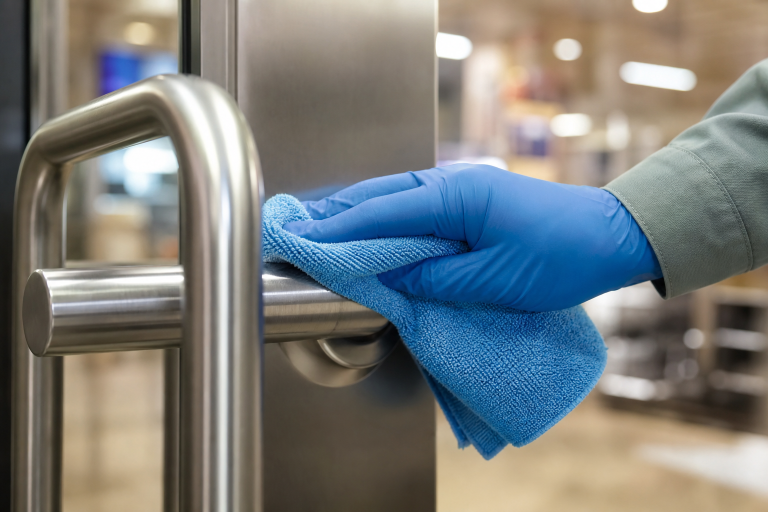
Square footage matters for labor planning, but exposure and use should guide cleaning frequency. Prioritize surfaces that many people touch in a short period, including door hardware, elevator buttons, shared equipment, counters, restroom fixtures, rails, and break-room appliances. Written instructions help every team member use the same products, follow the same sequence, and meet the same quality standards. Cleaning and disinfecting are not interchangeable. Cleaning removes soil and reduces contamination, while disinfection should be targeted to the situation and performed according to the product label. The CDC’s facility cleaning guidance emphasizes cleaning high-touch surfaces regularly, cleaning before disinfecting, and giving disinfectants adequate contact time.
Plan Cleaning Around Business Hours
Evening or overnight crews can complete detailed work with minimal disruption. Day porter coverage is useful when restrooms, entrances, spills, or common areas need attention while the facility is open. Whatever the timing, establish procedures for alarms, keys, badges, restricted rooms, loading access, and emergency communication. Keep a backup plan for weather, special events, staffing gaps, and unexpected spills.
Choose the Right Service Model
- In-house cleaning: Offers direct oversight but requires hiring, training, equipment, supervision, and coverage planning.
- Outsourced janitorial service: Can provide recurring crews, quality checks, and specialty capabilities.
- Hybrid coverage: Let’s internal staff handle quick daily needs while a provider manages routine and technical work.
- Specialty visits: Fit carpet care, windows, post-construction cleanup, floor restoration, and exterior maintenance.
How to Compare Commercial Cleaning Proposals
- Request a room-by-room scope of work and task frequency.
- Confirm what supplies, equipment, floor care, and emergency visits include.
- Verify insurance, worker screening, training, and account management.
- Ask how inspections, service issues, and response times are documented.
- Review cancellation terms and price-change policies before comparing total value.
Track Results With Clear Quality Measures
Use inspection forms for restrooms, entrances, floors, kitchens, and shared spaces. Track missed tasks, repeated complaints, supply shortages, response times, and recurring stains or odors. Review results after the first 30 days, then revisit the plan whenever staffing, tenancy, operating hours, or building use changes. Consistent documentation matters because clean conditions must be maintained, not just achieved once. Floor inspections deserve special attention. OSHA requires walking-working surfaces to be kept clean, orderly, and sanitary, with hazards such as spills addressed before employees use the area. Building managers can use these walking-working surface requirements as a practical reminder to build spill response and aisle checks into the cleaning routine.
Questions Facility Managers Often Ask
How Often Should a Commercial Building Be Cleaned?
Busy areas commonly need daily cleaning, while low-use rooms may need weekly or periodic service. Occupancy, traffic, public access, floor type, and sanitation needs determine the right mix.
Does a Larger Building Always Need More Cleaning?
No. A small, high-traffic clinic or store may need more frequent attention than a large office with limited daily occupancy.
When Is a Day Porter Worth Considering?
Day porter coverage is valuable when a facility has steady visitor traffic, frequent spills, busy restrooms, or common areas that must remain presentable throughout operating hours.
Conclusion
The strongest commercial cleaning schedule fits the building rather than forcing it into a generic package. By assessing traffic patterns, high-use areas, health and safety risks, operating hours, floor types, seasonal conditions, and the specific needs of each facility, managers can create a more practical cleaning routine. Regularly reviewing quality results also helps identify missed areas, unnecessary tasks, and changes in cleaning frequency as the building’s needs evolve. This approach can protect the property’s appearance, support a healthier and safer environment, reduce disruptions to daily operations, and keep cleaning costs easier to control over time.