Is TMS Therapy Right for You? A Sparks NV Patient Guide
Understanding the Basics of Transcranial Magnetic Stimulation
Living with depression can feel like an exhausting cycle. You might spend months trying a new medication, waiting for it to take effect, only to find that your symptoms remain unchanged. Sometimes the side effects are worse than the original condition. If this sounds like your experience, you are far from alone. Many people in our local community face treatment resistant depression. Fortunately, science offers an alternative path that does not rely on adding more pills to your daily routine. If you are exploring new options, you might be considering TMS Therapy Sparks NV as a potential next step.
Transcranial magnetic stimulation is an FDA cleared treatment designed specifically for individuals who have not found relief through traditional antidepressants. Instead of introducing chemicals into your system, this method uses focused magnetic pulses to stimulate the areas of your brain responsible for regulating mood. The magnetic waves are similar in strength to those used in a standard MRI machine. Because the treatment targets the brain directly, it avoids the systemic side effects commonly associated with oral medications. You will not have to worry about the sudden weight gain, severe fatigue, or persistent brain fog that often accompany heavy prescriptions.
One of the most reassuring facts about this therapy is its noninvasive nature. There is no surgery involved. There is no need for anesthesia or sedation. You remain completely awake and alert throughout the entire process. This means you will not lose hours of your day recovering in a hospital bed. You can simply walk into the clinic, complete your session, and immediately drive yourself back to work or home. For residents managing busy lives, this level of convenience makes prioritizing mental health much more realistic.
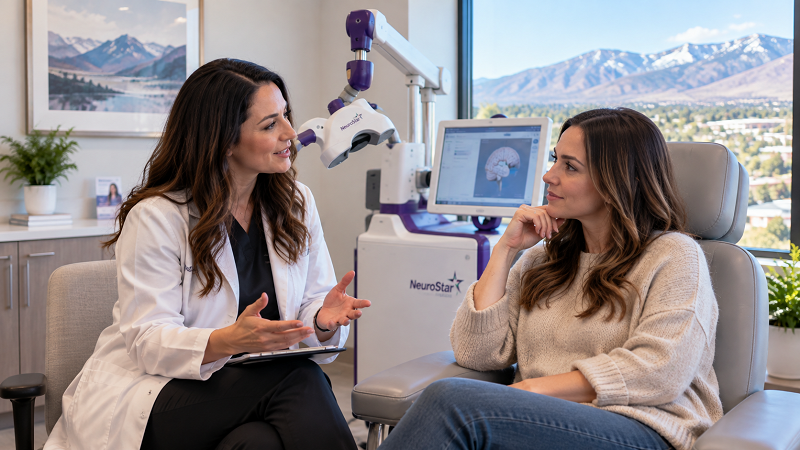
It is very common to wonder if the procedure will be painful. Most patients describe the sensation as a light tapping on the scalp. You might experience some mild discomfort at the treatment site during your first few visits. This sensation usually fades entirely after the first week as your body adjusts to the magnetic pulses. You simply sit back in a comfortable chair, much like a recliner or a spa chair, and let the technology do the work. The goal is to provide a calm, relaxing environment where your brain can begin the healing process.
Evaluating Your Candidacy for Magnetic Brain Stimulation
Deciding if this treatment aligns with your specific needs requires a thorough evaluation of your medical history. The ideal candidate is someone diagnosed with major depressive disorder who has tried at least one or two antidepressant medications without success. You might also qualify if you experience severe anxiety symptoms tied to your depression, or if you have been diagnosed with obsessive compulsive disorder. If your current medication plan is causing intolerable side effects, switching to a physical therapy for the brain might be the exact change your body needs.
Safety is always a top priority when considering any new medical procedure. Years of rigorous clinical trials have proven that this magnetic stimulation is exceptionally safe. Unlike older medical procedures like electroconvulsive therapy, transcranial magnetic stimulation does not induce seizures and has absolutely no negative impact on your memory or concentration. In fact, many patients report thinking more clearly once the heavy cloud of depression begins to lift. You maintain your full cognitive abilities before, during, and after every single appointment.
Financial concerns are completely valid when looking at advanced medical technologies. You will be relieved to know that most major insurance providers cover this treatment. Medicare, Tricare, and many commercial health plans recognize its effectiveness for treatment resistant depression. The approval process usually requires documentation from your doctor showing that standard medications have failed to resolve your symptoms. Your clinic will typically handle the paperwork and communicate directly with your insurance company to secure authorization before you ever begin.
There are a few medical restrictions you should keep in mind. Because the system utilizes powerful magnets, you cannot undergo this therapy if you have nonremovable metal objects in or near your head. This includes certain types of stents, metallic plates, or implanted medical devices like pacemakers. Standard dental fillings and braces are perfectly fine. Your provider will conduct a comprehensive screening during your initial consultation to ensure no hidden risks exist. Honesty about your complete medical background is the best way to guarantee a safe experience.
What to Expect When You Start Your Journey
Stepping into a new medical routine can feel intimidating, but knowing exactly what happens can ease your anxiety. Your journey begins with a detailed mapping session. During this first visit, your doctor will carefully measure your head to find the precise location for the magnetic coil. They will also determine the exact amount of magnetic energy needed to stimulate your brain cells effectively. This personalized calibration ensures that every subsequent visit is tailored uniquely to your exact anatomy and neurological needs.
A standard treatment course requires a significant time commitment upfront. You will typically visit the clinic five days a week for about four to six weeks. While this sounds like a lot, each daily session only lasts around nineteen to twenty minutes. Many patients schedule their appointments during a lunch break or early in the morning before starting their workday. The routine quickly becomes just another normal part of your week, much like going to the gym or attending a physical therapy appointment.
Patience is required as your brain begins to respond to the stimulation. You probably will not notice a massive shift in your mood after just one or two days. Most people begin to feel a gradual lifting of their depressive symptoms around the second or third week. You might notice that you have a little more energy in the mornings, or that tasks which previously felt overwhelming now seem manageable. Friends and family members often spot these subtle improvements in your demeanor before you even recognize them yourself.
As you reach the end of your treatment plan, your doctor will evaluate your progress and discuss long term maintenance. Clinical studies show that a large percentage of patients experience significant relief from their symptoms, with many achieving full remission that lasts for a year or longer. If you ever feel your depression creeping back, brief maintenance sessions can quickly get you back on track. Making the choice to pursue this advanced therapy is a powerful step forward. By gathering the right information and partnering with a trusted local provider, you can finally reclaim your health and start enjoying life again.