How Industrial Borescopes Support Inspection of Medical Endoscope Components
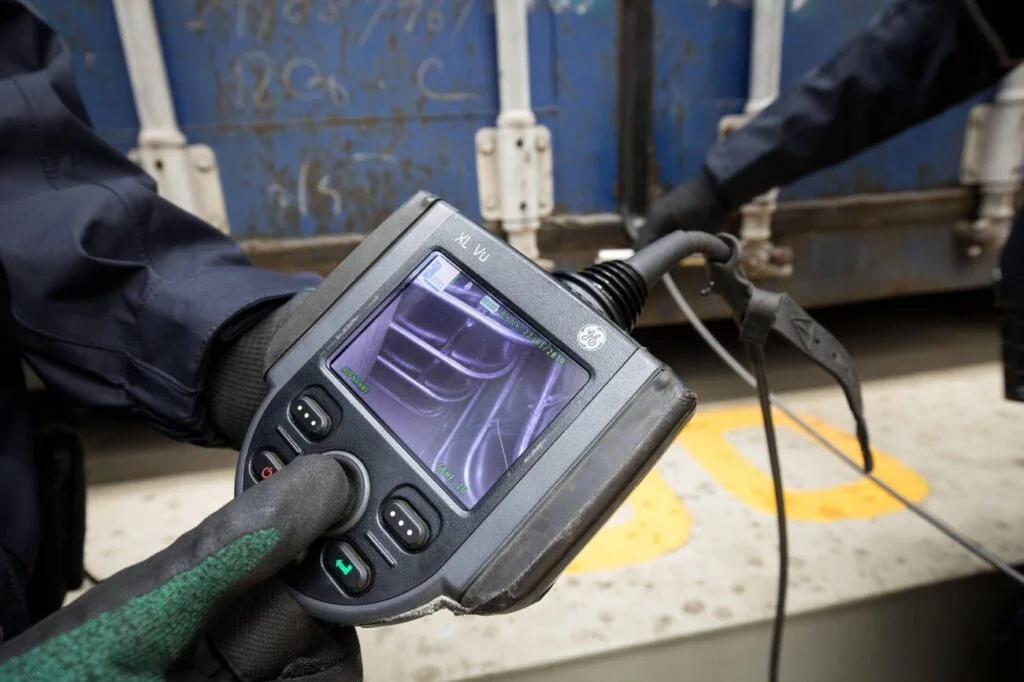
Medical endoscopes contain small, intricate components that must be manufactured with a high degree of consistency. Narrow internal channels, tubing, connections, and other difficult-to-access features can make comprehensive visual inspection challenging. Examining only exterior surfaces may leave important internal areas unseen. For medical endoscope manufacturers, industrial borescopes provide a practical way to visually examine these confined areas during production and quality control without unnecessarily dismantling or damaging components.
Looking Beyond External Component Surfaces
Traditional visual inspection works well when a component surface is directly accessible. The challenge becomes considerably greater when potential manufacturing imperfections are located inside a narrow channel or enclosed assembly.
Industrial borescopes extend visual access into these areas. A sufficiently small probe can be introduced through an available opening so inspectors can observe internal surfaces that cannot be examined directly. This capability can complement external inspection and other quality control methods by providing visual information about otherwise inaccessible locations.
For manufacturers, this means the inspection process can address more than the appearance of the finished exterior.
Evaluating Narrow Internal Channels
Endoscope designs can contain narrow pathways where direct visual access is inherently difficult. Their small dimensions make conventional cameras unsuitable for many inspection tasks.
Using Borescopes for endoscopes gives manufacturing and quality teams an opportunity to examine these restricted spaces without opening the component simply to gain visibility. Depending on the component and inspection system, technicians can observe internal walls and other features while moving the probe through the accessible passage.
Probe diameter is particularly important. The inspection instrument must be appropriately sized for the opening while still providing useful visual information about the area being examined.
Supporting Inspection Without Destroying the Component
Some internal areas can only be viewed directly after a component has been opened, separated, or sectioned. While destructive evaluation can have an important role in quality programs, it is not practical for every inspection.
Industrial borescopes offer a nondestructive visual approach when an appropriate access path exists. Inspectors can examine internal features while leaving the inspected component largely intact.
This can be valuable during prototype evaluation, process development, troubleshooting, and routine quality activities where manufacturers want internal visual information without sacrificing every inspected part.
Matching the Inspection Tool to the Component
Successful borescope inspection depends on more than selecting the smallest available probe. Manufacturers should consider the diameter and length of the area being inspected, viewing direction, illumination, image quality, access geometry, and the type of surface condition they need to evaluate.
Lighting deserves particular attention because enclosed medical device components provide little natural illumination. An inspection system must deliver enough light to make relevant features visible without producing reflections that obscure surface detail.
Expanding Visibility During Medical Device Manufacturing